Monday, September 7, 2020

Donald's Press Conference

Tom Nichols took one for the team today, watching Donald's press conference so you and I didn't have to. He live-tweeted the whole thing:


Friday, September 4, 2020

Thinking About Polls

Jonathan Bernstein ponders Donald's poll numbers and note, this was published yesterday morning, before The Atlantic dropped their nuclear bomb of an article about Donald and the military. This is Bernstein's column in its entirety:

Wednesday was Pollsmas, or whatever you’d call a holiday that celebrates a whole bunch of post-convention public-opinion surveys. And if you add them all up, there’s a lot of good news for former Vice President Joe Biden, Senator Kamala Harris and the Democrats.

I’ll start with the good news for President Donald Trump: His approval ratings have definitely improved. He’s at his best point since May. That’s … well, it’s quite a bit better than where he was in July.

The bad news for him is that those approval ratings aren’t very good; he’s still quite a bit worse off than any of the elected presidents who won a second term, although at least he’s now solidly better than where George H.W. Bush and Jimmy Carter were at this point. But as I said last month, after the conventions it’s time to start paying more attention to head-to-head horse-race polling, and the new surveys released Wednesday make clear that the conventions failed to change anything.

Biden is still in the lead. The FiveThirtyEight polling average estimate showed his lead at just about 8% right before he selected Harris as his running mate; now, after that news and both conventions, the lead is at 7.4%. But that reflects the polls taken during and immediately after the Republican convention, which means they may well reflect a bounce for Trump that will fade over the next two weeks. So at best, the president has gained a little, and more likely the conventions won’t have any cumulative lasting effect. It’s true that Trump appears to have an Electoral College advantage similar to the one he had in 2016, but even if he could win the Electoral College (and therefore the election) while losing the popular vote by 3 percentage points, that still leaves him in pretty bad shape.

The problem is that voters are engaged, and polling has been remarkably stable; ever since Biden essentially clinched the Democratic nomination in early March, his lead in national polling has rarely been more than a couple of points away from 8%. And the closer we get to Election Day, the less likely it is that events will change that. The conventions could have — we might’ve found out that there was a good-sized group of people who had moved away from Trump but, once they focused on the choice between Trump and Biden, would come back to the president. That hasn’t panned out, and it’s not clear what would change the contest at this point in Trump’s favor.

None of this is to say that the president can’t win. The model is 2016: He was behind, but a favorable news cycle dominated the last few days of the campaign and moved the national polls a bit. Then it turned out that some state polls were off by just enough, and in the right direction, that he was able to put together an unusual Electoral College win. This time, he’s farther behind in the polls, there’s no guarantee that any October surprise would be effective, and it’s likely that the state polls will be more accurate. Nate Silver’s model believes Biden will probably win; the Economist’s model thinks he is very likely to.

Even so, it’s certainly possible the president could turn things around. There’s still enough uncertainty in this unusual year that modesty in predictions makes even more sense than normal. Still, no incumbent president wants to be clearly behind in the polls after the conventions. I’ll put it this way: Yes, Trump can win, but it’s increasingly unlikely that he can win without something happening to change the situation, and it’s increasingly unlikely that something will happen to change the situation.

Serving Their Country - Updated

My father served in the U.S. Navy during World War II. His older brother, my uncle, was killed in the war and his body was never found.

Another uncle served a 20+ year career as an Air Force officer, including in Vietnam.

His son, my cousin Jim, graduated from the Air Force Academy and served a 20+ year career as an officer. He has two sons, one of whom is serving as an officer in the Army and the other as an officer in the Air Force.

My former husband is also an Air Force Academy graduate and served a 20+ year career as an officer.

Jim's sister Terry's youngest son graduated from Air Force and is now serving as an Air Force officer.

My niece's husband's brother served a two-year enlistment in the Air Force and is now in the Reserves. Starting last November he was deployed for six months in the Middle East.         

There are no words strong enough to express my rage.


This is from 2013:


Image


Update: This is a tweet thread that was posted this afternoon. What makes it interesting is that it's from Jennifer Griffin, a National Security Correspondent for Fox News:

Two former sr Trump admin officials confirm .@JeffreyGoldberg reporting that President Trump disparaged veterans and did not want to drive to honor American war dead at Aisne-Marne Cemetery outside Paris. 

According to one former senior Trump administration official: "When the President spoke about the Vietnam War, he said, 'It was a stupid war. Anyone who went was a sucker'." 

This former official heard the President say about American veterans: "What's in it for them? They don't make any money." Source: "It was a character flaw of the President. He could not understand why someone would die for their country, not worth it." 

I read the source a few quotes from The Atlantic article. This former Trump admin official said, "The President would say things like that. He doesn't know why people join the military. He would muse, 'Why do they do it'?" 

Re: trip to mark 100th anniversary of WW I

Source: "The President was not in a good mood. Macron had said something that made him mad about American reliability and the need perhaps for a European army. He questioned why he had to go to two cemeteries. 'Why do I have to do two'?" 

President Trump's staff explained he could cancel (his visit to the cemetery), but he was warned, 'They (the press) are going to kill you for this'." The President was mad as a hornet when they did.
When asked IF the President could have driven to the Aisne-Marne Cemetery, this former official said confidently:

"The President drives a lot. The other world leaders drove to the cemeteries. He just didn't want to go." 

Regarding Trump's July 4th military parade, during a planning session at the White House after seeing the Bastille Day parade in 2017, the President said regarding the inclusion of "wounded guys" "that's not a good look" "Americans don't like that," source confirms. 

Regarding McCain, "The President just hated John McCain. He always asked, 'Why do you see him as a hero?" Two sources confirmed the President did not want flags lowered but others in the White House ordered them at half mast. There was a stand off and then the President relented.


Update #2 on Saturday morning. Another tweet thread that touched me, from Army veteran Charlotte Clymer. She includes some details about a very specific process that I didn't know very much about:

The straight line distance between Washington, D.C. and Dover, Delaware is less than 85 miles. It takes a helicopter about 40-45 minutes to make the trip. I was 19 years-old, and it was my first time riding a helicopter. I barely remember any of it. I was distracted. 

I was more nervous than I've ever been in my life about what was to come next, and so, as this Black Hawk floated above the earth with my casket team--me being the youngest and most junior--I could only think: "What if I mess this up? What if I fail? How will I live with myself?"

That's how it should be in a moment like this. You should be nervous. You should let that sharpen your focus. Because there is no room for error when handling the remains of a service member returning to the U.S. after being killed in combat. You should strive for perfection.

The helicopter landed, and my anxiety spiked. In retrospect, I recall noticing the silence of the rest of the casket team. These were young men, mostly early 20s, loud and boisterous and chests puffed. Now, they were quiet. It was unnerving.

When you're a new enlisted soldier in an infantry unit--the FNG--you're treated like you know nothing. Because you don't. Everyone around you is older and vastly more competent and confident. Yet, in this moment, despite having done this before, they were all nervous, too. Scary.

We were brought into a holding area near the tarmac on Dover Air Force Base in Delaware, where the remains of service members who have died in a theater of operations arrive on a C-17 transport plane. We rehearsed our steps. And did it again. And then again. No room for error.

The plane arrived. The ramp was lowered. The transfer vehicle that would complete the next leg of the journey was parked. Our casket team was positioned. We were now each wearing ceremonial white cotton gloves we had held under the bathroom faucet. Damp gloves have a better grip.

We’re a casket team, but these are not caskets. They're transfer cases: rectangular aluminum boxes that bear a resemblance to a crate for production equipment. Yet, the dimensions are obvious. Any given civilian would take only a few moments to realize that's for carrying bodies.

It's called a "dignified transfer", not a "ceremony", because officials don't want loved ones to feel obligated to be there while in mourning, but it is as highly choreographed as any ceremony, probably more so. It is done as close to perfection as anything the military does.

I was positioned in formation with my casket team, and I could see the transfer cases precisely laid out, dress right dress, in the cavernous space of the C-17, each draped with an American flag that had been fastened perfectly. I remember my stomach dropping.

There is simply no space for other thoughts. Your full brain capacity is focused on not screwing up. The casket team steps off in crisp, exact steps toward the plane, up the ramp (please, oh god, don't slip), aside the case, lift up ceremonially, face back and down the ramp.

During movement, everyone else is saluting: the plane personnel, the OIC (officer-in-charge), any senior NCOS and generals, and occasionally, the president. The family is sometimes there. No ceremonial music or talking. All silent, save for the steps of the casket team.

You don't see the family during this. You're too focused. There are other distractions. Maybe they forgot, but no one told me there'd be 40-60 lbs. of ice in the transfer case to prevent decomposition over the 10-hour plane ride. You can sometimes feel it sloshing around a bit.

Some of the transfer cases feel slightly heavier, some slightly lighter. The weight is distributed among six bearers, so it's not a big difference. But then you carry a case that's significantly lighter, and you realize those are the only remains they were able to recover.

It probably takes all of 30-40 seconds to carry the transfer case from the plane to the mortuary vehicle, but it felt like the longest walk ever each time. The case is carefully placed in the back of the mortuary vehicle, and the casket team moves away in formation.

I don't know how to describe the feeling after you're done and on your way back to D.C., but it's a mixture of intense relief that you didn't screw up and profound sobriety over what you've just done and witnessed. I wouldn't call it a good feeling. Maybe a numbed pain.

From the outside, the most egalitarian place in America is a military transfer case. They all look exactly the same: an aluminum box covered with the American flag. We didn't know their names, rank, race, ethnicity, gender, religion, sexual orientation--none of it. All the same.

Whatever cruel and unfathomable politics had brought all of us to that moment--from the killed service member in the box to those of us carrying it to the occasional elected official who attends to pay respects--there were no politics to be found during a dignified transfer.

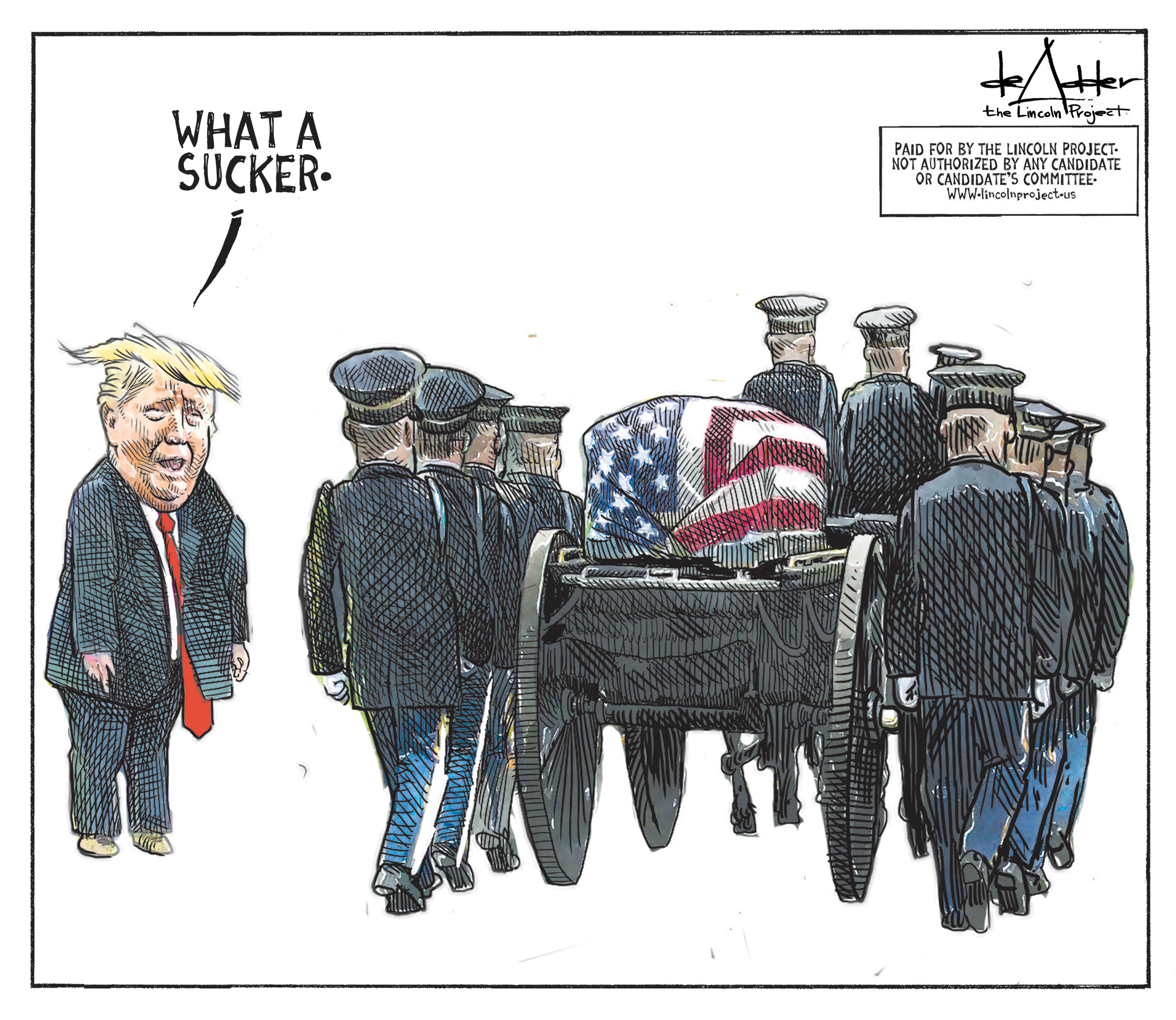
The fallen service members I helped receive and carry during this part of the journey to their final resting place were not "losers" or "suckers". They were selfless and heroic, and I had the honor of being among the first to hold them when they returned home.

There are service members around the world involved in caring for our war fatalities. The mortuary specialists, the casket teams, the family liaisons--so many people who work to ensure that this final act is done with the greatest amount of dignity and honor, seeking perfection.

I suppose the one thing we all took for granted is that dignity would always be affirmed by all our civilian leaders to those service members who gave everything. I never would have predicted any official, let alone a sitting president, would insult fallen service members.

I cannot adequately describe my anger at Donald Trump for being so willing to send service members halfway around the world to die on his own behalf and then call them "losers" for doing so. This coward is unfit for his office and the power it holds. He needs to go. 

Thursday, September 3, 2020

Losers And Suckers - Updated

This is from Jeffrey Goldberg, writing at The Atlantic:

When President Donald Trump canceled a visit to the Aisne-Marne American Cemetery near Paris in 2018, he blamed rain for the last-minute decision, saying that “the helicopter couldn’t fly” and that the Secret Service wouldn’t drive him there. Neither claim was true.

Trump rejected the idea of the visit because he feared his hair would become disheveled in the rain, and because he did not believe it important to honor American war dead, according to four people with firsthand knowledge of the discussion that day. In a conversation with senior staff members on the morning of the scheduled visit, Trump said, “Why should I go to that cemetery? It’s filled with losers.” In a separate conversation on the same trip, Trump referred to the more than 1,800 marines who lost their lives at Belleau Wood as “suckers” for getting killed.

Belleau Wood is a consequential battle in American history, and the ground on which it was fought is venerated by the Marine Corps. America and its allies stopped the German advance toward Paris there in the spring of 1918. But Trump, on that same trip, asked aides, “Who were the good guys in this war?” He also said that he didn’t understand why the United States would intervene on the side of the Allies.

Trump’s understanding of concepts such as patriotism, service, and sacrifice have interested me since he expressed contempt for the war record of the late Senator John McCain, who spent more than five years as a prisoner of the North Vietnamese. “He’s not a war hero,” Trump said in 2015 while running for the Republican nomination for president. “I like people who weren’t captured.”

There was no precedent in American politics for the expression of this sort of contempt, but the performatively patriotic Trump did no damage to his candidacy by attacking McCain in this manner. Nor did he set his campaign back by attacking the parents of Humayun Khan, an Army captain who was killed in Iraq in 2004.

Trump remained fixated on McCain, one of the few prominent Republicans to continue criticizing him after he won the nomination. When McCain died, in August 2018, Trump told his senior staff, according to three sources with direct knowledge of this event, “We’re not going to support that loser’s funeral,” and he became furious, according to witnesses, when he saw flags lowered to half-staff. “What the fuck are we doing that for? Guy was a fucking loser,” the president told aides. Trump was not invited to McCain’s funeral. (These sources, and others quoted in this article, spoke on condition of anonymity. White House spokeswoman Kayleigh McEnany did not respond to email and telephone requests for comment.)

Trump’s understanding of heroism has not evolved since he became president. According to sources with knowledge of the president’s views, he seems to genuinely not understand why Americans treat former prisoners of war with respect. Nor does he understand why pilots who are shot down in combat are honored by the military. On at least two occasions since becoming president, according to three sources with direct knowledge of his views, Trump referred to former President George H. W. Bush as a “loser” for being shot down by the Japanese as a Navy pilot in World War II. (Bush escaped capture, but eight other men shot down during the same mission were caught, tortured, and executed by Japanese soldiers.)

When lashing out at critics, Trump often reaches for illogical and corrosive insults, and members of the Bush family have publicly opposed him. But his cynicism about service and heroism extends even to the World War I dead buried outside Paris—people who were killed more than a quarter century before he was born. Trump finds the notion of military service difficult to understand, and the idea of volunteering to serve especially incomprehensible. (The president did not serve in the military; he received a medical deferment from the draft during the Vietnam War because of the alleged presence of bone spurs in his feet. In the 1990s, Trump said his efforts to avoid contracting sexually transmitted diseases constituted his “personal Vietnam.”)

On Memorial Day 2017, Trump visited Arlington National Cemetery, a short drive from the White House. He was accompanied on this visit by John Kelly, who was then the secretary of homeland security, and who would, a short time later, be named the White House chief of staff. The two men were set to visit Section 60, the 14-acre area of the cemetery that is the burial ground for those killed in America’s most recent wars. Kelly’s son Robert is buried in Section 60. A first lieutenant in the Marine Corps, Robert Kelly was killed in 2010 in Afghanistan. He was 29. Trump was meant, on this visit, to join John Kelly in paying respects at his son’s grave, and to comfort the families of other fallen service members. But according to sources with knowledge of this visit, Trump, while standing by Robert Kelly’s grave, turned directly to his father and said, “I don’t get it. What was in it for them?” Kelly (who declined to comment for this story) initially believed, people close to him said, that Trump was making a ham-handed reference to the selflessness of America’s all-volunteer force. But later he came to realize that Trump simply does not understand non-transactional life choices.

“He can’t fathom the idea of doing something for someone other than himself,” one of Kelly’s friends, a retired four-star general, told me. “He just thinks that anyone who does anything when there’s no direct personal gain to be had is a sucker. There’s no money in serving the nation.” Kelly’s friend went on to say, “Trump can’t imagine anyone else’s pain. That’s why he would say this to the father of a fallen marine on Memorial Day in the cemetery where he’s buried.”

I’ve asked numerous general officers over the past year for their analysis of Trump’s seeming contempt for military service. They offer a number of explanations. Some of his cynicism is rooted in frustration, they say. Trump, unlike previous presidents, tends to believe that the military, like other departments of the federal government, is beholden only to him, and not the Constitution. Many senior officers have expressed worry about Trump’s understanding of the rules governing the use of the armed forces. This issue came to a head in early June, during demonstrations in Washington, D.C., in response to police killings of Black people. James Mattis, the retired Marine general and former secretary of defense, lambasted Trump at the time for ordering law-enforcement officers to forcibly clear protesters from Lafayette Square, and for using soldiers as props: “When I joined the military, some 50 years ago, I swore an oath to support and defend the Constitution,” Mattis wrote. “Never did I dream that troops taking that same oath would be ordered under any circumstance to violate the Constitutional rights of their fellow citizens—much less to provide a bizarre photo op for the elected commander-in-chief, with military leadership standing alongside.”

Another explanation is more quotidian, and aligns with a broader understanding of Trump’s material-focused worldview. The president believes that nothing is worth doing without the promise of monetary payback, and that talented people who don’t pursue riches are “losers.” (According to eyewitnesses, after a White House briefing given by the then-chairman of the Joint Chiefs of Staff, General Joe Dunford, Trump turned to aides and said, “That guy is smart. Why did he join the military?”)

Yet another, related, explanation concerns what appears to be Trump’s pathological fear of appearing to look like a “sucker” himself. His capacious definition of sucker includes those who lose their lives in service to their country, as well as those who are taken prisoner, or are wounded in battle. “He has a lot of fear,” one officer with firsthand knowledge of Trump’s views said. “He doesn’t see the heroism in fighting.” Several observers told me that Trump is deeply anxious about dying or being disfigured, and this worry manifests itself as disgust for those who have suffered. Trump recently claimed that he has received the bodies of slain service members “many, many” times, but in fact he has traveled to Dover Air Force Base, the transfer point for the remains of fallen service members, only four times since becoming president. In another incident, Trump falsely claimed that he had called “virtually all” of the families of service members who had died during his term, then began rush-shipping condolence letters when families said the president was not telling the truth.

Trump has been, for the duration of his presidency, fixated on staging military parades, but only of a certain sort. In a 2018 White House planning meeting for such an event, Trump asked his staff not to include wounded veterans, on grounds that spectators would feel uncomfortable in the presence of amputees. “Nobody wants to see that,” he said.
(This is the article in its entirety.)

I wrote about Donald's visit to France in November, 2018; click here to read that post.

Update: This article is getting a lot of attention; I'll post reactions as I see them.


Update #2: The author of this article, Jeffrey Goldberg said this today (Sunday 9/6) on CNN:

"I would fully expect more reporting to come out about this and more confirmation and new pieces of information in the coming days and weeks," Goldberg told CNN's Chief Media Correspondent Brian Stelter on "Reliable Sources" Sunday. "We have a responsibility and we're going to do it regardless of what he says." (Read the entire article here.)

Update #3 on Tuesday, September 8. CNN says Donald is "visibly distressed" about this story: 

President Donald Trump was visibly distressed this weekend over the fallout that ensued from the story published in The Atlantic alleging that he privately disparaged the war dead.

In several conversations since the story was published Thursday, Trump vigorously denied that he made the comments and touted what he's done for the military. Two people who spoke with him said it was clearly a sign of how much the story had resonated with Trump -- and his fear that it could hurt his support with the military.

When the story first appeared on Thursday, Trump was outraged during his flights to and from Pennsylvania and demanded that aides begin denying it. That included sending his chief of staff Mark Meadows to the back of Air Force One to tell reporters it wasn't true. His angered reaction prompted officials to mobilize the massive pushback effort that began Thursday night.
By the weekend, however, Trump appeared more deflated than outraged at the allegations lobbed against him, based on conversations he had.

It was a relatively quiet weekend at the White House until Trump decided he wanted to hold a Labor Day news conference. Just as aides believed the story was quieting down, Trump accused top Pentagon military leaders of being beholden to defense contractors, an astonishing comment from the President as he's trying to bolster support with those people. Trump had been privately upset that more of the top brass at the Pentagon had not defended him in the wake of The Atlantic's story and some saw this as a response to that.
(Read the entire article here.)

Wednesday, September 2, 2020

This Day In History, 1945: Japan Surrenders, World War II Ends


Wait a minute. Didn't I just do an "end of the war" post on August 14? Yes (you can read it here.) The government of Japan announced that they would surrender on August 14; September 2 is when the formal surrender paperwork was signed on the U.S.S. Missouri. The LA Times article in the tweet above has details.

In 2012, I visited the U.S.S. Missouri site in Hawaii; this is what I wrote:

Yesterday we toured the Arizona Memorial at Pearl Harbor and the USS Missouri Memorial, both of which were fascinating and very moving. I was surprised to learn that after 71 years since the attack in 1941, there are 13 Pearl Harbor survivors still living. When a survivor dies, if the family wishes, the Navy will conduct a memorial service out on the white Arizona memorial structure, then send a diver with the cremated remains down under the water. The specially packaged remains are then inserted into a crack in the Arizona, allowing the veteran to be interred with his fallen comrades for all eternity.

On the Missouri, I was most intrigued to see the actual site of the Japanese surrender, which brought World War II to an end. My favorite tidbit: As they were setting up for the ceremony on the deck of the Missouri, apparently General Douglas MacArthur arranged for the tallest soldiers and sailors on the ship to be lined up along the pathway where the Japanese officials would walk - one last bit of in-your-face intimidation for the much-shorter representatives from Japan.

Monday, August 31, 2020

The Guessing Game - Updated/Chadwick Boseman

What will be on the cover of People this week? My guesses:

Chadwick Boseman: The beloved star dies unexpectedly from cancer at
age 43
Meghan Markle and Gloria Steinem: Meghan sits down for an interview with Steinem. Prince Harry, who has been talking about his nice backyard, is also a possibility
Katy Perry and Orlando Bloom: Their daughter was born
Brad Pitt: Is he dating German model Nicole Poturalski? (She's 27.)
Giancarlo Granda: The so-called Pool Boy in the Jerry Falwell Jr. story
Chasten Buttigieg: Pete's husband has a book coming out tomorrow
Alice Johnson: Donald commuted her prison sentence in 2018 after a lobbying campaign by Kim Kardashian, then on Friday, the day after she spoke at the RNC, he granted her a full pardon
Victoria Huber: The owner of a full-service bridal salon that was destroyed by Hurricane Laura, she's become the face of people suffering in Louisiana
Mariah Carey: Her memoir, titled The Meaning of Mariah Carey, comes out September 29
Melania Trump and/or Stephanie Winston Wolkoff: Wolkoff's book, titled Melania and Me, officially comes out tomorrow but review copies are out there and its getting a lot of attention, in particular some juicy gossip about the relationship between Melania and Ivanka. On Good Morning, America this morning, Wolkoff said, "There's nothing in the book that I can't back up, not one word, and Donald and Melania know that." Wow.

I've had Melania on the Guessing Game list periodically throughout Donald's presidency, but as I've said here before, since the 2016 election, there has been not one word about Melania on the cover of People. There was one cover story during the campaign:

Issue dated October 15, 2015 (Read the story here)
At Home with Donald Trump and His Family | PEOPLE.com


... but since the election there have only been three covers featuring anyone named Trump:

Issue dated November 21, 2016


Issue dated July 31, 2017


Issue dated April 2, 2018


Will People put Melania on the cover this week? Probably not.

Kellyanne Conway: In other Trump-related news, today is Senior Counselor Kellyanne Conway's last day at the White House. To mark the occasion I'll share a tweet from Inauguration Day:


Stories that appear on the new cover will be highlighted in green.

Update. Niecy Nash: The actress married singer Jessica Betts in a surprise wedding

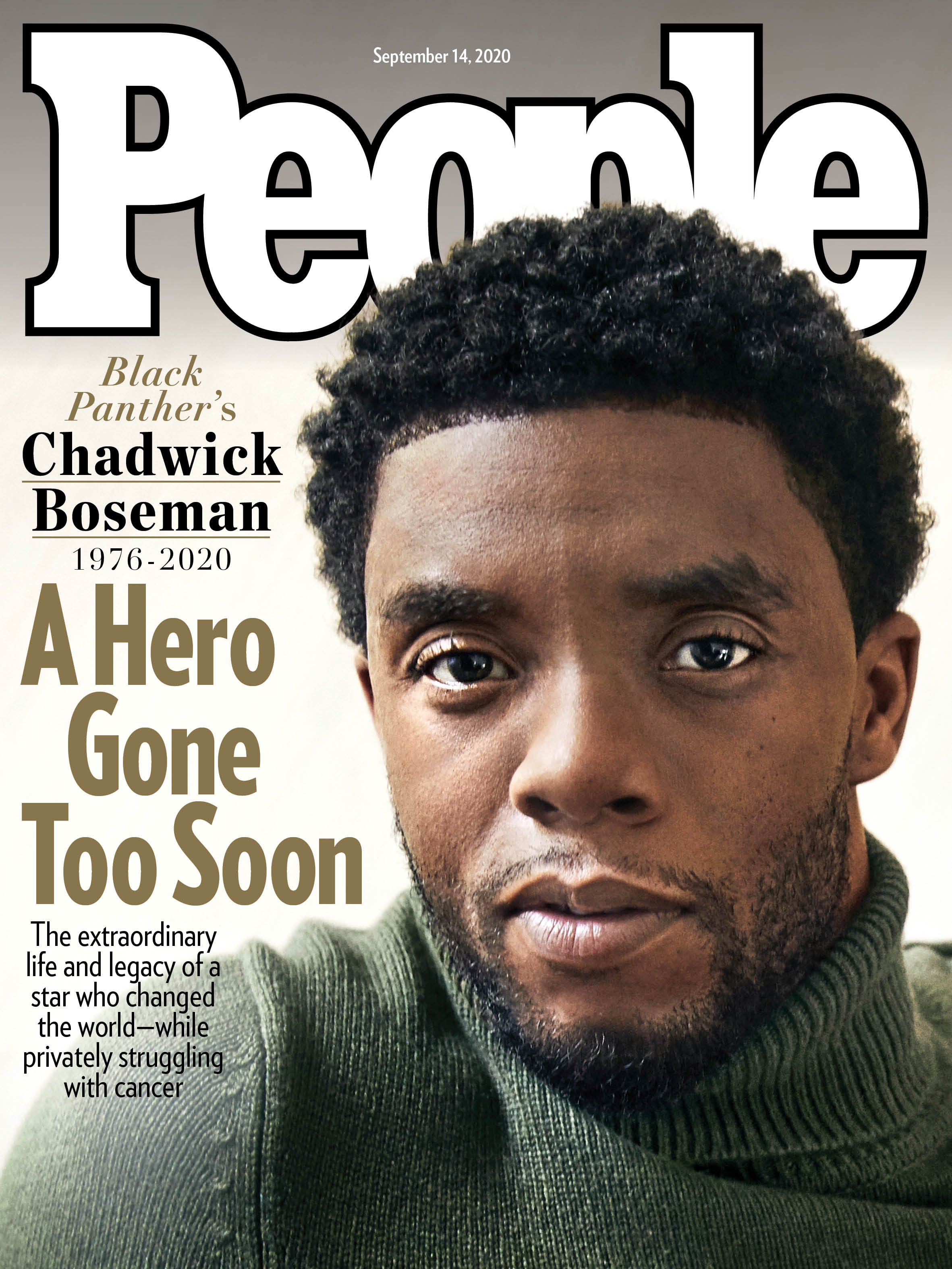
Update #2 on Tuesday night. People publishes the new cover early; as expected it's what they call a "Tribute Cover," recognizing a celebrity who has died:

Issue dated September 14, 2020: Chadwick Boseman
Image


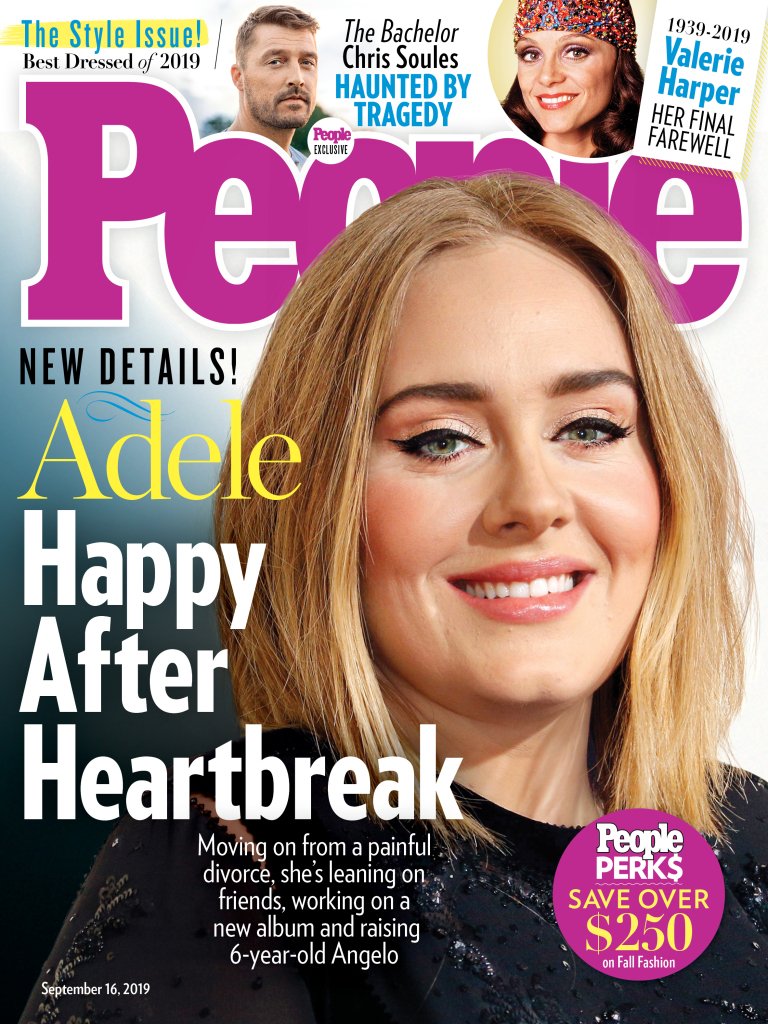
Last year at this time: Issue dated September 16, 2019


Note: there will probably be a couple of secondary headlines on the final version of this week's cover.

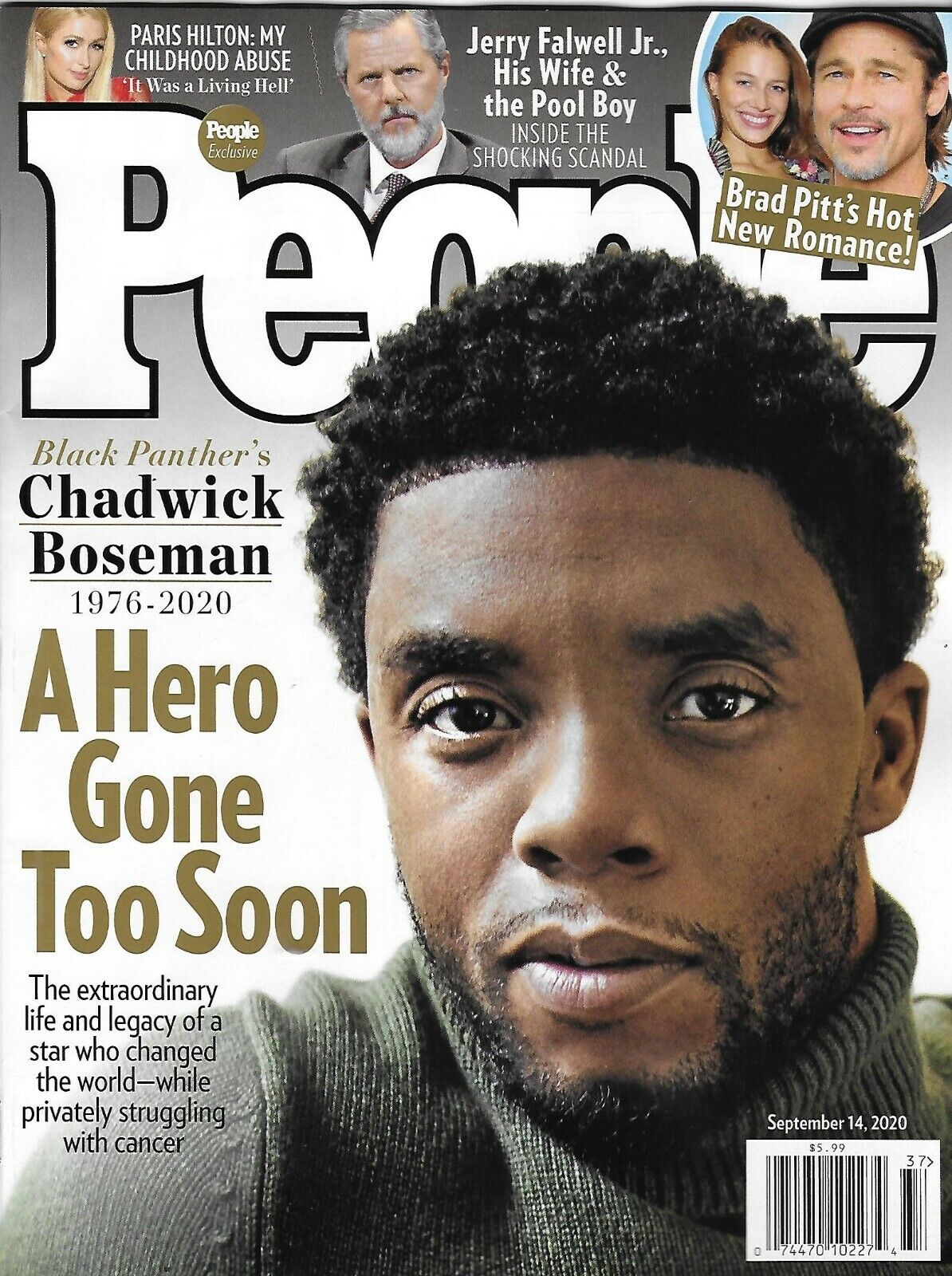
Update #3 on Wednesday morning: I've now seen a final version of the cover and it does include secondary headlines about Brad Pitt and the Jerry Falwell Jr. scandal, as well as Paris Hilton. If I can find an online copy I'll post it here. The "no Melania" streak is still going strong.

Update #4: This is the final version:


Saturday, August 29, 2020

#TrumpIsNotWell - Updated

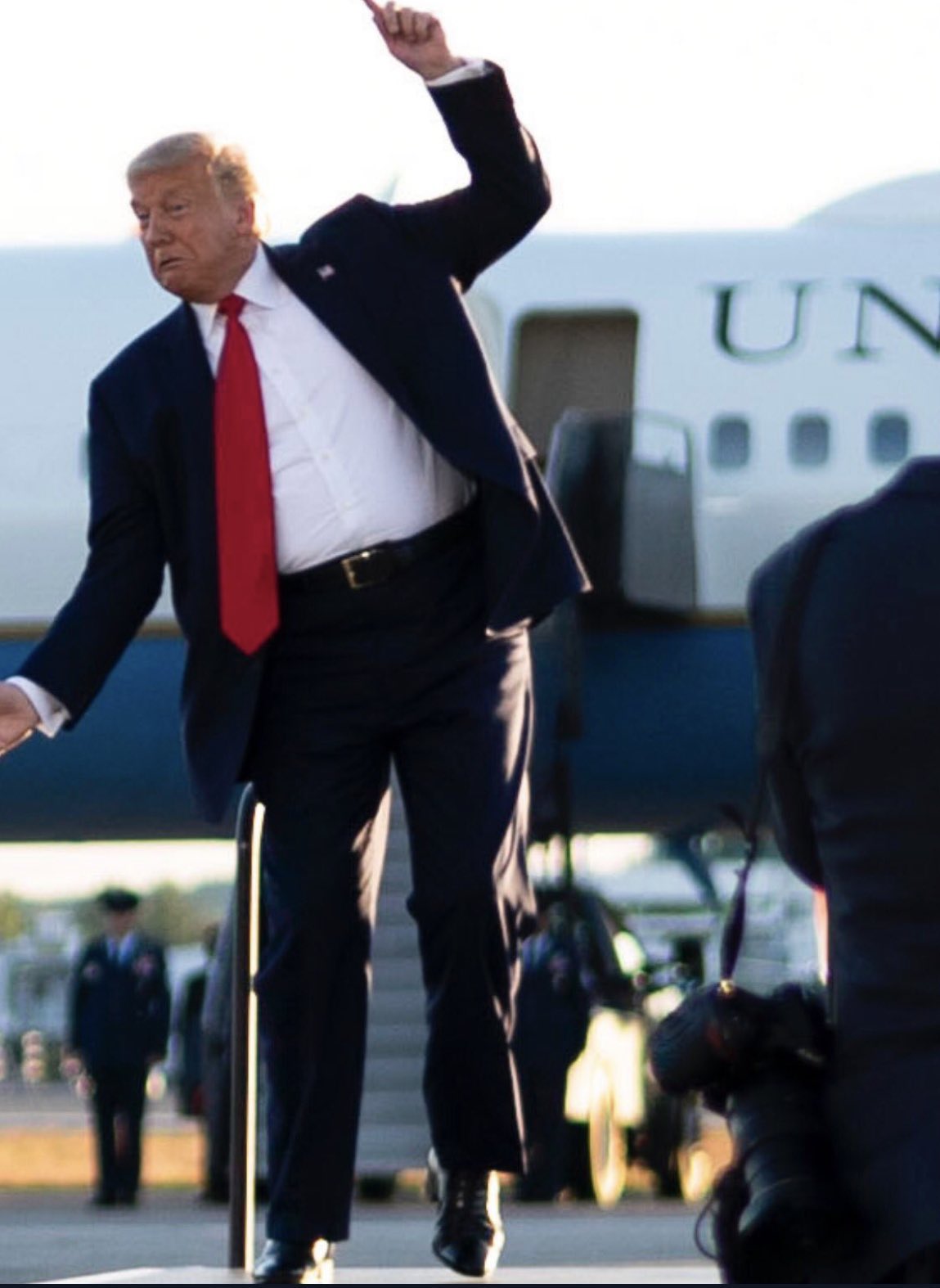
Donald slipped a little last night, causing #TrumpIsNotWell to once again be trending on Twitter. Here's the video:


And someone captured an unpleasant screenshot:


Image


I'll add to this post as I see other examples.

Update on September 1: Donald continues to sound like someone who is losing his marbles and I'm seeing more talk about his (assumed but not definitively known) impairment:


Here's how Talking Points Memo is reporting the story, reported by Nicole Lafond:

Title: Why Is Trump Tweeting About Mini-Strokes?

My roommate just asked me this question. There’s not a solid answer, but it’s related to news out of New York Times reporter Michael Schmidt’s forthcoming book, which was obtained by CNN.

According to the book, Vice President Mike Pence was reportedly put on standby to possibly temporarily assume presidential powers while Trump made an abrupt visit to Walter Reed late last year. There have been conflicting reports about the visit, and hospital officials alerted staff via a mass-memo about Trump visit, an indication it was not a routine check-up as the White House claimed.

From Schmidt’s book:

Word went out in the West Wing for the vice president to be on standby to take over the powers of the presidency temporarily if Trump had to undergo a procedure that would have required him to be anesthetized.

Trump responded Tuesday morning:


Why Trump is specifically denying having a stroke is not entirely clear. Twitter responded to President Trump’s tweets with many a “he doth protest too much” memes. But Trump may be pulling the accusation from this report: CNN contributor Joe Lockhart apparently at one time floated the theory that Trump might have had a secret stroke and was trying to hide it from the American people.

It’s convoluted and I’m sure we’ll learn more when Schmidt’s book is out.


Donald's White House doctor apparently felt compelled to weigh in. I'd take what he says with a grain of salt: 


Update #2 on Wednesday afternoon. Donald is sounding more and more out-of-it:


Who Can Say?


Only Time, by Irish singer Enya, is one of my absolute favorite songs:


... and this:

Kraft Original Flavor Macaroni & Cheese Dinner, 7.25 oz


... is one of my favorite foods. (Really.) I doctor it up with a good chunk of Extra Sharp Cheddar and sometimes a little olive oil and garlic, so my version is not "straight out of the box," but still, it's a fave. Even so, when I saw this favorite song paired with a favorite food for the purpose of selling a product, it didn't quite work:


Over the years, Only Time has been licensed to sell all kinds of products (and by-the-way, this is a short clip of a commercial trying to convince parents to serve their kids Mac and Cheese for breakfast.) The first time I heard it was in a promo for an upcoming Friends episode about the romance of Rachel and Ross. Clearly, Enya is not a member of the "I'm too pure to let my music be used for crass commercial purposes" club and good for her, but Macaroni and Cheese? Even though I love the song and I love the product, for me, this marriage of (commercial) convenience just didn't fit. 

Friday, August 28, 2020

Donald Botches His Big Speech

From Jonathan Bernstein:

Nomination speeches at normal conventions are easy. Joe Biden even showed last week that nomination speeches given remotely during a pandemic aren’t that hard. Donald Trump flubbed his.

To be clear: I doubt it will make any difference at all to the November results. No one remembers these things very long, and even bad reviews, if that’s what Trump gets, will be rapidly forgotten.

That said, Trump is behind in the polls, and this was an opportunity to reach out beyond his strongest supporters. But there was nothing new here; even had it been well-written and well-delivered and well-staged, it was just a laundry list — a very long laundry list — of his usual lines.

But it was not the best version of that speech. It was one of the worst. Trump still hasn’t mastered the teleprompter, so he looks awkward while using it, delivers the lines in a dull monotone, and frequently botches words.

It’s hard to know for sure, but part of his problem appears to be that he doesn’t bother to practice. It often seems as though he’s seeing the text for the first time. That means he swallows applause lines, has difficulties with words, and loses contact with both the live and the video audience.

Toward the end, Trump just gave up on the applause lines completely, rushing through his callback to his 2016 speech about making America proud and rich and whatever again. Maybe he was tired after the marathon speech.

And then there’s the poetry part — the stuff speechwriters add that’s supposed to soar. Barack Obama and Ronald Reagan made their careers out of bringing the poetry to life; Trump acts bored with it. Indeed, it’s surprising that his speechwriters still try.

Speaking of the writing; I agree with my Bloomberg Opinion colleague Tim O’Brien, who wrote on Twitter:

     "Stephen Miller is the worst speech writer in modern White House history — incapable of embracing any thoughts other than carnage, conflict and chaos. Completely devoid of aspiration, hope, community and generosity. A reflection of him and the man he works for."

It’s not just Miller’s weakness. It’s also Trump’s. One reason convention speeches are easy is that the nominee can normally call on all the campaign professionals in the party. But Trump can’t. Many of them support Biden, including the groups of former staffers for John McCain and Mitt Romney who endorsed the Democratic nominee on Thursday.

One more thing on substance and delivery. Republicans, of course, didn’t put together a party platform this year, and Trump has struggled to explain what his second term agenda would be. I haven’t compared the text to the speech as delivered, but I did notice that several times when there was a line about something he planned to do in the second term, he appeared to ad-lib a claim that he had already started doing it or had already done it.

Of course, a lot of what Trump claimed for first-term accomplishments was massively exaggerated to begin with.

No, Trump didn’t totally rebuild a depleted military, even though he could argue he increased spending. No, he didn’t have to start from scratch and entirely defeat ISIS, even though he could take credit for successfully continuing what Obama had started and legitimately hit the former president for not doing enough to check the original growth of the terrorist group. No, he didn’t build the greatest economy in the history of the world, even though he could take credit for keeping a long expansion going even longer — before the coronavirus hit, that is.

Again, none of this was new, and little of it seemed aimed at anyone other than his strongest supporters. Which is pretty much the story of his presidency, as far as public opinion goes: He is convinced that all he has to do is keep his die-hard voters with him, and he’ll be fine. That hasn’t worked in the approval polls, where overall he has been the least popular first-term president of the polling era. It didn’t work out at all well in the 2018 midterms. And so far, the polls indicate that it’s not working well in his re-election campaign.

That doesn’t mean he can’t win. But if he does, it seems highly unlikely it will be because of the convention, and certainly not because of his speech.
(This is the column in its entirety.)

This Day in History, 1955/1963/2008 - Updated

On this day in history:

65 years ago: 14 year-old Emmett Till was murdered in Mississippi. (Read more here)

57 years ago: The 1963 March on Washington and Martin Luther King Jr.'s I Have A Dream speech.

There's another march today:


12 years ago: Barack Obama accepts the Democratic nomination for president


Update: Something else that happened on August 28 is that this picture was taken:


We know who Pete Seeger was, but who was Henry Wallace? He was one of President Franklin Roosevelt's three vice presidents. He replaced John Nance Garner in 1940, after Garner had served two terms, and was himself replaced in 1944 by Harry Truman. The tweet above led to some fun What If/Counterfactual History tweets about a topic that intrigues me, vice presidential succession:


And speaking of vice presidents, back here in the real world, Mike Pence has now accepted the nomination to run for VP again, so the Dump Pence movement is (almost certainly) over.