Showing posts with label 2020. Show all posts

Friday, January 24, 2020

Timeline


Days until the election: 283


Monday, January 20, 2020

This Day In History: Inauguration Day

January 20, in the year following a presidential election, is Inauguration Day, meaning that 3 years ago, Donald became president, eleven years ago Barack Obama became president, 19 years ago George W. Bush became president and so on, all the way back to Franklin Roosevelt's 2nd inauguration in 1937. Prior to that, Inauguration Day was in March. Why the change? Primarily to shorten the Lame Duck period between the election and the start of the next presidency. (Read more about that here.)

The next presidential inauguration is now 366 days away and I fervently hope that on that day, one of these people will be standing on the steps of the Capitol preparing to raise her or his right hand:


Here's the same scene from a different angle:


Today is also Martin Luther King Day, of course, and in the spirit of the day, Donald sent out this heartfelt tribute:


Donald and the Vice President also made an unscheduled visit to the Martin Luther King Jr. Memorial on the National Mall. They stayed for about a minute:

 President Donald Trump and Vice President Mike Pence visit the Martin Luther King Jr. Memorial, Monday, January 20 in Washington.
photo credit: CNN

Thursday, January 10, 2019

Changes To The Line Of Succession (And Thinking About The VP) - Updated

With the installation of the 116th U.S. Congress, there have been a couple of changes to the line of succession to the presidency:

  1. VP: Mike Pence
  2. Speaker of the House: Nancy Pelosi
  3. President Pro Tempore of the Senate: Chuck Grassley
  4. Secretary of State: Mike Pompeo
  5. Secretary of the Treasury: Steve Mnuchin

No, not at the top. Donald is still in the White House, at least for now, and first-in-line VP Mike Pence is still doing his best to appear loyal in public while privately salivating over the possibility that Donald will in fact get booted out of office.

The changes are in the middle of the list. Former Speaker Paul Ryan is now out of government and Nancy Pelosi is once again 2nd in line as Speaker of the House. Former President Pro Tempore of the Senate Orrin Hatch has retired and Iowa Senator Chuck Grassley is now third in line. (What, exactly, is the President Pro Tempore of the Senate? It's a leadership position in the senate, traditionally held by the most senior senator in the majority party.) Fourth and fifth in line are unchanged since Mike Pompeo was confirmed as Secretary of State in April.

Note that our old friend Mitt Romney is, after 12 years in the wilderness and three attempts to become president, once again on the government payroll at the age of 71. He was elected to Hatch's Utah senate seat as expected, but he didn't slide into Hatch's place in the line of succession. Poor Mittens is 97th in seniority out of 100 senators. (Who does he outrank? Fellow newbies Mike Braun of Indiana, Josh Hawley of Missouri and Rick Scott of Florida.)
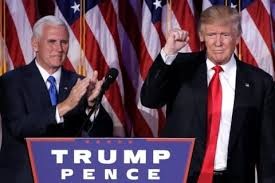
Image result for pence with trump
photo credit: Washington Post

With the churn in the line of succession, not to mention the incompetent chaos of the Trump administration, I admit I've been thinking about Mike Pence recently. Confession: I don't like him and I don't want to see him as president. (Yes, anyone, anyone, would be better than Donald, but in the case of Mike Pence, not by much.) Still, as we approach the halfway point of Donald's term, I think there's a good possibility he doesn't make it to January 20, 2021. What then? Pence accedes to the presidency. What happens next? I believe three things will be true:

1. Former president Donald Trump will be extremely unpopular. He's historically unpopular now but I'm not talking about now. I'm talking about six or nine or twelve months from now when all the bad stuff has come out about what a truly wretched, dishonest, treasonous, criminal degenerate pig Donald Trump really is. Richard Nixon was reviled when he left office and Donald will be too.

2. Many, many Republicans will try to rewrite history and pretend that they never had anything to do with Donald.

3. What newly-elevated President Pence will care most about is keeping his new job. In other words, he'll want to win reelection in 2020 and to do that, he'll need to separate himself from Donald. He may not say, in his first speech, that "Our long national nightmare is over," as Gerald Ford did when he assumed the presidency in 1974, but you know Pence will try very hard to make voters believe that the whole unmitigated disaster of the Trump presidency had nothing to do with him.
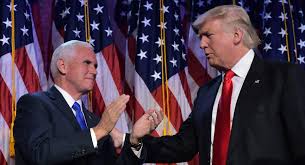
Image result for pence with trump
photo credit: Politico

That's not going to happen. Trust me when I tell you that the Democrats won't let anyone forget that Mike Pence sold his soul to the devil, as the saying goes, so that he would be in position to benefit if/when Donald flamed out. Unlike Gerald Ford, who was Nixon's second vice president, sworn into office in December, 1973, just eight months before Nixon's resignation and untainted by Watergate, Pence has been at Donald's side since the convention in July, 2016. There are many, many pictures of Pence standing sweetly next to Donald, starry-eyed with admiration (and yes, gratitude.) There are dozens of interviews and speeches in which VP Pence proclaims Donald's greatness. If Pence is the Republican nominee in 2020 you can expect to see those pictures and videos everywhere during the campaign.

I know I've wandered into the weeds a bit in this post, but there's one more thing on my mind as I ponder Mike Pence's future. A month after Gerald Ford became president he issued an unconditional pardon of Richard Nixon. He did it partly out of compassion for Nixon and his family, partly because he believed that having to resign the presidency counted as a serious punishment, meaning that Nixon didn't "get off scot-free," and partly so he (Ford) and the country could move on from Watergate.

Would Pence follow Ford's lead and pardon Donald, if he was in a position to do so? Ford's pardon of Nixon was volcanically unpopular and the conventional wisdom is that it played a significant part in Ford's loss to Jimmy Carter in 1976. I think it's accurate to say that Ford didn't anticipate how unpopular the Nixon pardon would be. (In his memoir, Ford wrote that he was surprised at how little compassion American voters felt for Richard Nixon after he resigned. I wonder how much compassion Americans would feel for Donald Trump.) President Ford had no historic precedent to look to for guidance but Pence would have one. Based on Ford's experience, my best guess right now is that even if Pence wanted to pardon Donald, he wouldn't do it before the 2020 election. Too risky.

In our "what if" scenario, Donald's best shot at a pardon would probably be a Pence loss in 2020. Soon-to-be former President Pence could issue the pardon on Inauguration Day, 2021, right before he walks out the door of the White House for the last time, which is when outgoing presidents traditionally issue pardons that are expected to be controversial or unpopular. Would he? Pence, who would be 61 at the time, presumably would be looking forward to enjoying the cushy life of a former president. (He could also, of course, be thinking about running again in 2024.) Would he be willing to risk his popularity, and possibly some of his future income from paid speeches and a memoir, by taking the heat for letting Donald off the hook? There's no way to know right now but I'd say it's not a given.

Enough speculating for now. The next two years are going to be fascinating, if not particularly enjoyable. Two years from today we'll be 10 days away from Inauguration Day. Will it be President Trump, preparing for a second term? President Pence, elected in his own right and starting his first full term? (Because Pence would have served less than half of Donald's term, he would be eligible to run again in 2024.) President Warren? President Inslee? President Biden? I'm going to be watching closely. Election day 2020 is only 662 days away.

Update on January 16: Someone is indulging in a little wishful thinking. Don't get too excited, this really is "fake news":


Naturally the real Washington Post is not happy:

Update #2 on January 21, Martin Luther King Jr. Day. VP Pence compares Donald to Dr. King:

And here's a picture of Mike adoring Donald, accompanying a story at the Washington Post:


photo credit: Alex Brandon/AP

Thursday, November 8, 2018

Another Name On The List

The midterms are over, so start your engines and take a deep breath. 2020 is officially underway. Last time around the first Republican to officially declare himself to be a candidate was Ted Cruz, on March 23, 2015. (There was far less suspense on the Democratic side last time, so I didn't keep much of a list, and Hillary didn't officially announce until June, 2015.) This time, with a Republican incumbent the suspense is on the Democratic side, and with so many potential candidates, I expect the official announcements to start any day now. (Yes, there are already two officially declared candidates on the list below, but they're not really, as the late Charles Krauthammer used to say, viable.)

Before we get any official announcements, however, I'm adding another name to the "Potential" list. Eric Swalwell is a Democratic Congressman from California and until I saw an item at Politico a few minutes ago I had never heard his name. Apparently he's been thinking about running for quite a while:

Democratic Rep. Eric Swalwell plans to run for president in 2020, according to a person close to the California congressman who is familiar with his plans. 

"He's definitely running," the source said. 

This week-end, Swalwell will be the first potential presidential candidate to visit Iowa after the midterms with a trip to meet the Asian & Latino Coalition in Des Moines and Iowa Democratic Party chairs in Dubuque. The travel to Iowa was first reported by NBC News and confirmed by POLITICO. 

The 37-year-old Swalwell has been positioning himself for a run over the past year, with several trips to early primary voting states and endorsements of three young congressional candidates in Iowa and New Hampshire through his Future Forum PAC. He has also asked for lists of potential staffers for the early-state contests. (Read the article here.)

I've added Rep. Swalwell's name to the Potential list, and remember, not every name on this list is "viable" as a future nominee or president, or even seriously interested in running, necessarily. It's just a list of every name I've ever seen mentioned, anywhere, as someone who might run in 2020. I expect that within six months or so, this list will have shrunk considerably and the "I'm not running'' list will have expanded.

Potential Democratic Candidates:
  1. Michael Avenatti (Lawyer, represents Stormy Daniels and others) added Oct. 1
  2. Joe Biden (Former VP)
  3. Michael Bloomberg (Former mayor of New York City)
  4. Peter Buttigieg (Mayor of South Bend, Indiana) added Sept. 8
  5. Cory Booker (New Jersey senator)
  6. Sherrod Brown (Ohio senator)
  7. Jerry Brown (Governor of California)
  8. Steve Bullock (Governor of Montana)
  9. Julian Castro (Former secretary of Housing and Urban Development) 
  10. Mark Cuban (Businessman, owner of the Dallas Mavericks)
  11. Bill de Blasio (Mayor of New York City)
  12. Tulsi Gabbard (Congresswoman from Hawaii) added Sept. 8
  13. Eric Garcetti (Mayor of Los Angeles) 
  14. Kirsten Gillibrand (New York senator)
  15. Luis Gutierrez (Congressman from Illinois)
  16. Kamala Harris (California senator)
  17. John Hickenlooper (Governor of Colorado) 
  18. Eric Holder (Former Attorney General)
  19. Jay Inslee (Governor of Washington)
  20. Tim Kaine (Virginia senator, 2016 VP nominee)
  21. Amy Klobuchar (Minnesota senator)
  22. Mitch Landrieu (Mayor of New Orleans)
  23. Terry McAuliffe (Former governor of Virginia)
  24. Jeff Merkley (Oregon senator)
  25. Seth Moulton (Congressman from Massachusetts) 
  26. Chris Murphy (Connecticut senator)
  27. Martin O'Malley (Former governor of Maryland, ran in 2016 primaries)
  28. Beto O'Rourke (Texas Congressman, running for the U.S. Senate) added Sept. 13
  29. Deval Patrick (Former governor of Massachusetts)
  30. Tim Ryan (Congressman from Ohio) added Sept. 8
  31. Bernie Sanders (Vermont senator, registered Independent, ran in 2016 primaries)
  32. Howard Schultz (Businessman, former CEO of Starbucks)
  33. Tom Steyer (Businessman) added Sept. 8
  34. Eric Swalwell (Congressman from California, added Nov. 8)
  35. Elizabeth Warren (Massachusetts senator)
  36. Mark Zuckerberg (Businessman, founder of Facebook)
Declared Democratic Candidates, in order of their announcement 
John Delaney (July 28, 2017)
Andrew Yang (November 6, 2017) added Sept. 8

I'm Not Running
Oprah Winfrey
Andrew Cuomo
Sheryl Sandberg, added Sept. 8
Jason Kander, added Oct. 17
Robert Iger, added Oct. 22

Days until the presidential election: 725 

Wednesday, November 7, 2018

The Morning After... - Updated

Some optimism from Josh Marshall, at Talking Points Memo:

Let me try to put this whole erratic evening into some perspective. This was definitely not one of those nights when a triumphant party drives everyone before it. The Senate results were brutal. There was a half hour or so mid-evening when it looked as though the whole thing might be a replay of the brutal 2016 result. There were key gubernatorial wins but also some disappointing misses – particularly Florida and Ohio. But I come out of tonight feeling good about the result. Why? The country is in a position where we don’t have the luxury of getting everything we want or getting overly disappointed if we don’t. I can’t tell you how disappointed I am that Gillum went down to defeat. But there was one absolutely critical thing that had to happen tonight: the Democrats had to reclaim a foothold of power in Washington to place a check on President Trump.

They did that. It wasn’t close. The victories had geographical breadth. That is critical.

Update: More from Josh Marshall. I like his smart and nuanced take on things, he says he'll be posting throughout the day, I'll cut-and-paste here as he does.

I’m going to start this morning with an email from TPM Reader JF. It’s a deeply pessimistic look at last night’s results. I thoroughly disagree with it. I’m publishing it partly because I like JF and like sharing a range of reader opinions but more because it’s a good statement of the view I disagree with. So it’s helpful to put out there as a clear, smart statement of the take I disagree with.

I’m going to be sharing my thoughts and argument in different posts over the course of the day. But principally, this was never going to be easy. We shouldn’t expect it to be easy. The disgrace of the Trump presidency is still in many ways a historical accident. But Trumpism is not. It grows out of beliefs and structures that are deeply rooted in our history and rife in our present. Democrats don’t just need to win elections. They need to build an electoral movement and political infrastructure that will change the shape of the electorate over time and rewrite the rules of the political structure itself.
Millions more Americans voted for Hillary Clinton to be President two years ago than Donald Trump. The total vote for the House will likely be an aggregate total as large or larger than any wave election in the last 30 years. And yet they’ll end up with a relatively modest majority. These facts are deeply embedded in geography and constitutional structure. They will very hard to change. But a critical task of Democrats going forward will be to delegitimize an electoral system that consistently produces such results. In a 21st century democracy, the majority should not be routinely denied the greater share of political power. This is not merely something to grouse about for the few weeks after election day. It is a sustained argument, one that must leverage the deepest strains of American democratic ideology. That will lay the predicate for new rule making. That is not unprecedented in American history. It is a recurrent, historic pattern of reform.

We’re still waiting for a lot of results. But Democrats made significant inroads on all the down ticket fronts that are most critical. That’s a big deal. But it’s just the first step.

When I look at last night’s results, tough Senate losses aren’t the big concern for me. It’s embedding what happened in this midterm into structures and institutions, party organizations, civic groups, political entities that can perpetuate these beginnings over time. Our entire experience politically over the last quarter century is that politics is not about ‘one and dones’. It’s what is getting built between cycles and over the course of multiple years. (Click here to read the reader's message.) 

Update #2: Political Scientist Jonathan Bernstein's thoughts about the election:

The polls and projections were basically correct: The Democrats had a very good election night. They’ll gain a House majority for the first time since 2010, and for only the third Congress since 1994, and by a solid margin. They’ll lose some in the Senate, but that’s not because they did badly Tuesday; it’s because Republicans had a large lead, 42 to 23, among the seats that weren’t up this year. That was too much for Democrats to overcome even on a fairly good night.
1 And Democrats will pick up a few governors, a slew of state legislative seats and some state legislative chambers, and some other down-ballot positions.
Yes, Republicans have some bragging rights. They won quite a few gubernatorial races that were considered tossups, including in Florida, Ohio and (probably) Georgia. And as of early Wednesday they were leading in most of the up-for-grabs Senate contests. The latter is a big deal, because not only will they continue to hold the chamber, but they made their job in 2020 a lot easier. They were worried they would do a lot worse, but they clearly didn’t do as well as they expected two years ago. 
So why did the Republicans have a bad night? The basic story is pretty simple: This is what happens to a party when it controls the White House and the president is unpopular. In fact, most of what was resolved on Tuesday was probably a consequence not of the fall campaign, but of Trump's record-shattering bad year in 2017, at least in terms of approval ratings. A large group of Republicans decided to retire last year; that’s when Democrats recruited many of their top potential candidates to run; and that’s when Republicans failed to find good candidates in several states where they might have been competitive.
Trump’s standing recovered a bit in 2018, but as of Tuesday he was the least popular president through 656 days in the polling era. The slight uptick in his approval ratings wasn’t going to be enough to help the party recover from 2017, and it’s possible he cost Republicans a little more. 
And unlike George W. Bush in 2006 or Barack Obama in 2010, when poor policy outcomes (Iraq in Bush’s case, a slow recovery for the economy for Obama) turned people against them, Trump’s failure to date has mainly been strikingly personal. Granted, the two big Republican policy initiatives in Congress, the attempted repeal of Obamacare and the tax cut, didn’t help. But Trump failed to contribute any popular policy ideas -- and certainly wasn’t effective at pushing for any ideas that might have been popular, such as an infrastructure bill. 
The bottom line is that despite a solid economy and without any high-casualty war, Trump spent 2017 at around 38 percent approval, and 2018 at around 42 percent. And he has spent his entire presidency, after a brief honeymoon, solidly over 50 percent disapproval, with a large portion of that strongly disapproving. This shouldn’t come as a surprise. Trump rarely even pretended to be the president of all the people, which was especially foolish for someone who narrowly won in the Electoral College and lost solidly in the popular vote. 
This disdain for those who didn’t vote for him has turned out to be a disastrous strategy. Beyond that, mismanagement of the White House and a parade of scandals, with indictments and guilty pleas and resignations and criminal referrals, meant that there was a steady stream of bad news coming from the administration. Enough, it appears, to overwhelm the good news about the economy. (Read the entire post here.)

Update #3: Barack Obama issued a "morning after" statement:

I congratulate everybody who showed up and participated in our democracy yesterday. Obviously, the Democrats’ success in flipping the House of Representatives, several governorships, and state legislatures will get the most attention. But even more important than what we won is how we won: by competing in places we haven’t been competitive in a long time, and by electing record numbers of women and young veterans of Iraq and Afghanistan, a surge of minority candidates, and a host of outstanding young leaders. The more Americans who vote, the more our elected leaders look like America.

On a personal note, Michelle and I couldn’t be prouder of the alumni of my administration who took the baton and won their races last night. Even the young candidates across the country who fell short have infused new energy and new blood into our democratic process, and America will be better off for it for a long time to come.

I also want to congratulate voters across the country for turning out in record numbers, and for voting for several ballot initiatives that will improve the lives of the American people – like raising the minimum wage, expanding Medicaid, and strengthening voting rights.

Our work goes on. The change we need won’t come from one election alone – but it is a start. Last night, voters across the country started it. And I’m hopeful that going forward, we’ll begin a return to the values we expect in our public life – honesty, decency, compromise, and standing up for one another as Americans, not separated by our differences, but bound together by one common creed.
Days until the 2020 election: 727