Showing posts with label Trump resignation. Show all posts

Friday, August 14, 2020

A Pardon For Donald?

I'm just going to start posting these when I see them:


Interestingly, Reich tweeted the exact same message on August 5:


Friday, July 17, 2020

Immensely Powerful, Bizarrely Irrational, Increasingly Desperate

From Eugene Robinson, writing at the Washington Post:

This is the awful reality of our situation: For the next six months — at least — we are trapped on a badly leaking ship captained by an utter fool.

If he cared a whit about the well-being of the nation he is supposed to lead, President Trump would resign immediately. He would slink back to his gaudy apartment in Trump Tower, where he could look down at the new Black Lives Matter street painting on Fifth Avenue. Or he would flee to his Florida estate, Mar-a-Lago, where his rounds of golf might be disturbed by the sirens of ambulances rushing covid-19 victims to overburdened emergency rooms.

But it is absurd to imagine that Trump cares about anyone or anything but himself. He will not go voluntarily. So on Election Day, he must be made to suffer a humiliating defeat, and on Inauguration Day, he must be firmly escorted — bodily, if necessary — out of the White House.

This election is not about politics, ideology or even red vs. blue tribal identity. At this point, it’s about our collective survival.

I believe that Joe Biden will be a good president if he is elected, and that circumstances will present him with the opportunity to be a truly great president, if he’s able. But any functioning adult would be an improvement over Trump, because he is not in fact a functioning adult. As his niece, Mary L. Trump, explains at length in her new book, he is more like a damaged child.

His callousness and refusal to admit error led us to where we are now with covid-19 — beset by worsening, out-of-control spread of the virus at a time when other industrialized countries are cautiously returning to normal. There is nothing we can do about his past mistakes. But look at what the president is doing now — pushing hard for a nationwide reopening of schools with in-person classroom instruction, just like before the pandemic. If viruses had imaginations, that would be covid-19’s fondest dream.

Trump’s hostility toward a national reckoning with structural racism is no surprise — not to those who recall his crusade for the death penalty ​after the arrests of the Central Park Five, who were ultimately exonerated; ​or his exploitation of the racist “birther” conspiracy theory about former president Barack Obama, which vaulted Trump to political prominence. But look at how he is heightening racial tensions, rather than soothing them, by going out of his way to champion Confederate memorials and the Confederate battle flag, and by turning “law and order” into code words for white nationalism. Even George Wallace, when he ran for president, was more circumspect.​

If Trump had done all of this out of calculation, reasoning that it gave him the best chance of winning reelection, he would immediately change course. An NBC News/Wall Street Journal national poll of registered voters released Wednesday showed him trailing Biden by 11 points, with 50 percent of respondents saying that under no circumstances would they even consider voting for Trump. A Quinnipiac poll released the same day showed Trump down by a whopping 15 points.

Listening to the hour-long screed Trump delivered in the Rose Garden on Tuesday, I didn’t hear a canny politician trying to calibrate his positioning. I heard an angry, frustrated man who might actually believe the lies he tells to excuse his failures. Witness what he said about the fact that the United States is seeing tens of thousands of new cases of covid-19 every day, while European countries now see just hundreds or even dozens: 

"But if we did — think of this, if we didn’t do testing — instead of testing over 40 million people, if we did half the testing, we’d have half the cases. If we did another — you cut that in half, we’d have yet again half of that. . . . They talk about cases, and the cases are created because of the fact that we do tremendous testing.”

Can a grown man able to dress himself in the morning really not understand that all those covid-19 cases would still exist, and people would still be suffering and dying, if we were performing no tests at all? Does he sincerely believe a tree that falls in the forest makes no sound if a Fox News camera crew isn’t there to record it?

Trump is immensely powerful, bizarrely irrational and increasingly desperate. Perilous months lie ahead, and I fear that things are likely to get much worse before they get better.

Thursday, July 9, 2020

Would Donald Quit, Continued - Updated

Just going to post this:


This may be a one-off or there may be a growing chorus discussing the possibility of Donald declining to run for re-election. I'll add to this post as I see more.

Update. Another tweet about Donald not running:


I wrote about the possibility of a Pence pardon for Donald back in January, 2019. I said then I don't think it's a given and I still don't:

I know I've wandered into the weeds a bit in this post, but there's one more thing on my mind as I ponder Mike Pence's future. A month after Gerald Ford became president he issued an unconditional pardon of Richard Nixon. He did it partly out of compassion for Nixon and his family, partly because he believed that having to resign the presidency counted as a serious punishment, meaning that Nixon didn't "get off scot-free," and partly so he (Ford) and the country could move on from Watergate.

Would Pence follow Ford's lead and pardon Donald, if he was in a position to do so? Ford's pardon of Nixon was volcanically unpopular and the conventional wisdom is that it played a significant part in Ford's loss to Jimmy Carter in 1976. I think it's accurate to say that Ford didn't anticipate how unpopular the Nixon pardon would be. (In his memoir, Ford wrote that he was surprised at how little compassion American voters felt for Richard Nixon after he resigned. I wonder how much compassion Americans would feel for Donald Trump.) President Ford had no historic precedent to look to for guidance but Pence would have one. Based on Ford's experience, my best guess right now is that even if Pence wanted to pardon Donald, he wouldn't do it before the 2020 election. Too risky.

In our "what if" scenario, Donald's best shot at a pardon would probably be a Pence loss in 2020. Soon-to-be former President Pence could issue the pardon on Inauguration Day, 2021, right before he walks out the door of the White House for the last time, which is when outgoing presidents traditionally issue pardons that are expected to be controversial or unpopular. Would he? Pence, who would be 61 at the time, presumably would be looking forward to enjoying the cushy life of a former president. (He could also, of course, be thinking about running again in 2024.) Would he be willing to risk his popularity, and possibly some of his future income from paid speeches and a memoir, by taking the heat for letting Donald off the hook? There's no way to know right now but I'd say it's not a given.
(Read the entire post here.)

What about the opposite switch? Trump stays in place to run for reelection but he dumps Mike Pence and picks another running mate? Former Democratic strategist Ed Kilgore, writing at NYMag.com, thinks it's a possibility:

First, Trump is in very serious danger of not being reelected. He needs a game changer to reset the race, and a fresh veep is a time-honored way to do that, even if it involves (to quote the words said to John McCain in 2008 about choosing Sarah Palin) "high risk [and potentially] high reward." Indeed, if, like Trump, you have no real second-term agenda to tout and no capacity to "pivot to the center" and pursue swing voters via messaging or policies, it's one of the few cards in the deck.

... Second, Trump could perhaps try to blame Pence for his administration's deadliest and most politically damaging error, its mishandling of COVID-19 from the get-go. The veep is, after all, the head of the White House Task Force, even though he has consistently given up the spotlight to Trump and to public-health advisers like Anthony Fauci and Deborah Birx. In an administration with constant personnel changes and little sense of reciprocal loyalty, it wouldn't be that out of the ordinary for the sycophant-in-chief to be asked to step aside as one last act of service to the warrior-king, taking the fall for a public-health disaster. (Read the entire article here.) 

I wrote about the possibility of Donald dumping Pence here, here and here.

Update #2. I was listening to the Campaign HQ podcast, which is hosted by David Plouffe and he also mentioned the possibility that Donald dumps Pence, saying that [Trump] is going to "look to change the channel" and a VP switch might be a way to do that. The episode was recorded yesterday.

Update #3 on July 17. I'm not watching Morning Joe this morning but apparently Mika and Donny are still considering the possibility that Donald will drop out of the race:


Read my first Would Donald Quit? post here.

Update #4 on July 25. Yesterday Nikki Haley sent out a slobberingly sycophantic tweet; apparently she's still dreaming of replacing Mike Pence on the ticket:


Tuesday, July 7, 2020

Is Donald Trying To Lose?

In a column titled "Trump Is Acting As If He Wants To Lose," Jonathan Bernstein ponders Donald's strange choices:

President Donald Trump began a week in which the coronavirus pandemic continues to spread, with devastating consequences for public health and for the economy, by bashing Nascar for banning Confederate symbols and Black Nascar driver Bubba Wallace for not apologizing for … well, it wasn’t exactly clear what he thought Wallace should apologize for. At any rate, it put Trump squarely on the other side of the issue from Nascar, and from (for example) most White state legislators in Mississippi, who recently voted to remove Confederate symbolism from their state flag.

My immediate reaction over on Twitter was to question whether Trump would be behaving any differently if he had given up on winning re-election and was instead trying to cultivate a fanatical group of loyal customers for future business endeavors. I then saw that smart political scientists in the Eastern time zone had beaten me to it:


I should emphasize: In politics, we should always be wary of questioning motives. The nature of political action is that what people say and do is what counts, not what they really think.

And in this case, we should be particularly hesitant. It's tempting to leap to the conclusion that when things go badly for a president, it must reflect his or her deficits and shortcomings rather than economic or political realities. Thus when George H.W. Bush fell behind Bill Clinton in the 1992 campaign, pundits were quick to find what they interpreted as signs that Bush didn’t really want a second term after all — he looked at his watch during a debate! — rather than accepting that Bush surely wanted to win but was basically doomed by a recession.

But when presidents act in ways that can’t be easily understood by analyzing the normal incentives of the job, it’s reasonable to ask what else might be going on. Trump has repeatedly taken fringe positions recently, whether by denouncing Black Lives Matter or scorning masks or deriding a cautious approach to easing pandemic restrictions. Or, for that matter, by ignoring or dismissing reports that Russia offered bounties for killing American troops in Afghanistan. Why would he do that?

I’ve questioned for some time now whether Trump desperately craves re-election, and I think that’s the best framework here. It’s not that Trump doesn’t want to win. It’s that he’s not willing, as normal presidents are, to do whatever it takes. In particular, he doesn’t appear willing to do his job.

That’s the story of the pandemic, where Trump’s refusal since mid-April to do anything at all has been close to inexplicable. In fact, it’s so contrary to normal presidential behavior that the White House plan at this point is just to “hope Americans will grow numb to the escalating death toll and learn to accept tens of thousands of new cases a day,” the Washington Post reported on Monday. Presumably the campaign wishes it had more to work with — as Washington Post columnist Greg Sargent says, it’s a point that certainly makes the president look awful — but that's all that Trump is giving them. And it’s the story on Nascar, too. Trump simply isn’t willing to listen to advisers who want him to stick to poll-tested campaign themes.

Why? Trump’s whole life has taught him that he’s always right no matter how wrong he seems to be. He had plenty of setbacks in his business career, but if he was inclined to learn from them, that temptation was surely erased when he ran for president, was ridiculed by everyone for months, and won anyway. All politicians are at risk of overlearning the supposed lessons of their elections and to think of themselves as underdogs whom the experts wrote off. Trump has better reason than perhaps any other politician ever to make that mistake.

Beyond that is a question of ambition. It’s not really about how much ambition a politician has; it’s about what that ambition is about — the content of a politician’s ambition. Trump is unusual in that he seems focused more on private interest than public ambition. In this sense, choosing not to read briefing materials and to spend hours and hours watching cable TV news is similar to Trump’s decisions against divesting from his businesses or disclosing his tax returns. For Trump, the presidency is a prize he’s won that validates his decision to do whatever he wants, not a job that has obligations.

And that differs radically from previous presidents. Whether it was to change policy in order to improve the nation, or to serve the public, or to be personally powerful, normal presidents really wanted the job. Not just the election victory and the title. And most of those presidents worked hard and sacrificed for years in order to get it. They were under no illusion about the presidency being a position that entitles its occupant to do whatever he or she wants because they had to make so many compromises and commitments to get there — and because, as politicians, they worked with previous presidents and watched them carefully as they were frustrated by the limits of the job. Trump has never given any indication that he’s like that. And right now, it’s costing him — and the nation.

Thursday, July 2, 2020

Letting Trump Be Trump

In an article titled "Why June Was Such A Terrible Month For Trump," the New York Times ponders the state of Donald's re-election campaign. This is the article in its entirety:

Last Saturday night, over dinner at the White House, Bernard Marcus, a top Republican donor, told President Trump he was alarmed at Mr. Trump’s plummeting poll numbers and Jared Kushner’s stewardship of his father-in-law’s re-election effort.

Mr. Trump sought to assuage Mr. Marcus’s concerns, assuring the billionaire Home Depot founder that his political fortunes would soon change in part because he was bringing in “good people” to steady his campaign, according to a person briefed on their conversation.

The next morning, before setting off for a round of golf, the president tweeted a video from a Florida retirement community that featured a Trump supporter yelling, “white power,” setting Mr. Trump’s aides on a scramble to reach him on the course and have him delete the message.

As Mr. Trump heads to Mount Rushmore on Friday to spend the Independence Day holiday in the carved presence of presidential greatness, he is suffering through the most trying stretch of his administration thanks in large part to his self-inflicted wounds. June represented the political nadir of his three and a half years in the Oval Office, when a race in which he had been steadily trailing, but faring respectably, broke open and left him facing the possibility of not just defeat but humiliation this fall.

The disconnect between the surge in coronavirus cases and Mr. Trump’s dismissive stance toward the pandemic has been particularly pronounced, mystifying Democrats and Republicans alike; this week, as some states halted their reopening because of a record-setting number of new cases, the president predicted the virus would “just disappear.”

In addition to public surveys showing him losing decisively to Joseph R. Biden Jr. in a number of battleground states, private Republican polls in recent weeks show the president struggling even in conservative states, leading Mr. Biden by less than five points in Montana and trailing him in Georgia and even Kansas, according to G.O.P. officials who have seen the data.

Last month’s convergence of crises, and the president’s missteps in responding to them, have been well-chronicled: his inflammatory response to racial justice protesters and his ill-considered rally in Tulsa, his refusal to acknowledge the resurgent virus or seriously address detailed reports about Russian operatives’ putting a cash bounty on American soldiers. It’s this kind of behavior, polls indicate, that has alienated swaths of swing voters.

“People are making judgments about the president’s performance there and how he’s handling it,” said John Thune of South Dakota, the second-ranking Senate Republican, making no attempt to sugarcoat what he acknowledged has become a referendum on Mr. Trump’s performance. “Sometimes you get dealt a hand and you got to play it.”

Yet as demoralizing as June was for many Republicans, what was less visible were the frenetic, and often fruitless, attempts by top Republicans to soothe the president and steer him away from self-sabotage, while also manipulating him to serve their own purposes.

One Republican official who is in frequent contact with the campaign expressed incredulity at how some aides willfully distort the electoral landscape to mollify Mr. Trump, recalling one conversation in which they assured him he was faring well in Maine, a state where private polling shows he’s losing.

Interviews with almost four dozen Republican lawmakers, strategists and administration officials about Mr. Trump’s re-election bid paint a picture of a White House and a re-election effort adrift, at once paralyzed by Mr. Trump’s erratic behavior yet also dependent on him to execute his own Houdini-like political escape. Most of those interviewed requested anonymity to freely discuss internal deliberations, and to avoid retribution from the president.

Mr. Trump continues to hope for an economic recovery he can run on in the final four months of the campaign, and on Thursday he trumpeted as a sign of progress the employment report showing 4.8 million jobs gained in June. But it is not clear that Mr. Trump will get much credit for a partial — and possibly fleeting — rebound when coronavirus cases are soaring.

Some of Mr. Trump’s advisers say their internal polling is more competitive than myriad public surveys showing the president in a deep hole. The debates, which could reorient the race, still loom, and even as Mr. Biden catches up, the president still enjoys substantial fund-raising and organizational advantages.


On Thursday morning, top White House and campaign aides met to lay out a schedule for Mr. Trump through July, one that allows for politicking but, in a nod to Tulsa, at a far smaller scale than his signature rallies.

People close to the White House said that Mr. Trump remains stubbornly determined to feed the appetites of his hard-right base and deliver a message about what he describes as his great achievements in office. He’s also eager to recreate his tiny 2016 team.

Indeed, his well-financed political apparatus is more than ever a family affair, controlled by a small handful of Trump relatives and retainers who are exceedingly indulgent of the candidate — and often at war with one another.

In an interview, Mr. Kushner, whose influence in the administration is exceeded only by Mr. Trump, said his strategy amounted to letting the president dictate his own re-election.

“He’s really the campaign manager at the end of the day,” Mr. Kushner said, adding: “Our job is to present him with data, give him ideas, help him structure. And then when he makes decisions on where he wants to go, the campaign was designed to be like a custom suit for him.”

Letting Trump be Trump will delight some of his most committed supporters, but it is likely to dishearten Republicans who are already nervous about losing the Senate and yielding further ground in the House.

Some of the president’s closest outside allies are attempting to devise more of a strategic plan for his re-election.

Chris Christie, the former New Jersey governor, sent the president a memo last week that White House officials described as a blunt warning that he will lose if he does not stop running the 2016 campaign all over again and urging him to develop a clear vision for the next four years.

Senator Lindsey Graham of South Carolina, who joined Mr. Trump for his golf outing Sunday, is urging him to run as more of a populist on issues like stimulus spending, infrastructure and prescription drugs to combat the virus-driven recession.

A handful of Mr. Trump’s allies are more focused on the staff than the candidate. They are agitating for him to overhaul his operation and effectively demote the campaign manager, Brad Parscale; that’s a move Mr. Kushner has been encouraging in the wake of the Tulsa debacle, for which he has blamed Mr. Parscale, according to people familiar with his thinking.

But some of the president’s closest advisers believe that is unlikely to happen, in part because Mr. Trump is loath to take advice from new strategists anyway.

Mr. Kushner and Mr. Parscale appear increasingly at odds. Mr. Kushner has sent mixed signals about his view of the campaign manager: In a meeting with Republican officials this week, Mr. Kushner repeatedly shushed Mr. Parscale and told him to “shut up,” according to multiple people familiar with the events, but at other times he has urged friends of the president to tell Mr. Trump they think Mr. Parscale is doing a good job.

To some of Mr. Trump’s allies, including some in the conservative news media, the outsized role Mr. Kushner himself plays is part of the problem. And Mr. Trump, for his part, has been dismissive of Mr. Kushner in discussions with advisers in recent weeks, on matters including criminal justice reform, and has indicated that he wants to follow his own impulses, not his son-in-law’s, on how to campaign.

It’s those impulses that members of Mr. Trump’s inner circle spend much of their time on, seeking to quell his agitation over his sagging electoral prospects. Last week, for example, a handful of his White House advisers, but not Mr. Parscale, gathered in the Map Room to lift Mr. Trump’s spirits by showing him new campaign advertising.

Equally revealing — at a moment when Mr. Trump is bleeding support from independents and some moderate Republicans — is how often his advisers pacify him by highlighting his standing with voters he largely has in hand: those who participate in party primaries.

His campaign frequently trumpets the president’s record of success in influencing nominating contests, and in private, campaign officials wield his endorsement as a barely veiled threat.

In an email last month that was shared with Senate Republican chiefs of staff, Mr. Trump’s White House political director, Brian Jack, reminded the head of the Senate Republican campaign arm about the president’s then-unblemished record of endorsements.

“After last night’s election results,” Mr. Jack wrote in the message, obtained by The New York Times, “candidates endorsed by President Trump are now 64-0 in Congressional special and primary elections since the midterms.”

Such boasting, though, only drew more attention to an otherwise obscure House runoff last month for the North Carolina seat previously held by Mark Meadows, Mr. Trump’s chief of staff. Mr. Meadows’s wife nudged Mr. Trump to endorse a candidate who wound up getting trounced, leaving the president unhappy with Mr. Meadows.

There have been strides, if tardy ones, toward a more functional political structure. A key Florida-based operative who was dismissed because the governor of Florida wanted her fired was suddenly brought back this week.

And after he endorsed Kris Kobach, the firebrand Republican, in the 2018 Kansas governor’s race only to see him lose the general election in a deeply red state, Mr. Trump has played a hands-on role in attempting to deny Mr. Kobach the nomination for a Senate seat.

Last month, the president called David McIntosh, the head of the conservative Club for Growth, and persuaded him to have the group take down its ads attacking a rival to Mr. Kobach, Representative Roger Marshall, who is favored by many establishment-aligned Republicans. Still, Mr. Trump has not gone as far as endorsing Mr. Marshall, telling allies he did not want to anger his own voters by openly spurning Mr. Kobach.

Yet the campaign and the White House are still rife with fiefs.

Kimberly Guilfoyle, the former television personality who’s dating Mr. Trump’s eldest son, controls an expanding fund-raising division that is paying at least one donor, the socialite Somers Farkas, to help raise money.

At the same time, the campaign has quietly unwound a team dedicated to coordinating Vice President Mike Pence’s activities, shedding a group of staff members assigned to him.

Mr. Trump is sometimes unaware of moves made in his name, even though Mr. Kushner has made it part of his role to ensure that people don’t take advantage of him. At times, his newness to national politics haunts him as other Republicans seek to have him promote their agendas.

House Minority Leader Kevin McCarthy, for example, had lobbied the president to endorse Tony Gonzales for an open South Texas seat over a more hard-line candidate they feared would have little chance in the general election.

But Mr. Trump grew uneasy after a call from Senator Ted Cruz of Texas, who urged him not to take sides against Raul Reyes, a build-the-wall border hawk. Mr. Cruz endorsed Mr. Reyes on Tuesday, and it is now unclear what the president will do.

What mystifies many Republicans about Mr. Trump is why he is so unwilling to take easy steps that could help remedy his political difficulties.

The most visible example is Mr. Trump’s refusal to promote mask-wearing to fight the virus, which poses perhaps the most dire threat to his re-election. Several advisers have privately urged him to do so, to little avail.

“What I find hard to understand is that in order for the president to get re-elected, he’s going to want to see a really strong economy,” Senator Mitt Romney said, adding that a recovery can’t happen without slowing the spread of the virus, which includes wearing masks. “So I would think the president would be on the air hammering his base to get the economy back and win the election.”

Mr. Romney’s lament illustrates the limits on the ability of Mr. Trump’s staff to influence him.

The president has resisted appeals from some advisers to start an onslaught of television advertising against Mr. Biden. Several people in touch with Mr. Trump and his campaign said the president strongly preferred seeing positive ads about his own accomplishments to negative ones about Mr. Biden. And he has told people he believes the race won’t be decided until October, as it was last time.

Mike Shields, a G.O.P. strategist involved in outside-spending efforts to support Mr. Trump, said Republicans had to seize the opportunity to sully Mr. Biden in a new way. He said efforts to brand Mr. Biden as nearly senile were not working.

“He should not be portrayed as doddering; he should be portrayed as what he is: someone who will drown our vulnerable economy and gladly sign Nancy Pelosi’s radical left legislation into law,” Mr. Shields said, adding of Mr. Biden, “General election voters simply don’t know this yet, so the sooner the better.”

Such a plan of attack would, however, require a disciplined president. Asked if his advisers could separate Mr. Trump from his Twitter feed as they did for a stretch in 2016, a senior administration official laughed and said Mr. Trump would do what he wanted.

Or, as Senator Rick Scott of Florida put it: “He is who he is. People know who he is. You think he’s going to change?”


This is how co-author Jonathan Martin publicized the article on Twitter:  


... and note that he's not talking about Donald resigning his job. He means that the staff is resigned to having a really bad candidate. 


Carl Rove weighs in: 


Raise your hand if you think Donald can all-of-a-sudden demonstrate competence and discipline.

Sunday, June 28, 2020

Would Donald Quit? - Updated

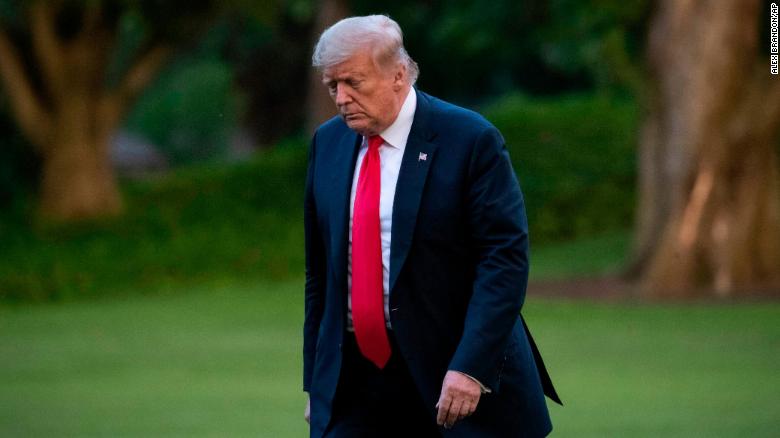
President Donald Trump walks on the South Lawn after arriving on Marine One at the White House, Thursday, June 25, 2020, in Washington. Trump is returning from Wisconsin. (AP Photo/Alex Brandon)
photo credit: AP Photo/Alex Brandon


It's hard for me to imagine that Donald would walk away, but I decided to post this just in case. As I've said here before, he sure doesn't look like he's having much fun as president. Maybe he will declare victory and leave the field. Stay tuned.  

Update. The Lincoln Project weighs in: 


Update #2 on Tuesday afternoon. Apparently Joe Scarborough thinks Donald might drop out. The question was asked during Eugene Robinson's Live Chat today: 


Hi Eugene! I watched Morning Joe this morning and Joe thinks that maybe President Trump will drop out in August. Politically, what would that mean for the race? I want Mike Pence to suffer political consequences for following Trump lock step--but would VP Biden have a harder time with VP Pence? Do you think Trump would go after Mike Pence because he couldn't stand to see his VP win? I know it's speculation, but would love to know what you think!

A: Eugene Robinson

I don't think Trump is going to drop out. If he did, and Pence ended up being the GOP nominee, I think Pence would lose -- I don't see him taking votes from Biden and I don't see him firing up the Trump base. I think the Republican Party would get massacred and basically have to start from scratch.

I'll see if I can find a clip of Joe Scarborough's remarks.

I haven't found video of Joe this morning, but I did see another tweet and this one uses the term "resign" rather than "drop out:"


Days until the election: 126

Update #3. I found the Joe S. video, which is from Friday morning:


Update #5 on Sunday, July 5. Donny Deutsch and Joe are still talking about the possibility that Donald would walk away. This is from Friday, July 3:

Donny Deutsch: "I want to go back something you teed up last week, that I've been thinking about all week, I would not be shocked if at some point he drops the mic. This thing is away from him, it's not turning around. and this is a guy that I can not see standing up and owning the biggest landslide defeat in U.S. history. ... I don't see this guy going the distance."

Joe S: "I've been talking to people who are actually close to him who have speculated for some time that rather than lose a huge election, a huge landslide loss, that he would walk away. Sort of do what LBJ did. ... He does not want to get beaten, with Biden getting 350, close to 400 electoral votes. You look at the polls, I don't know if people close to him are lying to him, but he's behind in Georgia, Texas is tied, even, I read that even some GOP pollsters are talking about the problems, he's struggling in Kansas. This is shaping up to be a historic landslide so I don't understand why he would hang on, especially because the coronavirus just keeps getting worse."

I wonder if somewhere, very quietly and very discreetly, officials from the RNC are developing a plan for what they would do if Donald drops out of the race.

Update #6 on Monday, July 6. An interesting thought from Jonathan Bernstein:


Thursday, March 19, 2020

Randomly - Updated


Prince Albert of Monaco is the first Head of State to test positive for the disease:


Read more here. 


I'll update this post with anything that catches my eye. 


The President of the United States:


Update on Friday morning, from The Mooch: 


Update #2: Shelter-in-Place goes into effect in Illinois tomorrow; after the 
governor spoke, Emily Landon, the chief infectious disease epidemiologist 
at the University of Chicago Medicine said this:

As daily life undergoes rapid changes in response to the coronavirus outbreak and the death and infection total climb, a Chicago epidemiologist is drawing praise for her comments at a Friday news conference that outlined with clarity and urgency how seemingly small sacrifices today will prevent deaths of loved ones and strangers next week.

Emily Landon, the chief infectious disease epidemiologist at the University of Chicago Medicine, took the lectern following Illinois Gov. J.B. Pritzker (D) who on Friday afternoon announced the state would undergo a shelter-in-place order for two and a half weeks starting Saturday evening.

“The healthy and optimistic among us will doom the vulnerable,” Landon said. She acknowledged that the restrictions like a shelter in place may end up feeling “extreme” and “anticlimactic” — and that’s the point. 


“It’s really hard to feel like you’re saving the world when you’re watching Netflix from your couch. But if we do this right, nothing happens,” Landon said. “A successful shelter in place means you’re going to feel like it was all for nothing, and you’d be right: Because nothing means that nothing happened to your family. And that’s what we’re going for here.” (From the Washington Post, read more here.)

Wouldn't it be great if we had a president who could communicate like this?

Update #3 on March 25: Prince Charles, age 71, has now been diagnosed with the coronavirus. Read more here.


And another sharp ad:


Update #4 on Thursday March 26. Donald's campaign really doesn't like 
this one. In response to the Cease and Desist letter, Priorities USA has 
purchased additional airtime for the ad:


Note that as of today, March 26, there are over 81,000 cases of Covid 19 in
the U.S., more than any other country in the world.

Tuesday, December 17, 2019

How Did We Get Here?

CNN media reporter Brian Stelter has some interesting thoughts about how right-wing media led Donald to impeachment:


This is what his newsletter says:

The right-wing roots of impeachment

How did we get here? How did Trump wind up on the verge of impeachment? Well, his sources of information led him astray. He was misinformed by the shows and sites he was watching and reading.

To be clear: His choices, what Trump did with the information — the withholding of aid money, the alleged shakedown of the Ukrainian president, the claims that it was a "perfect" phone call — that's all his own doing. Trump is responsible for what he did. But what he was hearing from right-wing media was crucial. The conspiratorial bent of his favorite talk shows was critical.

--> Re: Ukraine and 2016: Sean Hannity and other Trump backers took tiny bits of true information from a January 2017 Politico story titled "Ukrainian efforts to sabotage Trump backfire" and blew it way, way out of proportion, to the point that some viewers thought Ukraine, not Russia, interfered in the 2016 election. Hannity leaned on the Politico story for months and months — in fact, he's still talking about it, as of Sunday -- so it's no wonder why Trump harbored a grudge against Ukraine.

--> Re: the Bidens and Burisma: Enter John Solomon, the right-wing columnist for The Hill who worked closely with Rudy Giuliani to light the fuse of the Ukraine scandal. Trump was watching when Solomon went on Hannity in March and described a Ukrainian effort to "try to influence the United States election in favor of Hillary Clinton." We know he was watching because he tweeted about the segment. Solomon rolled out an anti-Biden conspiracy theory... the feedback loop kept looping... and it ultimately ensnared Trump.

--> Re: the aid money for Ukraine, according to WaPo, Trump saw an article from the right-leaning Washington Examiner titled "Pentagon to send $250M in weapons to Ukraine" and started to ask Q's about the $$.

Here's the thing: The pro-Trump media bubble did not actually help Trump. To the contrary, it led him to the brink of impeachment...

Ari Melber's point


MSNBC's Ari Melber made a similar point about the power of right-wing media last week. The web headline: "Trump could be impeached partly for admissions on Fox News."

"Democrats think they can prove key, damning parts of this plot based partly on these scheming and intimidating statements in public, specifically broadcast live on Fox," Melber said, "which looks especially bad because it was occurring before this whistleblower came forward."

"The impeachment probe is finding evidence that Trump's Ukraine plot was fundamentally about propaganda," he added. "The goal was pushing Ukraine to damage the Bidens in public, not about actually investigating foreign corruption. It was about getting talk of Biden and corruption on American television -- in a loop from Fox News, back to Ukraine, back to CNN -- an entire political conversation that was designed to tarnish the Biden brand."


Read Stelter's newsletter here.

Wednesday, November 20, 2019

Would Trump Resign?

The conventional wisdom among the wise men and pundits I follow has been that Donald would never resign the presidency. Due to his temperament, his ego, his narcissism, his neediness, or all of the above, I've heard many observers say that a Trump resignation would never, never, happen.

Now, consider the following, and note that the first tweet was sent out Sunday and the response was posted Monday. In other words, before today's explosive testimony at the Impeachment Hearing:


Who's Barbara Res? This is from an article at the Huffington Post, dated October 7: 

A former executive in the Trump Organization said President Donald Trump really doesn’t want to be impeached ― and that he may not let the process go much further as a result.

Barbara Res, who was vice president in charge of construction at Trump’s company, predicted that he will look for a way out first.

“My gut tells me he’ll leave office, he’ll resign or make some kind of a deal, even, depending on what comes out,” she said on CNN on Sunday.

Trump would leave office to save face, Res said, even if he’s unlikely to be found guilty by the Senate during an impeachment proceeding.

“I don’t think he wants to be impeached,” Res said. “I think that’s what this panic is about.”

She went into more detail on Twitter, predicting that Trump would warn of the “deep state,” spread conspiracy theories about the Democrats and claim he’s quitting to save the Republican Party.

Res said he may quit even before the House votes to impeach him.

“Trump is toast,” she wrote in one tweet.
  (This is the article in its entirety. Click here to see video.)

That's interesting but it was still just one person's opinion, although Ms. Res knows Donald better than almost everyone else. Then today, I saw this. *Ken Starr* thinks we may see a Barry Goldwater moment aimed at getting Donald out of the White House: 


Would Donald resign? I'd say it's not out of the question. 

Wednesday, October 23, 2019

Would-Be Presidents Are All Around

Writing at The Atlantic, Sarah Longwell, executive director of Republicans for the Rule of Law and publisher of The Bulwark, says that Mitt Romney is "laying the groundwork for an eventual challenge to Trump." At first, I thought she was talking about the same thing I've been saying here in the blog: that Romney is positioning himself to slide into the presidency (or at least, into the 2020 Republican nomination) if Donald flames out. In fact, Longwell doesn't actually say that directly, but the implication is there.

On the surface she's just encouraging Romney to provide political cover for his Republican colleagues to vote Donald out of office, but let's assume that happens. What happens next? Mike Pence gets the immediate promotion, of course, but if the Republicans want a "fresh start" after the disaster of the Trump era, and I believe they will, they probably won't want Donald's charisma-challenged VP as their standard-bearer for 2020. Who would they want? There are many, many Republicans out there who see a president in the mirror every morning, from Donald's opponents in 2016:

Ted Cruz
Rand Paul
Marco Rubio
Dr. Ben Carson
Carly Fiorina
Mike Huckabee
Rick Santorum
George Pataki
Lindsey Graham
Rick Perry
Jeb Bush
Bobby Jindal
Chris Christie
Scott Walker
John Kasich
Jim Gilmore

... to the declared 2020 candidates, Joe Walsh, Bill Weld and Mark Sanford, to the names in an October 11 Washington Post article titled "So if Trump gets removed, who's the GOP nominee?" including Pence, Romney and Walsh, plus Nikki Haley, Tom Cotton, Josh Hawley, Jeff Flake, Ben Sasse, John Kasich and Mike Pompeo. (Read that article here.)

Would Mitt Romney really be the best post-Trump Republican candidate? On one hand, he's the most recent Republican nominee before Donald and the only one of all these names who has been a general election candidate at the presidential level. On the other hand, Mitt lost that race and the things that were problematic for him in 2012 haven't just gone away, as he learned when he pondered running in 2016. Still, if Mitt is seen as the brave and principled warrior who saved the country from Donald Trump, he may also be seen as the last best hope for Republicans in 2020.

For a different perspective about Romney, click here to read another article at The Atlantic, titled The Liberation of Mitt Romney, dated October 20 and written by McKay Coppins. It includes a statement from Mitt that he's not planning to run again, but I would take that as pro forma and not binding.

As I'm thinking about all this, a song from the musical Evita is running through my head. It comes at the end of Act One. Juan Peron is out of power in Argentina, contemplating the wrath of his political opponents. His ambitious wife Evita encourages him to stay the course:

It doesn't matter what those morons say
Our nation's leaders are a feeble crew
There's only twenty of them anyway
What is twenty next to millions who
Are looking to you? 

All you have to do is sit and wait
Keeping out of everybody's way
We'll ... you'll be handed power on a plate
When the ones who matter have their say
And with chaos installed
You can reluctantly agree to be called

Watch it here:


Would Pierre Delecto, oops, I mean Mitt Romney, "reluctantly" agree to be called? I'd bet Rafalca on it.

In the meantime, this is Longwell's article in its entirety:

Donald Trump has never feared another elected Republican. Over the course of five years, he has bullied and insulted, mocked and complained about nearly every GOP officeholder past and present, including George W. Bush and Marco Rubio, Ted Cruz and Jeff Flake. He knew that the Republicans who dared to stand up to him couldn’t hurt him (Bob Corker), and that the Republicans who could have hurt him wouldn’t dare stand up to him (Paul Ryan).

All of which has led Trump to believe that there is no possible danger of the Republican Party being pried from his grasp. But Trump may at last need to rethink that calculus.

Mitt Romney’s attempt to excise Trump from his party started early. In March 2016, he became the only former Republican presidential nominee to take a public position against Trump’s candidacy. This act of resistance didn’t work, however, because while Romney had moral authority, he had no real power.

That situation changed this year, when Romney again became an elected official. On January 1, 2019, the newly minted Senator Romney announced his arrival in Washington with an op-ed in The Washington Post titled, “The President Shapes the Public Character of the Nation. Trump’s Character Falls Short.”

After having softened his criticism of the president and even tacitly accepting his endorsement during his Senate campaign in Utah, Romney wrote:

To a great degree, a presidency shapes the public character of the nation. A president should unite us and inspire us to follow “our better angels.” A president should demonstrate the essential qualities of honesty and integrity, and elevate the national discourse with comity and mutual respect. As a nation, we have been blessed with presidents who have called on the greatness of the American spirit. With the nation so divided, resentful and angry, presidential leadership in qualities of character is indispensable. And it is in this province where the incumbent’s shortfall has been most glaring.

Democrats and some pundits sniffed that Romney was just another Jeff Flake, all bark and no bite. Republicans derided the decision to call Trump out, with many of them attacking Romney in response—including his own niece, the chairwoman of the Republican National Committee, who called his criticism “disappointing and unproductive.”

The backlash to the op-ed was a crash course in “damned if you do, damned if you don’t.” But if you look closely, you can see that Romney was laying the groundwork for an eventual challenge to Trump. He was getting into position to get into position.

That said, he didn’t mobilize over the Mueller report, saying only that he was “sickened” by what the special counsel uncovered. Romney’s relatively low profile and mere brow furrowing exasperated Democrats and worried apostate Republicans (like me) who held out hope that Romney might become a Goldwater-like figure in the Senate: a former presidential nominee with the clout to exact some accountability from his party’s president.

Now it looks like Romney was playing the long game, waiting for a moment when there might be leverage for him not simply to annoy Trump, but to be in the jury box rendering a verdict on his presidency. Which is exactly where the whistle-blower report about Trump and his dealings with Ukraine may put him. Suddenly we’ve gone from an environment where impeachment couldn’t even clear the House Democratic caucus to one where polling support for impeachment and removal is above 50 percent, and rising.

Romney has not rushed to get ahead of the process. Instead, he’s engaged with characteristic caution. At first, he called the allegations “troubling in the extreme.” When the readout of Trump’s call with President Volodymyr Zelensky and the whistle-blower complaint became public, providing clearer evidence that the president had courted foreign interference in the coming election, and seemingly pressured a vulnerable ally to do the interfering, Romney stepped up his criticism, calling it “wrong and appalling.”

After Trump pulled American troops out of Syria and abandoned America’s Kurdish allies to slaughter, Romney delivered a blistering indictment of the administration’s betrayal on the Senate floor, saying, “What we have done to the Kurds will stand as a blood stain in the annals of American history.”

People assume that because Republicans have for the most part let Trump be Trump, they have no influence over him. But we saw recently that this isn’t true: Trump walked back the Doral G7 summit after Republicans expressed outrage. The right Republicans, in the right circumstances, can roll him.

Now circumstances are evolving to the point where Romney may be able to lead his colleagues to break with the administration if—or rather when—the president is impeached by the House.

Jeff Flake has speculated that 35 or more Republican senators might vote in an impeachment trial to remove Trump from office, but only if the vote were held in secret. Whatever the real number is, the senators face a collective-action problem. Politically, their safest bet is to move as one, announcing their openness to removal as a bloc. The president can say what he wants about this or that senator. But he wouldn’t be able to claim—with any credibility beyond his most cultlike followers—that a group composed of 10 or more Republican senators is just a cabal of dishonest, no-good losers secretly working for the Democrats.

Part of any collective-action problem is the disincentive to go first. Senators who want to vote against Trump will want to wait until the last minute, letting their more courageous colleagues take the political hit by going first. The senator going first might get hailed as a hero when the history books are written. But in the moment, he or she will be used as a human shield. It won’t be fun, and it’s a big ask for any sitting Republican.

Romney is best suited for the job. We already know, from The Atlantic’s McKay Coppins, that Romney is “taking the prospect of a Senate trial seriously—he’s reviewing The Federalist Papers, brushing up on parliamentary procedure, and staying open to the idea that the president may need to be evicted from the Oval Office.” He’s not up for reelection until 2024, which gives him the maximum amount of leeway to make difficult votes. Even then, he represents Utah, a deep-red state where Trump’s approval rating has been underwater for much of his presidency. And that’s all assuming that Romney would even want to run for another six-year term at age 77. This all points to Romney as the perfect person to overcome the collective-action problem—he has more stature and political capital than anyone else in the Senate, but he also has the least to lose.


Days until Election Day: 376

Friday, October 18, 2019

"... an underlying current of frustration, humiliation, anger and fear"

In an op-ed at the New York Times with a headline that says: "Our Republic Is Under Attack From the President," and a sub-head that says: "If President Trump doesn't demonstrate the leadership that America needs, then it is time for a new person in the Oval Office," former commander of the United States Special Operations Command Admiral William H. McRaven (retired) had this to say about Donald:

Last week I attended two memorable events that reminded me why we care so very much about this nation and also why our future may be in peril.

The first was a change of command ceremony for a storied Army unit in which one general officer passed authority to another. The second event was an annual gala for the Office of Strategic Services (O.S.S.) Society that recognizes past and present members of the intelligence and Special Operations community for their heroism and sacrifice to the nation. What struck me was the stark contrast between the words and deeds heralded at those events — and the words and deeds emanating from the White House.

On the parade field at Fort Bragg, N.C., where tens of thousands of soldiers have marched either preparing to go to war or returning from it, the two generals, highly decorated, impeccably dressed, cleareyed and strong of character, were humbled by the moment.

They understood the awesome responsibility that the nation had placed on their shoulders. They understood that they had an obligation to serve their soldiers and their soldiers’ families. They believed in the American values for which they had been fighting for the past three decades. They had faith that these values were worth sacrificing everything for — including, if necessary, their lives.

Having served with both officers for the past 20 years, I know that they personified all that is good and decent and honorable about the American military with genuineness of their humility, their uncompromising integrity, their willingness to sacrifice all for a worthy cause, and the pride they had in their soldiers.

Later that week, at the O.S.S. Society dinner, there were films and testimonials to the valor of the men and women who had fought in Europe and the Pacific during World War II. We also celebrated the 75th anniversary of D-Day, recognizing those brave Americans and allies who sacrificed so much to fight Nazism and fascism. We were reminded that the Greatest Generation went to war because it believed that we were the good guys — that wherever there was oppression, tyranny or despotism, America would be there. We would be there because freedom mattered. We would be there because the world needed us and if not us, then who?

Also that evening we recognized the incredible sacrifice of a new generation of Americans: an Army Special Forces warrant officer who had been wounded three times, the most recent injury costing him his left leg above the knee. He was still in uniform and still serving. There was an intelligence officer, who embodied the remarkable traits of those men and women who had served in the O.S.S. And a retired Marine general, whose 40 years of service demonstrated all that was honorable about the Corps and public service.

But the most poignant recognition that evening was for a young female sailor who had been killed in Syria serving alongside our allies in the fight against ISIS. Her husband, a former Army Green Beret, accepted the award on her behalf. Like so many that came before her, she had answered the nation’s call and willingly put her life in harm’s way.

For everyone who ever served in uniform, or in the intelligence community, for those diplomats who voice the nation’s principles, for the first responders, for the tellers of truth and the millions of American citizens who were raised believing in American values — you would have seen your reflection in the faces of those we honored last week.

But, beneath the outward sense of hope and duty that I witnessed at these two events, there was an underlying current of frustration, humiliation, anger and fear that echoed across the sidelines. The America that they believed in was under attack, not from without, but from within.

These men and women, of all political persuasions, have seen the assaults on our institutions: on the intelligence and law enforcement community, the State Department and the press. They have seen our leaders stand beside despots and strongmen, preferring their government narrative to our own. They have seen us abandon our allies and have heard the shouts of betrayal from the battlefield. As I stood on the parade field at Fort Bragg, one retired four-star general, grabbed my arm, shook me and shouted, “I don’t like the Democrats, but Trump is destroying the Republic!”

Those words echoed with me throughout the week. It is easy to destroy an organization if you have no appreciation for what makes that organization great. We are not the most powerful nation in the world because of our aircraft carriers, our economy, or our seat at the United Nations Security Council. We are the most powerful nation in the world because we try to be the good guys. We are the most powerful nation in the world because our ideals of universal freedom and equality have been backed up by our belief that we were champions of justice, the protectors of the less fortunate.

But, if we don’t care about our values, if we don’t care about duty and honor, if we don’t help the weak and stand up against oppression and injustice — what will happen to the Kurds, the Iraqis, the Afghans, the Syrians, the Rohingyas, the South Sudanese and the millions of people under the boot of tyranny or left abandoned by their failing states?

If our promises are meaningless, how will our allies ever trust us? If we can’t have faith in our nation’s principles, why would the men and women of this nation join the military? And if they don’t join, who will protect us? If we are not the champions of the good and the right, then who will follow us? And if no one follows us — where will the world end up?

President Trump seems to believe that these qualities are unimportant or show weakness. He is wrong. These are the virtues that have sustained this nation for the past 243 years. If we hope to continue to lead the world and inspire a new generation of young men and women to our cause, then we must embrace these values now more than ever.

And if this president doesn’t understand their importance, if this president doesn’t demonstrate the leadership that America needs, both domestically and abroad, then it is time for a new person in the Oval Office — Republican, Democrat or independent — the sooner, the better. The fate of our Republic depends upon it.
(This is the column in its entirety.) 

I'm part of a military family. My father's older brother died while serving in the Navy in World War II and my father served in the Navy as well. Another uncle served a 20+ year career as an Air Force officer, including in Vietnam. One of my cousins, and my ex-husband, graduated from the Air Force Academy; they both served 20+ year careers. Three of my younger cousins are currently serving in uniform, two as Air Force officers and one as an Army officer. And another young relative is serving in the Reserves after a two-year enlistment. 

Anyone who has read this blog over the last four years knows that I don't admire the current president (massive understatement) and there are many, many reasons for my disdain. If anyone asks me, today, why I'm fervently hoping that Donald will soon be out of office, one way or another, I'll simply point them to Admiral McRaven's heartfelt words above and say, This is why.