Showing posts with label 2020 Pres R. Show all posts

Monday, October 26, 2020

Enthusiasm

Do you remember Jason Miller? He's the deadbeat baby daddy in the "When AJ met Jason" story I've been writing about for the last three years. (You can read those posts here.) Jason is once again working for Donald's reelection campaign, and in fact, he's one of their top spokesmen. Today he said this on MSNBC, about Trump voter enthusiasm: "The Trump supporters? It doesn't matter if it's snowing, if it's raining, they're going to be there. There's a big question on that on the Biden end." 

Talking about Republican voter enthusiasm gives me an excuse to resurrect Peggy Noonan's unintentionally hilarious (and now infamous) paean to the "coming Romney moment" during the 2012 election, featuring lawn signs and good vibrations. Peggy's column, titled "Monday Morning," was published in the Wall Street Journal on Monday, November 5, 2012, the day before that election. To pass the time as we wait for this year's election, I'm copying it here in its entirety: 

We begin with the three words everyone writing about the election must say: Nobody knows anything. Everyone's guessing. I spent Sunday morning in Washington with journalists and political hands, one of whom said she feels it's Obama, the rest of whom said they don't know. I think it's Romney. I think he's stealing in "like a thief with good tools," in Walker Percy's old words. While everyone is looking at the polls and the storm, Romney's slipping into the presidency. He's quietly rising, and he's been rising for a while. 

Obama and the storm, it was like a wave that lifted him and then moved on, leaving him where he'd been. Parts of Jersey and New York are a cold Katrina. The exact dimensions of the disaster will become clearer when the election is over. One word: infrastructure. Officials knew the storm was coming and everyone knew it would be bad, but the people of the tristate area were not aware, until now, just how vulnerable to deep damage their physical system was. The people in charge of that system are the politicians. Mayor Bloomberg wanted to have the Marathon, to show New York's spirit. In Staten Island last week they were bitterly calling it "the race through the ruins." There is a disconnect. 

But to the election. Who knows what to make of the weighting of the polls and the assumptions as to who will vote? Who knows the depth and breadth of each party's turnout efforts? Among the wisest words spoken this cycle were by John Dickerson of CBS News and Slate, who said, in a conversation the night before the last presidential debate, that he thought maybe the American people were quietly cooking something up, something we don't know about.   

I think they are and I think it's this: a Romney win. 

Romney's crowds are building--28,000 in Morrisville, Pa., last night; 30,000 in West Chester, Ohio, Friday. It isn't only a triumph of advance planning: People came, they got through security and waited for hours in the cold. His rallies look like rallies now, not enactments. In some new way he's caught his stride. He looks happy and grateful. His closing speech has been positive, future-looking, sweetly patriotic. His closing ads are sharp--the one about what's going on at the rallies is moving. 

All the vibrations are right. A person who is helping him who is not a longtime Romneyite told me, yesterday: "I joined because I was anti Obama--I'm a patriot, I'll join up. But now I am pro-Romney." Why? "I've spent time with him and I care about him and admire him. He's a genuinely good man." Looking at the crowds on TV, hearing them chant "Three more days" and "Two more days"--it feels like a lot of Republicans have gone from anti-Obama to pro-Romney. 

Something old is roaring back. One of the Romney campaign's surrogates, who appeared at a rally with him the other night, spoke of the intensity and joy of the crowd. "I worked the rope line, people wouldn't let go of my hand." It startled him. A former political figure who's been in Ohio told me this morning something is moving with evangelicals, other church-going Protestants and religious Catholics. He said what's happening with them is quiet, unreported and spreading: They really want Romney now, they'll go out and vote, the election has taken on a new importance to them. 

There is no denying the Republicans have the passion now, the enthusiasm. The Democrats do not. Independents are breaking for Romney. And there's the thing about the yard signs. In Florida a few weeks ago I saw Romney signs, not Obama ones. From Ohio I hear the same. From tony Northwest Washington D.C., I hear the same.   

Is it possible this whole thing is playing out before our eyes and we're not really noticing because we're too busy looking at data on paper instead of what's in front of us? Maybe that's the real distortion of the polls this year: They left us discounting the world around us. 

And there is Obama, out there seeming tired and wan, showing up through sheer self discipline. A few weeks ago I saw the president and the governor at the Al Smith dinner, and both were beautiful specimens in their white ties and tails, and both worked the dais. But sitting there listening to the jokes and speeches, the archbishop of New York sitting between them, Obama looked like a young challenger--flinty, not so comfortable. He was distracted, and his smiles seemed forced. He looked like a man who'd just seen some bad internal polling. Romney? Expansive, hilarious, self-spoofing, with a few jokes of finely calibrated meanness that were just perfect for the crowd. He looked like a president. He looked like someone who'd just seen good internals. 

Of all people, Obama would know if he is in trouble. When it comes to national presidential races, he is a finely tuned political instrument: He read the field perfectly in 2008. He would know if he's losing now, and it would explain his joylessness on the stump. He is out there doing what he has to to fight the fight. But he's still trying to fire up the base when he ought to be wooing the center and speaking their calm centrist talk. His crowds haven't been big. His people have struggled to fill various venues. This must hurt the president after the tremendous, stupendous crowds of '08. "Voting's the best revenge"--revenge against who, and for what? This is not a man who feels himself on the verge of a grand victory. His campaign doesn't seem president-sized. It is small and sad and lost, driven by formidable will and zero joy. 

I suspect both Romney and Obama have a sense of what's coming, and it's part of why Romney looks so peaceful and Obama so roiled. 

Romney ends most rallies with his story of the Colorado scout troop that in 1986 had an American flag put in the space shuttle Challenger, saw the Challenger blow up as they watched on TV, and then found, through the persistence of their scoutmaster, that the flag had survived the explosion. It was returned to them by NASA officials. When Romney, afterward, was shown the flag, he touched it and an electric jolt went up his arm. It's a nice story. He doesn't make its meaning fully clear. But maybe he means it as a metaphor for America: It can go through a terrible time, a catastrophe, as it has economically the past five years, and still emerge whole, intact, enduring.  

Maybe that's what the coming Romney moment is about: independents, conservatives, Republicans, even some Democrats, thinking: We can turn it around, we can work together, we can right this thing, and he can help.    

Peggy was wrong, of course. A few days after the 2012 election, which Obama won and Romney lost, Peggy had this to say: 

President Obama did not lose, he won. It was not all that close. There was enthusiasm on his side. Mitt Romney's assumed base did not fully emerge, or rather emerged as smaller than it used to be. He appears to have received fewer votes than John McCain. The last rallies of his campaign neither signaled nor reflected a Republican resurgence. Mr Romney's air of peaceful dynamism was the product of a false optimism that, in the closing days, buoyed some conservatives and swept some Republicans. While GOP voters were proud to assert their support with lawn signs, Democratic professionals were quietly organizing, data mining and turning out the vote. Their effort was a bit of a masterpiece; it will likely change national politics forever. Mr. Obama was perhaps not joyless but dogged, determined, and tired.

For what it's worth, Peggy wasn't the only Republican seeing voter enthusiasm and translating it to a big Romney win. The candidate did too, and so did his campaign. According to the after-the-campaign book Double Down, by Mark Halperin and John Heilemann, by the week-end before the election, Romney and his staff were certain he would win:  

[His internal pollsters] had him running ahead in Florida, Colorado, and other battlegrounds; in Ohio, he was leading among independent voters, a reliable barometer of impending victory. Then there was the matter of Republican intensity, which Romney was experiencing firsthand--the size of the crowds, the rabid enthusiasm, the way Believe in America voters, for the first time, were really believing in him. All of it had Romney's gut screaming that he was going to win. 

Is there enough voter enthusiasm for Donald to carry him over the finish line first on election night? Current polls appear to say no, but after the debacle of 2016, I'm petrified to take anything for granted, so I'll simply say I hope not. I can't even begin to think how I'll feel if Donald is reelected. Seriously. It will be unbearable. 

And one more thing: Peggy Noonan has a website (peggynoonan.com, see it here,) and it includes an archive featuring over 1,000 of her Wall Street Journal columns going back to 1999. There are several columns written in 2012, but not "Monday Morning." Is it possible that, upon reflection, Peggy doesn't love her ode to lawn signs and is trying to keep it hidden? Maybe. I just happen to have printed it out back in 2012. Sorry, Peggy.                   

Wednesday, November 13, 2019

Deval Patrick Is Running

I thought the Democratic field was set, with the only changes to come as people drop out, but nope. Apparently former Massachusetts governor Deval Patrick sees a path and will join the race: 


Former New York City mayor Michael Bloomberg is thinking about it too. Regarding Patrick, I saw a comment on Twitter stating that another "Massachusetts governor from Bain Capital" may not be what we need. Probably not, but I've added him to the "I'm Running" list. The next debate is a week from tonight, followed by the final one of 2019 on December 19. Presumably Mr. Patrick will qualify for neither of them.

I'm Running Declared Democratic candidates, in order of their announcement:
  1. John Delaney (7/28/17) 
  2. Andrew Yang (11/6/17) 
  3. Elizabeth Warren (12/31/18)
  4. Tulsi Gabbard (1/11/19)
  5. Julián Castro (1/12/19)
  6. Kamala Harris (1/21/19)
  7. Pete Buttigieg (1/23/19)
  8. Marianne Williamson (1/30/19)
  9. Cory Booker (2/1/19)
  10. Amy Klobuchar (2/10/19)
  11. Bernie Sanders (2/19/19)
  12. Joe Biden (4/25/19)
  13. Michael Bennet (5/2/19)
  14. Wayne Messam (Declared 3/28, added to this list on 5/2/19)
  15. Steve Bullock (5/14/19)
  16. Joe Sestak (6/22/19) 
  17. Tom Steyer (7/9/19)
  18. Deval Patrick (11/13/19)
On the Republican side, I haven't been keeping a list but there have been three candidates attempting to ''primary" Donald. One of them, former Representative and S.C. governor Mark Sanford has suspended his campaign. (If Sanford's name rings a bell, but not from his minimal and short-lived presidential campaign, think back 10 years and start singing Don't Cry For Me, Argentina. While hiking the Appalachian Trail. Read more here.) Bill Weld (another former Massachusetts governor) and Joe Walsh continue their candidacies.

And one more thing. Here's a little "Massachusetts governor" trivia. There are currently five living former governors of the state (Michael Dukakis, William Weld, Jane Swift, Mitt Romney and Deval Patrick.) Patrick's entry into the Democratic race leaves only one, Ms. Swift, who has not been a presidential candidate. So far, none have been elected president.

Days until Election Day: 355

Tuesday, November 12, 2019

Will Donald Dump Pence? - Updated

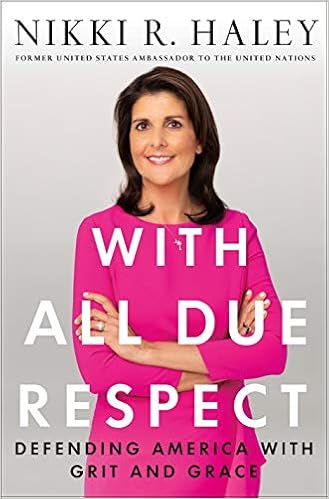
Steve Schmidt took a break from commentating/punditing to work for Howard Schultz while he pondered running for president. Ultimately Schultz said no, which means that Steve is back to his old job, and he had some interesting things to say on Morning Joe this morning. The topic was Nikki Haley's new book and her ambitions to be Vice President. Not in 2024, next year. Here's how Steve sees it:

"She wants to be Vice President, she wants to be Vice President on the Republican ticket in 2020. I think there's an overwhelming chance that Trump will dump Pence to put Nikki Haley on the ticket."

Willie Geist: "Really. Why do you say that?"

Schmidt: "He has an enormous problem with women, suburban women particularly. He's entirely transactional, loyalty is a one-way street, and so she's clearly angling for the job and when you look at the politics of it, she would serve his immediate political interests in a way that Pence can't. So I would suggest that he's going to be gone and she'll be in. I think this book's about that."

Thoughts: In 2008, Schmidt was a top adviser to John McCain's campaign and was a key part of the decision to put Sarah Palin on the ticket. The McCain brain trust thought Palin, as a woman, might attract some of Hillary Clinton's voters. Wrong. Way wrong. As I've said here before, even if Palin had turned out to be a lot smarter than she is, there's no way Hillary's Democratic/liberal/progressive voters would vote for someone with Palin's far-right ideology. I believe there's a similar dynamic today. Women who don't like Donald are not going to be impressed, distracted or fooled by someone who's as closely aligned with him as Haley is.

For what it's worth, in August Haley herself shot down such talk:


... but hey, a girl can change her mind.

Steve Schmidt is also not a fan of Mike Pence and that may be influencing his view of Pence's place in the world. In this clip from May, 2018, he calls Pence the house butler at Mar-a-Lago and a titanic fraud:


Finally, and this is a nitpick, but I don't like the subtitle of Haley's new book: "Defending America with Grit and Grace". Saying that someone is doing something "with grit and grace" is usually meant as a compliment, i.e., something you say about someone else. It's grating to see her describing herself that way. 

Image result for With All Due Respect Haley


Update on Friday morning. There was a time when Nikki Haley wasn't a fan of Donald:


Wednesday, October 23, 2019

Would-Be Presidents Are All Around

Writing at The Atlantic, Sarah Longwell, executive director of Republicans for the Rule of Law and publisher of The Bulwark, says that Mitt Romney is "laying the groundwork for an eventual challenge to Trump." At first, I thought she was talking about the same thing I've been saying here in the blog: that Romney is positioning himself to slide into the presidency (or at least, into the 2020 Republican nomination) if Donald flames out. In fact, Longwell doesn't actually say that directly, but the implication is there.

On the surface she's just encouraging Romney to provide political cover for his Republican colleagues to vote Donald out of office, but let's assume that happens. What happens next? Mike Pence gets the immediate promotion, of course, but if the Republicans want a "fresh start" after the disaster of the Trump era, and I believe they will, they probably won't want Donald's charisma-challenged VP as their standard-bearer for 2020. Who would they want? There are many, many Republicans out there who see a president in the mirror every morning, from Donald's opponents in 2016:

Ted Cruz
Rand Paul
Marco Rubio
Dr. Ben Carson
Carly Fiorina
Mike Huckabee
Rick Santorum
George Pataki
Lindsey Graham
Rick Perry
Jeb Bush
Bobby Jindal
Chris Christie
Scott Walker
John Kasich
Jim Gilmore

... to the declared 2020 candidates, Joe Walsh, Bill Weld and Mark Sanford, to the names in an October 11 Washington Post article titled "So if Trump gets removed, who's the GOP nominee?" including Pence, Romney and Walsh, plus Nikki Haley, Tom Cotton, Josh Hawley, Jeff Flake, Ben Sasse, John Kasich and Mike Pompeo. (Read that article here.)

Would Mitt Romney really be the best post-Trump Republican candidate? On one hand, he's the most recent Republican nominee before Donald and the only one of all these names who has been a general election candidate at the presidential level. On the other hand, Mitt lost that race and the things that were problematic for him in 2012 haven't just gone away, as he learned when he pondered running in 2016. Still, if Mitt is seen as the brave and principled warrior who saved the country from Donald Trump, he may also be seen as the last best hope for Republicans in 2020.

For a different perspective about Romney, click here to read another article at The Atlantic, titled The Liberation of Mitt Romney, dated October 20 and written by McKay Coppins. It includes a statement from Mitt that he's not planning to run again, but I would take that as pro forma and not binding.

As I'm thinking about all this, a song from the musical Evita is running through my head. It comes at the end of Act One. Juan Peron is out of power in Argentina, contemplating the wrath of his political opponents. His ambitious wife Evita encourages him to stay the course:

It doesn't matter what those morons say
Our nation's leaders are a feeble crew
There's only twenty of them anyway
What is twenty next to millions who
Are looking to you? 

All you have to do is sit and wait
Keeping out of everybody's way
We'll ... you'll be handed power on a plate
When the ones who matter have their say
And with chaos installed
You can reluctantly agree to be called

Watch it here:


Would Pierre Delecto, oops, I mean Mitt Romney, "reluctantly" agree to be called? I'd bet Rafalca on it.

In the meantime, this is Longwell's article in its entirety:

Donald Trump has never feared another elected Republican. Over the course of five years, he has bullied and insulted, mocked and complained about nearly every GOP officeholder past and present, including George W. Bush and Marco Rubio, Ted Cruz and Jeff Flake. He knew that the Republicans who dared to stand up to him couldn’t hurt him (Bob Corker), and that the Republicans who could have hurt him wouldn’t dare stand up to him (Paul Ryan).

All of which has led Trump to believe that there is no possible danger of the Republican Party being pried from his grasp. But Trump may at last need to rethink that calculus.

Mitt Romney’s attempt to excise Trump from his party started early. In March 2016, he became the only former Republican presidential nominee to take a public position against Trump’s candidacy. This act of resistance didn’t work, however, because while Romney had moral authority, he had no real power.

That situation changed this year, when Romney again became an elected official. On January 1, 2019, the newly minted Senator Romney announced his arrival in Washington with an op-ed in The Washington Post titled, “The President Shapes the Public Character of the Nation. Trump’s Character Falls Short.”

After having softened his criticism of the president and even tacitly accepting his endorsement during his Senate campaign in Utah, Romney wrote:

To a great degree, a presidency shapes the public character of the nation. A president should unite us and inspire us to follow “our better angels.” A president should demonstrate the essential qualities of honesty and integrity, and elevate the national discourse with comity and mutual respect. As a nation, we have been blessed with presidents who have called on the greatness of the American spirit. With the nation so divided, resentful and angry, presidential leadership in qualities of character is indispensable. And it is in this province where the incumbent’s shortfall has been most glaring.

Democrats and some pundits sniffed that Romney was just another Jeff Flake, all bark and no bite. Republicans derided the decision to call Trump out, with many of them attacking Romney in response—including his own niece, the chairwoman of the Republican National Committee, who called his criticism “disappointing and unproductive.”

The backlash to the op-ed was a crash course in “damned if you do, damned if you don’t.” But if you look closely, you can see that Romney was laying the groundwork for an eventual challenge to Trump. He was getting into position to get into position.

That said, he didn’t mobilize over the Mueller report, saying only that he was “sickened” by what the special counsel uncovered. Romney’s relatively low profile and mere brow furrowing exasperated Democrats and worried apostate Republicans (like me) who held out hope that Romney might become a Goldwater-like figure in the Senate: a former presidential nominee with the clout to exact some accountability from his party’s president.

Now it looks like Romney was playing the long game, waiting for a moment when there might be leverage for him not simply to annoy Trump, but to be in the jury box rendering a verdict on his presidency. Which is exactly where the whistle-blower report about Trump and his dealings with Ukraine may put him. Suddenly we’ve gone from an environment where impeachment couldn’t even clear the House Democratic caucus to one where polling support for impeachment and removal is above 50 percent, and rising.

Romney has not rushed to get ahead of the process. Instead, he’s engaged with characteristic caution. At first, he called the allegations “troubling in the extreme.” When the readout of Trump’s call with President Volodymyr Zelensky and the whistle-blower complaint became public, providing clearer evidence that the president had courted foreign interference in the coming election, and seemingly pressured a vulnerable ally to do the interfering, Romney stepped up his criticism, calling it “wrong and appalling.”

After Trump pulled American troops out of Syria and abandoned America’s Kurdish allies to slaughter, Romney delivered a blistering indictment of the administration’s betrayal on the Senate floor, saying, “What we have done to the Kurds will stand as a blood stain in the annals of American history.”

People assume that because Republicans have for the most part let Trump be Trump, they have no influence over him. But we saw recently that this isn’t true: Trump walked back the Doral G7 summit after Republicans expressed outrage. The right Republicans, in the right circumstances, can roll him.

Now circumstances are evolving to the point where Romney may be able to lead his colleagues to break with the administration if—or rather when—the president is impeached by the House.

Jeff Flake has speculated that 35 or more Republican senators might vote in an impeachment trial to remove Trump from office, but only if the vote were held in secret. Whatever the real number is, the senators face a collective-action problem. Politically, their safest bet is to move as one, announcing their openness to removal as a bloc. The president can say what he wants about this or that senator. But he wouldn’t be able to claim—with any credibility beyond his most cultlike followers—that a group composed of 10 or more Republican senators is just a cabal of dishonest, no-good losers secretly working for the Democrats.

Part of any collective-action problem is the disincentive to go first. Senators who want to vote against Trump will want to wait until the last minute, letting their more courageous colleagues take the political hit by going first. The senator going first might get hailed as a hero when the history books are written. But in the moment, he or she will be used as a human shield. It won’t be fun, and it’s a big ask for any sitting Republican.

Romney is best suited for the job. We already know, from The Atlantic’s McKay Coppins, that Romney is “taking the prospect of a Senate trial seriously—he’s reviewing The Federalist Papers, brushing up on parliamentary procedure, and staying open to the idea that the president may need to be evicted from the Oval Office.” He’s not up for reelection until 2024, which gives him the maximum amount of leeway to make difficult votes. Even then, he represents Utah, a deep-red state where Trump’s approval rating has been underwater for much of his presidency. And that’s all assuming that Romney would even want to run for another six-year term at age 77. This all points to Romney as the perfect person to overcome the collective-action problem—he has more stature and political capital than anyone else in the Senate, but he also has the least to lose.


Days until Election Day: 376

Friday, October 11, 2019

Resign And Get It Over With? - Updated

Writing at Bloomberg Opinion, political scientist Jonathan Bernstein ponders possible outcomes of the impeachment story. Resignation by Trump is his second-most likely:

With new twists in the story of President Donald Trump’s looming impeachment coming every day — at times seemingly every hour — let’s try jumping ahead to the end. Here are four possible outcomes of this process, ranked from most to least likely.

By far the most likely endgame is that Trump is impeached by the House and then acquitted in the Senate. House Democrats seem determined to move ahead, even if they get no support from Republicans. But on the Senate side, where 67 votes are needed and there are only 47 Democrats, it’s very hard to imagine 20 Republicans voting to remove the president. Gradations of support still may matter. If Democrats wind up with fewer than 47 “yes” votes, for instance, that would be a political disaster; even a single Republican plus all Democrats would be better. Better still for them would be a chamber majority — not least because, if defecting Republicans voted with united Democrats, they could force trial rules favorable to impeachment supporters.

After that, we’re really just guessing. But if I had to bet on a different outcome it would be Trump’s resignation. I’ve seen some speculation that Trump would, unlike President Richard Nixon, fight to the bitter end. But that’s what everyone, including Nixon, expected in 1974. Once Nixon was certain to lose, he realized that putting the nation — and himself — through such an ordeal was pointless. There’s also the possibility of a Spiro Agnew-like ploy. Facing corruption charges, Agnew, Nixon’s first vice president, accepted a deal in which he resigned from office and pleaded no contest to one offense, while the attorney general agreed to forgo further prosecution. If Trump faces prison but could avoid it by quitting, I’d expect him to take that deal. We’re a long way from either scenario, but it’s not hard to see a path from here to there. It would simply require a gradual weakening of Republican support — as it is, very few Republicans are eager to come to the microphones to defend Trump — until eventually it collapsed.

Less likely would be the entire impeachment movement fizzling out in the House. I’d be quite surprised by that at this point. It’s possible that the evidence against the president could turn out to be weaker than it now appears, or that the politics of the situation change. House Speaker Nancy Pelosi no doubt still sees the drawbacks of a party-line impeachment and acquittal. But as of now, it’s hard to see how this train gets stopped. I’m tempted to say this is actually the least likely outcome, except that ...

It’s still difficult to imagine how this ends in removal, something that has never happened to a president. My read of the situation is that a 67 to 33 Senate vote to oust the president is unlikely. Again, there just aren’t 20 Republicans whose support for Trump is soft. That means he’d only be removed after a trial if the whole party turned against him, including a lot of Republican-aligned interest groups and media outlets. The final Senate vote in that case would probably be something like 87 to 13 or even closer to unanimous, with only a handful of radicals holding out.

Even if the party is behind them, however, Republican senators still aren’t going to want to take that vote. Nor are they going to want to sit through a trial that airs Trump’s dirty laundry and might make more than a few other Republicans look bad. Plus, they’re going to be in a hurry to find another presidential nominee while leaving as much time as possible between removing Trump and the election. Which is why, if removal looks like a foregone conclusion, everyone is going to put heavy pressure on Trump to simply resign and get it over with.


I quoted the last sentence in the title of this post, but the second-to-last sentence is interesting too:

... they’re going to be in a hurry to find another presidential nominee while leaving as much time as possible between removing Trump and the election.

Another presidential nominee? If Donald is removed or resigns, Mike Pence automatically becomes president. Wouldn't President Pence also be the obvious (and best) choice to be the 2020 Republican nominee? Apparently Bernstein doesn't think so, and as I've said here before, neither do I. 

Update: Great minds think alike? After I published this post I went to the homepage of the Washington Post, which currently has not one but two stories contemplating the possibility that Donald will not be the Republican nominee in 2020. The first, titled "So if Trump gets removed, who's the GOP nominee?" includes a list of potential replacement candidates, some with comments:

1. Mike Pence. Comments: Pence would start in the pole position if Trump were removed from office. But he has never been a formidable figure to national Republicans, and plenty of party activists - pro- and anti-Trump - would want a fresher start if Trump were gone. He'd have to expect a serious challenge. 

2. Mitt Romney. Comments: If the GOP had to come up with a candidate on short notice, Romney fits the bill. Heck, did he ever stop running for president after 2008? The irony is that if the GOP could/would/had to rid itself of the incumbent president, it would be free to occupy the large void in the middle of American politics. A center-right Romney-Haley ticket would probably get 55% percent of the vote against Warren, or maybe Biden too. 

3. Nikki Haley. Comments: Haley denounced Trump's move to abandon the Kurds. She might be the only person acceptable to both pro- and anti-Trump Republicans. 

4. Tom Cotton

5. Josh Hawley. Comments: Hawley would probably be too young to become the nominee. But he is fast becoming a favorite among evangelical Christians who want someone who shares their values without being too identified as one of them. He would make an attractive vice-presidential pick for the nominee, especially if former U.N. ambassador Nikki Haley were to emerge on top.   

6. Jeff Flake. Comments: Mr. Conscience of a Conservative wants Republicans to "save their souls." Perhaps he could convince voters the best place to buy a ticket to heaven is at the ballot box. And as far as his own celestial fate goes, he might earn some points by running instead of telling other people to do it. 

7. Ben Sasse

8. (Tie) John Kasich

8. (Tie) Mike Pompeo

10. Joe Walsh  

Joe Walsh is the only one of the three declared Republican candidates who made the list. Who are the others? Bill Weld and Mark Sanford. Who's Josh Hawley? (I admit I didn't know when I first saw this list. Please don't judge.) He's the junior senator from Missouri, age 39, having defeated Claire McCaskill in 2018. (Read the rest of the article here.)

The second article, titled "How likely is it Trump will be on the ballot in 2020?" is a column from Jennifer Rubin, a regular opinion writer at the Post. Here are her thoughts on the subject, along with the (unpleasant) picture of Donald, taken yesterday, that accompanies her article: 

President Trump outside the White House on Thursday. (Alex Wroblewski/Bloomberg)
photo credit: Alex Wroblewski/Bloomberg

A normal political party — either for political convenience or some remote sense of propriety — would have dumped this guy a long time ago (before, for example, he consigned the Kurds in Syria to a genocide). Trump and the current Republican Party are anything but normal. Their utter shamelessness and the use of propagandist (false) Fox News keeps them bound together in the belief that they can survive this.

How rational is it for Republicans to not only continue carrying his dirty water but supporting his reelection? They would, in 2020, be running with a candidate who comes into their state (if it is remotely winnable for Trump, who exaggerates what “remotely winnable” encompasses), declaring that going to foreign countries to get dirt on rivals is perfectly fine. Ads tying them to his inane defenses and confessions (there is overlap there, I grant you) will rain down upon them.

A presidential nominee with a track record such as Trump’s, and who lost the popular vote in 2016, and who has done nothing but offend voters outside his core base, would ordinarily portend disaster for his party up and down the ticket. Perhaps the incumbent cowards would rather risk losing and watching the Senate and White House turn over to the Democrats than speak out against Trump. They’d rather go down with the cult, for at least they might have a shot at jobs in right-wing organizations.

Other than that, I cannot think of a single, logical reason the Republican Party would want to go into 2020 with this guy. (Who knows which characters — e.g., former national security adviser John Bolton, Trump lawyer Rudolph W. Giuliani, Secretary of State Mike Pompeo, Attorney General William P. Barr — will finally testify against Trump in an effort to save their own skins?)

The latest Fox News poll understandably shook up the president, who blasted the network for releasing a harmful poll. His approval is deep in the red (43 percent approve, 55 percent disapprove, with 47 percent disapproving strongly). He is trailing among all women, white women, suburban women (56 percent strongly disapprove) and white college-educated women (57 percent strongly disapprove) as well as white non-college educated women (43 percent strongly disapprove). Unless there are states with no women, Trump looks ready to get pummeled in 2020.


Republicans have been granted an off-ramp from the Trump traffic jam, a way of perhaps saving the Senate and holding down losses in the House. All they need do is declare they will not support him in 2020. It would be easier to get a somewhat competitive candidate to win 30 to 35 percent in an early primary race to help nudge him off stage but it is not, strictly speaking, necessary. All they need is a modicum of common sense and a mammalian survival instinct. Well, yes, that’s why he is still a better than even chance to be the nominee. But the odds are increasing that Republicans one way or another may be forced to shove him aside. When they do, the potential replacement better not be someone who excused the inexcusable. (Read the column here.)  

A few more random thoughts: 

For a brief moment in history, Joe Walsh was my Congressman. He ran in 2010 against incumbent Democrat Melissa Bean and wasn't expected to win. She had exponentially more money in her war chest; he had never been elected to anything and got minimal support from the Republican party. I never saw her name on any list of endangered incumbents or districts at risk of flipping. Because I volunteered on the Melissa Bean campaign, I was at what was supposed to be her victory party on election night. As the night went on the race was too close to call, so eventually they sent everyone home. A couple of days later, after a recount, Walsh was the winner, part of the big Tea Party movement of 2010. He only served one term, however. He was defeated in 2012 by Tammy Duckworth.  

There's one more scenario that's not being discussed much. Call it the LBJ option, or possibly the "declare victory and leave the field" option: If neither impeachment/removal or a Trump resignation happen, Donald could serve out this term but choose not to run in 2020. 

As Donald's troubles mount, are writers and photo editors deliberating using the most unpleasant and/or unflattering pictures of him? It certainly looks that way in my Twitter feed. 

"If the GOP had to come up with a candidate on short notice" These are the words next to Mitt Romney's name on the above list, and as I've said here before, I believe that's the main reason Romney decided to run for a senate seat in 2018. In a post dated January 26 of this year, I wrote this: 

I don't for one minute believe that Romney, at the age of 71, has any real interest in being the 97th-most senior member of the U.S. Senate, which is what he currently is. I've thought from the moment he announced his run that his real reason for getting himself elected to the senate is strategic, based on the belief that Donald may not last his full term: Mittens wants to be in position to raise his hand and humbly offer to serve. (To be clear, and obviously, if Donald leaves office for any reason, the VP automatically becomes president. I'm talking about Senator Romney offering to be the 2020 nominee.) (Read the entire post here.)

Update #2. Jonathan Bernstein continues to point out ways in which Trump's situation is similar to Nixon's, as well as ways in which it is not. Note that in the second tweet, I think he means "kids":


Update #3 on Monday evening. A few more unpleasant, or possibly unhinged, pictures of Donald, from his rally in Minneapolis last Thursday night.

From NY Mag:


From the Washington Post:

President Donald Trump delivers remarks during a Keep America Great campaign rally at the Target Center in Minneapolis on Thursday.  (Ricky Carioti/The Washington Post)

From CNN:

Image result for Trump Oct 11 rally minneapolis


Update #4 on Friday, October 18. I'm not the only one considering the LBJ scenario. It came up in reporter Aaron Blake's Friday live chat at the Washington Post:

Q: GOP Plan B

Hypothetical scenario. Trump says he's not running in 2020 because why not. Who are the front runners to challenge Biden/Warren?

A: Aaron Blake

Good one!

-Pence

-Haley

-Sasse

-Cruz

-Portman

-Arizona Gov. Doug Ducey

And I wouldn't be surprised if Romney looked at it, honestly.
(You can read the entire chat here.)

Update #5 on Saturday, October 19. Another bad picture of Donald. I said previously that Trump's increasingly unpleasant appearance is indicative of his deterioriating mental state, and it's still true: 


Tuesday, October 1, 2019

Last Exit From Trumpland

Ross Douthat is a Conservative author, blogger and columnist. This is his September 27 column in the New York Times, in its entirety:

Ask an intelligent Republican staffer what they imagine awaits their party after Donald Trump, and you’ll get an interesting disquisition on the factions and figures that might shape conservatism, the political and policy arguments to come.

Ask that same staffer what happens if Trump is re-elected, and you’ll get a heavy sigh, a thousand-yard stare and then a hopeful “Well, maybe we can just pretend he isn’t there …?”

This is the state of Republican politics with impeachment suddenly looming. People are ready for the after, the reckoning to come, the attempted restorations and Trumpisms-without-Trump, the great Nikki Haley-Tucker Carlson brawl.

But if Trump survives impeachment and somehow gets re-elected, there will be no after Trump, not yet and not for four long years. Instead Trump will bestride his party like a decaying colossus, and his administration’s accelerative deterioration will be the G.O.P.’s as well. There will be no second-term policymaking, no John Kelly to stabilize the ship — just a floating hulk drifting between the icebergs of recession and foreign crisis, with all American conservatism onboard.

Outside the ranks of the truest Trump believers, most Republicans anticipate very bad things in 2022 and 2024 if the Trump Show continues uninterrupted. And most would happily fast-forward through that show if the magical remote control from that terrible Adam Sandler movie were suddenly available.

My days of writing high-dudgeon columns demanding that Republicans act in concert against Trump are behind me; cynicism and bemusement define my attitude toward G.O.P. decadence these days.

But in a bored-Roman-aristocrat drawl, I just want to suggest — mildly, dabbling my hands in a convenient finger bowl — that the current impeachment inquiry might, in fact, be that magical remote control: a chance to hit fast-forward and summon the post-Trump future into existence here and now, for the 2020 campaign.

Hitting the button requires only two things: the swift, before-primary-season impeachment schedule House Democrats are entertaining and then 20 Republican votes in the Senate for conviction, if the Trump-Giuliani operation in Ukraine looks as bad in a few months as it does today.

Of course the second thing is a political near-impossibility. But we’re fantasizing here, my dear Petronius, so we can imagine how it might happen. Start with Mitt Romney, add the four retiring Republican senators, plus the most embattled purple-state 2020 incumbents, plus a clutch of Republicans most at risk in 2022, plus the handful of the senators who don’t face the voters till 2024 … and then you’re just a few Republicans of principle away from 20.

In voting to remove Trump (and to bar him, as an impeachment can, from simply running for president again immediately), these 20 would allow the other 33 Republican senators to stand by him, thank him for his service and promise to Make America Great Again themselves. And the more ambitious among the latter group of senators would then compete to succeed Trump, while his wrath was concentrated against the treacherous 20.

That competition would be the next phase of our fast-forward: With Trump gone, everyone from Haley and Carlson to Marco Rubio and Josh Hawley could jump into an accelerated primary campaign against the unloved Republican “incumbent,” Mike Pence. The result would be, in effect, the 2024 G.O.P. primary four years early — with the possibility of either pre-empting a President Elizabeth Warren or preventing a Trump second term’s likely demolition of the G.O.P.

Of course this is just a pleasant conceit, whose mere description by a Trump critic like myself will irritate the many conservatives for whom it’s absurd to imagine any upside to allowing Democrats and the media to eject a fighting conservative president from office.

I think these conservatives underestimate, as liberals did with Bill Clinton long ago, the advantages in jettisoning a corrupt leader. (An Al Gore presidency was a better timeline for Democrats, even though it would have required the horror of letting Ken Starr win.) But I certainly can see ways in which, after so much elite failure and populist anger, having elites (indeed, the C … I … A!) work to remove a populist president just before his re-election campaign could make our toxic politics that much worse.

But I would still ask — swirling my wine and adjusting my NeverTrumper toga — worse than what? Worse than a world where Trump survives impeachment, the Ukraine miasma chokes Biden’s campaign, Warren proves less electable than her supporters hope, we replay 2016 with the Electoral College and enter a second Trump term with the ship of state rudderless, Democrats yet more radicalized, and all those icebergs looming for the country and the G.O.P. alike?

In the event we do arrive in that world, consider this column a casually tossed marker for the Republican Senators who will probably vote to keep Trump in office, in case they find themselves very unhappy with the ultimate result.

You can’t say that you didn’t have an early exit from the Trump era. You can’t say you didn’t have a choice.

Wednesday, September 11, 2019

Would Donald Fire Mike Pence? Can He?


Remember this tweet?


I assumed Kristol was mostly kidding, just piling on the "What was he thinking?" snarkfest when Mike Pence's stay at Donald's hotel in Ireland became a big story. Now I'm wondering, is Pence really at risk? Bill Kristol and Rick Wilson, in tweets posted yesterday, apparently think so:  


Can Donald fire his Vice President? Probably not directly. Unlike cabinet Secretaries and White House staff members, the VP doesn't serve solely "at the pleasure of the president." He was elected by the people and sworn in via oath on Inauguration Day, just like Donald. If Donald decides he wants Pence gone, he'd have to convince him to "resign" and I'd say it's at least possible that the VP wouldn't go, or at least not quietly.

The other option for Donald would be to keep Pence on as VP for the rest of this term, but select someone else as his running mate for the 2020 election. If that sounds machiavellian and not very nice, well, yes, it would be but it's not unprecedented. Franklin Roosevelt had three vice presidents over the course of his 12-year presidency. John Nance Garner was his running mate in 1932 and 1936 and served eight years as VP. For the 1940 election, FDR dumped Garner and selected someone named Henry A. Wallace, who I had never heard of before doing some googling to write this post. (In truth, I probably learned about him in junior high school history classes, but Vice President Wallace was less than memorable.) Wallace served one term then got dumped himself for Harry Truman. Truman was elected, with FDR, in the 1944 election, and sworn in as VP on January 20, 1945. Just shy of 12 weeks later, FDR died and Truman became president. More recently, President Ford dropped his vice president, Nelson Rockefeller, and selected Senator Bob Dole as his running mate in 1976.

Can you imagine the political feeding frenzy that would ensue if Donald even hinted that he has fallen out of love with Mike Pence? In the past 74 years, three vice presidents, Truman, Lyndon Johnson (1963) and Gerald Ford (1974) have been promoted to the top job as a result of presidential death or resignation. (In the same period of time, only one sitting VP, George H.W. Bush in 1988, was able to get himself elected to the presidency.) I've said here before that I believe one of the key reasons Pence agreed to work for Donald was the possibility that Donald wouldn't last a full term. That possibility makes the VP job very appealing, even with Donald as the boss. I can only imagine how ugly things could get with Mike Pence desperately trying to keep his job while every other Republican, from Nikki Haley to Mitt Romney to Chris Christie, is desperately trying to replace him in it.

Would Donald really break up with Mike Pence? Based on everything we've seen so far, I'd say it's not out of question. I considered the possibility of Pence becoming president back in January, click here to read that post. 

Saturday, August 24, 2019

Nikki Haley And Mike Pence: The 2024 Republican Primary?

Did you see this tweet?


Sweet, right? Maybe not. In an article posted today titled Haley-Pence rivalry heats up as GOP weights post-Trump future, and with a subtitle that says Interviews with top Republicans reveal they're watching each other warily ahead of a potential 2024 showdown, Politico ponders what will happen when Donald is no longer president. It starts with this: 

When top Republicans convened at the St. Regis resort in Aspen, Colo. last month for an exclusive donor retreat, several attendees said there was palpable tension in the room as the gathering’s two headliners prepared to speak: Vice President Mike Pence and former United Nations ambassador Nikki Haley.

The assembled group of governors, high-dollar donors, and operatives were well aware that the two have big ambitions; to some it seemed as if Pence and Haley, who spoke on back-to-back days, were vying for their attention. Some in the audience found themselves parsing and comparing the two speeches and buzzed they were getting a sneak preview of a 2024 Republican primary. Others recalled something peculiar: Neither Pence nor Haley acknowledged each other in their presentations, even though they gave shout-outs to others attending the retreat.

At a time when Republicans are starting to contemplate what their party will look like after Donald Trump leaves office, a rivalry has developed between the two politicians who cut markedly different profiles — and signs of strain are bubbling to the surface.

Pence and Haley aren't openly sniping: Publicly, both sides maintain there's nothing but mutual respect between them. But interviews with nearly two dozen top Republicans revealed that the opposing camps are closely tracking each other's moves, and remain deeply suspicious of one another.

... includes this: 

“The two of them have absolutely been friends and worked well together over the years, but you have to suspend disbelief to say that their relationship going forward won’t be viewed within the context of the presidential election after next,” said Rob Godfrey, who served as a senior aide to Haley during her six-year tenure as South Carolina governor.

... The recent divisions have been fueled partly by the rumors that Haley could replace Pence on the ticket and the fact she took so long to address them. Some top Pence aides said they think Haley or an ally was behind the Wall Street Journal op-ed, which a representative for the former ambassador denied.

The White House has pushed back against the idea that Pence will get booted. Trump privately told Pence he was irritated by the Wall Street Journal article, and last weekend the president told reporters he was “very happy” with the vice president and “wouldn't be thinking about” removing him from the ticket.

Erick Erickson, a prominent conservative commentator who is close to Pence and Haley, said the former ambassador was wise to shoot down the VP speculation. The rumors had intensified so much that two governors had recently reached out to him to ask whether Pence was about to be canned, Erickson said.


... and concludes with this: 

The skirmish offers a potential preview of what’s in store for the GOP after 2020 — a fight over the direction of the party. Pence has been the president’s most unwavering ally since he joined the ticket in 2016, even when Trump’s policies and personal conduct veered far from the principles Pence had long been known for. Haley, who endorsed Marco Rubio in 2016 and was critical of Trump during the campaign, has shown a willingness to break from the administration. She has urged the GOP to be more inclusive, representing potentially a new direction for the party.

Haley’s forthcoming memoir, to be released in November, may offer a hint of her approach. While the book isn’t expected to take direct shots at the White House, its promotional materials describe her as “a leader who seeks to bring Americans together in divisive times.”
(Read the entire article here.) 

This isn't the first time the possibility of booting Mike Pence off the ticket has come up. In December there was reporting that said Donald was questioning his VP's loyalty: 


I wrote about it here. 

There really will come a day when Donald is no longer president. Who will lead the Republicans, and possibly the country, in the post-Trump era is one of the most intriguing questions in politics. You bet I'll be watching closely.  

Thursday, August 15, 2019

Tom Nichols Will Vote For A Democrat


This is Nichols' USA Today article in full: 

Headline: Why the Never Trump ex-Republican will vote for almost any 2020 Democratic nominee

Subhead: I'm good with anyone who is mentally stable and in no way sympathetic or beholden to a hostile foreign power. That's it. Policy just doesn't matter.

I don’t care if Sen. Elizabeth Warren is a mendacious Massachusetts liberal. She could tell me that she’s going to make me wear waffles as underpants and I’ll vote for her. I don’t care if Sen. Kamala Harris is an opportunistic California prosecutor who wants to relitigate busing. She could tell me that I have to drive to work in a go-cart covered with Barbie decals and I’ll vote for her. I don’t care if Vermont Sen. Bernie Sanders is a muddle-headed socialist from a rural class-warfare state (where I once lived as one of his constituents). He could tell me he’s going to tax used kitty litter and I’ll vote for him.

I don’t care if Hawaii Rep. Tulsi Gabbard is clearly influenced by a hostile foreign government or that Marianne Williamson is a weird, anti-science guru. They could …

Wait. I do care about that. It’s the reason they won’t get my vote next year, and why the president won’t either.

Trump is getting worse

All of the policy “what about” hypotheticals from my conservative friends are diversions. They’re trying to move the argument to policy to blind us to the reality that President Donald Trump is both unstable and compromised.

As I have argued for well over two years, there is plenty of evidence that the president is compromised by our most dedicated enemy. Even before the Mueller report laid bare the degree to which the Trump campaign welcomed Russian help, it was obvious that Trump feared Russian President Vladimir Putin — not only because Putin knew how much Trump had lied to the American people during the campaign about his dealings with Russia, but also likely because Moscow holds Trump’s closest financial secrets after years of shady dealings with Russian oligarchs.

And obviously, I would care if Warren or Harris wanted me to do something insane, because it would be evidence of their mental or emotional impairment. As much as conservatives hate to admit it, governing by executive order or supporting the financial evisceration of rich people is not a sign of an emotional disorder.

I can live with policies I hate

Compulsive lying, fantastic and easily refuted claims, base insults and bizarre public meltdowns, however, are indeed signs of serious emotional problems. Trump has never been a reasonable man, but for two years, he has gotten worse. He literally cannot tell the truth from a lie, he often seems completely unable to comprehend even basic information, and he flies off the handle in ways that would make most of us take our children to a pediatrician for evaluation.

This is why policy doesn’t matter. I have only two requirements from the Democratic nominee. First, he or she must not be obviously mentally unstable. Second, the nominee must not be in any way sympathetic — or worse, potentially beholden — to a hostile foreign power. This rules out Gabbard, Williamson and maybe New York City Mayor Bill de Blasio, although in de Blasio’s case it’s hard to tell whether he is unstable or just a terrible person.

As for the rest of them, I am willing to live with whoever wins the Democratic primary process. I will likely hate the nominee’s policies, but at least I will not be concerned that he or she is incapable of understanding “the nuclear” or “the cyber.” I will feel like I have a shot at trying to convince my elected representatives that they should listen to the policy preferences of normal human beings instead of two old men wearing shirts that say they’d “rather be a Russian than a Democrat,” or a woman in a shirt indicating that she is willing to have the president grab her genitalia.

I can't believe I miss Eric Holder

The Democratic candidate will promise to nominate people into Cabinet posts who will make me tear my hair out. But at least I will be confident that they are in charge of their own inner circle, instead of surrounded by unprincipled cronies who keep their own boss in the dark while taking a hatchet to the Constitution. Is there anyone that Warren or former Vice President Joe Biden could bring to, say, the Justice Department, whom I would fear more than an odious and sinister courtier like William Barr?
I never thought I could miss Eric Holder, yet here we are.

It is a sign of how low we have fallen as a nation that “rational” and “not compromised by an enemy” are now my only two requirements for the office of the president of the United States. Perhaps years of peace and prosperity have made us forget the terrifying responsibilities that attend the presidency, including the stewardship of enough nuclear weapons to blow the Northern Hemisphere to smithereens.

As long as the Democrats can provide someone who can pass these simple tests, their nominee has my vote.


Pass the waffles.

Tuesday, March 12, 2019

Happy Birthday To Mittens


Yes, that's a strange way to blow out candles. No, you don't get a very glam office when you're the 97th-most senior senator. Why did seventy-something Mitt decide he wanted to be a senator? My thoughts, from a post on January 26:

I don't for one minute believe that Romney, at the age of 71, has any real interest in being the 97th-most senior member of the U.S. Senate, which is what he currently is. I've thought from the moment he announced his run that his real reason for getting himself elected to the senate is strategic, based on the belief that Donald may not last his full term: Mittens wants to be in position to raise his hand and humbly offer to serve. (To be clear, and obviously, if Donald leaves office for any reason, the VP automatically becomes president. I'm talking about Senator Romney offering to be the 2020 nominee.) Read the entire post here. 

Saturday, January 26, 2019

Primary The President?

As I've said here before, with a Republican incumbent, most of the suspense around the 2020 presidential nominations is on the Democratic side, which is why I'm keeping my various lists. Still, there are rumblings that someone might "primary" Donald, or, I suppose if it comes to that, President Pence. One name to keep in mind? Maryland governor Larry Hogan:

Talking Points Memo also mentions Hogan as a possibility, along with a few other names:

According to a Saturday New York Times report, Trump’s recent failures and dismal polling is piquing the interest of some possible 2020 Republican challengers.

A name frequently tossed around is Larry Hogan, the popular governor of Maryland. Hogan is reportedly setting up meetings with prominent never-Trumpers, like William Kristol, and reaching out to Iowa-based strategists.

Per the Times, also in the mix is William Weld, the former Republican governor of Massachusetts with a Libertarian bent.

Other less likely potential challengers are former Ohio governor John Kasich, former Sen. Jeff Flake (R-AZ) and Sen. Ben Sasse (R-NE).
(Read it here). 

One name not mentioned is newly-elected Senator Mitt Romney of Utah. I don't for one minute believe that Romney, at the age of 71, has any real interest in being the 97th-most senior member of the U.S. Senate, which is what he currently is. I've thought from the moment he announced his run that his real reason for getting himself elected to the senate is strategic, based on the belief that Donald may not last his full term: Mittens wants to be in position to raise his hand and humbly offer to serve. (To be clear, and obviously, if Donald leaves office for any reason, the VP automatically becomes president. I'm talking about Senator Romney offering to be the 2020 nominee.)  

Update on Tuesday, January 29. In a column published yesterday, Jonathan Bernstein says Trump could very well get primaried, although possibly not successfully:

On one hand, no eligible president has been denied renomination since the system changed after the 1968 election. The closest was in 1976, when Ronald Reagan challenged Gerald Ford, but that comes with the asterisk that Ford had inherited the presidency when Richard Nixon resigned, and had only become vice president because Nixon needed someone who could be approved under the 25th Amendment by a Democratic Congress. Senator Ted Kennedy issued the other serious challenge when he tried and failed to unseat Jimmy Carter in 1980. Since then, the only significant contest was when Pat Buchanan ran against George H.W. Bush in 1992; Buchanan didn’t win a single state and really didn’t come close, peaking at 37 percent in New Hampshire.

On the other hand, Donald Trump has, over his first two years, been the least popular president during the polling era, and right now his approval rating is slightly under 40 percent. With numbers like that, party actors are surely concerned that he’s in huge reelection trouble – and must at least be thinking about how to move on without him.

To be sure: Trump is still very popular among Republican voters. And some of the names that have been floated as challengers are less than promising; even if voters are fed up with Trump, it’s extremely unlikely they would jump to former Ohio Governor John Kasich or Maryland Governor Larry Hogan or any of the other moderates who have been talking about running. If Trump slumps further, it’s possible that even one of those could wind up running a Buchanan-like campaign, competing in the primaries and getting a third of the votes or so in many of them.

But the candidates who could actually give Trump a serious fight are those with orthodox Republican positions. For them, the big question is whether trying and losing would be, as my colleague Ramesh Ponnuru recently argued, political suicide. The historical examples Ponnuru cites don’t help his case. It’s true that Kennedy’s run may have marginally hurt his reputation. But Reagan surely helped himself in 1976. Buchanan entered the 1992 campaign as a conservative pundit; he did well enough that he wound up a semi-serious contender for the 1996 nomination. In none of these cases, including Kennedy’s, did the party wind up blaming the challenger for its loss in November. Democrats didn’t blame Gene McCarthy or Robert Kennedy for their party’s defeat in 1968 either.

It could be different this time, of course. And it’s still early: If Trump’s approval ratings quickly recover from the government shutdown and he spends this year about as popular as he was in 2018, he’s not going to look like a hopeless loser and any serious challenge will likely evaporate. But it’s also possible that he won’t recover, leaving him solidly below that 40 percent mark. Events (a recession, for example) could push his popularity even lower.

History shows that unpopular incumbents usually wind up with nomination challenges, even if those challenges tend to fail. That’s the most likely scenario for Trump right now – and if he slumps badly enough, the nomination could well be closely contested.

Read the column here. 

Thursday, January 3, 2019

Martin O'Malley Won't Run In 2020 - Updated


Former Maryland governor and 2016 candidate Martin O'Malley says he won't run in 2020. I'm moving him to the I'm Not Running list.  

Potential Democratic Candidates, in alphabetical order:

Reminder: Not every name on this list is "viable" as a future nominee or president, or even seriously interested in running, necessarily. It's just a list of every name I've ever seen mentioned, anywhere, as someone who might run in 2020.
  1. Stacey Abrams (2018 candidate for Georgia governor) added 1/3/19
  2. Joe Biden (Former VP)
  3. Michael Bloomberg (Former mayor of New York City)
  4. Peter Buttigieg (Mayor of South Bend, Indiana) added Sept. 8
  5. Cory Booker (New Jersey senator)
  6. Sherrod Brown (Ohio senator)
  7. Jerry Brown (Governor of California)
  8. Steve Bullock (Governor of Montana)
  9. Mark Cuban (Businessman, owner of the Dallas Mavericks)
  10. Bill de Blasio (Mayor of New York City)
  11. Tulsi Gabbard (Congresswoman from Hawaii) added Sept. 8
  12. Eric Garcetti (Mayor of Los Angeles) 
  13. Kirsten Gillibrand (New York senator)
  14. Andrew Gillum (Former mayor of Tallahassee, FL, 2018 candidate for governor) added Dec. 11
  15. Kamala Harris (California senator)
  16. John Hickenlooper (Governor of Colorado) 
  17. Eric Holder (Former Attorney General)
  18. Jay Inslee (Governor of Washington)
  19. Dwayne "The Rock" Johnson (Actor) added Nov. 10
  20. Tim Kaine (Virginia senator, 2016 VP nominee)
  21. Joe Kennedy (Congressman from Massachusetts) added Nov. 10
  22. John Kerry (former Secretary of State, 2004 Democratic nominee) added Nov. 10 
  23. Amy Klobuchar (Minnesota senator)
  24. Mitch Landrieu (Mayor of New Orleans)
  25. Terry McAuliffe (Former governor of Virginia)
  26. Jeff Merkley (Oregon senator)
  27. Seth Moulton (Congressman from Massachusetts) 
  28. Chris Murphy (Connecticut senator)
  29. Beto O'Rourke (Texas Congressman, running for the U.S. Senate) added Sept. 13
  30. Tim Ryan (Congressman from Ohio) added Sept. 8
  31. Bernie Sanders (Vermont senator, registered Independent, ran in 2016 primaries)
  32. Howard Schultz (Businessman, former CEO of Starbucks)
  33. Tom Steyer (Businessman) added Sept. 8
  34. Eric Swalwell (Congressman from California) added Nov. 8
  35. Mark Warner (Virginia senator) added Nov. 10
  36. Marianne Williamson (Author, teacher, spiritual leader) added Dec. 11
  37. Mark Zuckerberg (Businessman, founder of Facebook)

I'm Running: Declared Democratic Candidates, in order of their announcement
  1. John Delaney (7/28/17) 
  2. Andrew Yang (11/6/17) 
  3. Richard Ojeda (11/11/18)
  4. Elizabeth Warren (12/31/18)
  5. Julian Castro (added 1/3/19) Note: Castro hasn't officially announced, but he did form an exploratory committee, which is usually a good indication that someone is running. 

I'm Not Running
Oprah Winfrey
Andrew Cuomo
Sheryl Sandberg, added Sept. 8
Jason Kander, added Oct. 17
Robert Iger, added Oct. 22
Michael Avenatti, December 4, 2018
Deval Patrick, December 5, 2018
Martin O'Malley, January 3, 2019
Luis Gutierrez, added January 7, 2019 

Meanwhile, in an article posted yesterday, Slate says these seven Democrats have early leads: 

Joe Biden
Bernie Sanders
Elizabeth Warren
Beto O'Rourke
Kamala Harris
Cory Booker
Amy Klobuchar

The article lays out strengths and liabilities for each of the seven and ends with this: 

Those are just seven of the Democrats who could mount a credible primary campaign this year and next. Plenty more are eager to try. Despite their low polling numbers now, you’re going to hear more about Kirsten Gillibrand and Sherrod Brown and Julián Castro (who recently launched his exploratory committee). A national newcomer like Andrew Gillum or Stacey Abrams could make a splash should they decide to get in. Democrats with a lower national profile but without a recent electoral loss on their record could also attract the spotlight, be it Los Angeles Mayor Eric Garcetti or Colorado Gov. John Hickenlooper. And there are those who could bankroll their own campaigns to consider: former New York City Mayor Michael Bloomberg, environmental activist Tom Steyer, and former Starbucks CEO Howard Schultz, among them. The only thing that would truly be a surprise in 2019 is if there were no surprises. But the seven on this short list can reasonably expect one thing, should they decide to run: Their early popularity will provide an initial platform to make their case directly to the Democratic base. The other could-be candidates won’t necessarily have that luxury. Their immediate concern, then, won’t be how their pitch will be received but whether enough primary voters will even be able to hear it over the competing noise.

Note: I hadn't seen that Julian Castro had launched an exploratory committee; I'm moving him to the I'm Running list. I also hadn't seen Stacey Abrams, who ran for governor of Georgia, as a potential candidate, but Slate says it's possible so I'm adding her to my Potential Candidate list. Click here to read the Slate article. 

And one more thing. With a Republican incumbent in 2020 most of the suspense is on the Democratic side, but not all of it. Some Republicans would clearly prefer that Donald not be their nominee in 2020. Daniel Drezner shares some thoughts at the Washington Post: 

To understand what is going on, one must appreciate the following facts: (A) Sitting presidents who face a primary challenge tend not to win reelection. See: Lyndon Johnson, Gerald Ford, Jimmy Carter, George H.W. Bush. (B) The primary challenger usually does not win, either. See: Eugene McCarthy, Ronald Reagan (who didn’t win in 1976), Ted Kennedy and Patrick Buchanan. (C) Reagan aside, within party politics it’s better to be the person cleaning up the mess than the person making the mess.

What I suspect Romney, Haley, Kasich and Hogan are all doing is planning for one of two contingencies. The first is that Trump resigns or is forced out of office due to one of his many mounting scandals, in which case Vice President Pence will be about as strong as Georgy Malenkov. The second is to wait for someone else to make a kamikaze run at Trump during the 2020 GOP primary, paving the way for a less controversial run at the nomination. This requires an odd game of signaling visibility without moving first. What they all need is the equivalent of a pace car, a politician willing to challenge Trump in such a way as to facilitate more viable entrants. But none of them want to be the one to fall on their sword.
(Read the article here.) 

Days until the presidential election: 669 

Update on Saturday morning. South Bend mayor Pete Buttigieg is on the Potential list, above, and yesterday I saw this tweet: 


Normally the mayor of a relatively small city would be the longest of longshots but if a reality TV star can get elected president, anyone can, right? 

Things will only get more hectic in the days ahead, in terms of who's running and who's not. I won't see every little thing that's written about every potential candidate but when I do see something interesting I'll add it to the blog. I'll also try to keep the lists up-to-date, in particular the "I'm Running" list of declared candidates. 

Days until the election: 667

Update #2 on Monday morning. An interesting tweet about Joe Biden:
Update #3: Gutierrez isn't running. I've moved him to the "I'm Not Running" list.
Update #4, on January 8: Up until a couple of minutes ago, when I read a Washington Post article by Jonathan Capehart titled "Everyone's talking about Beto and Biden. But here's another 'B' you should know," I didn't know that Pete Buttigieg is gay and married to a man named Chasten Glezman. (Read it here.) I also didn't know that on June 11, 2016 New York Times columnist Frank Bruni published a column about Buttigieg titled "The first gay president?" It starts with this: 

South Bend, Ind. — IF you went into some laboratory to concoct a perfect Democratic candidate, you’d be hard pressed to improve on Pete Buttigieg, the 34-year-old second-term mayor of this Rust Belt city, where he grew up and now lives just two blocks from his parents.

Education? He has a bachelor’s from Harvard and a master’s from Oxford, where he was a Rhodes Scholar.

Public service? He’s a lieutenant in the Navy Reserve. For seven months in 2014, he was deployed to Afghanistan — and took an unpaid leave from work in order to go.

He regularly attends Sunday services at his Episcopal church. He runs half-marathons. His TEDx talk on urban innovation in South Bend is so polished and persuasive that by the end of it, you’ve hopped online to price real estate in the city. (Read the column here.)

We've had the first black president. Which presidential barrier will be the next to fall? A woman? A Jewish man? A gay man? (A gay Jewish woman? In my dreams.) Will 2020 be another barrier-busting year? Possibly.   

Days until the election: 664