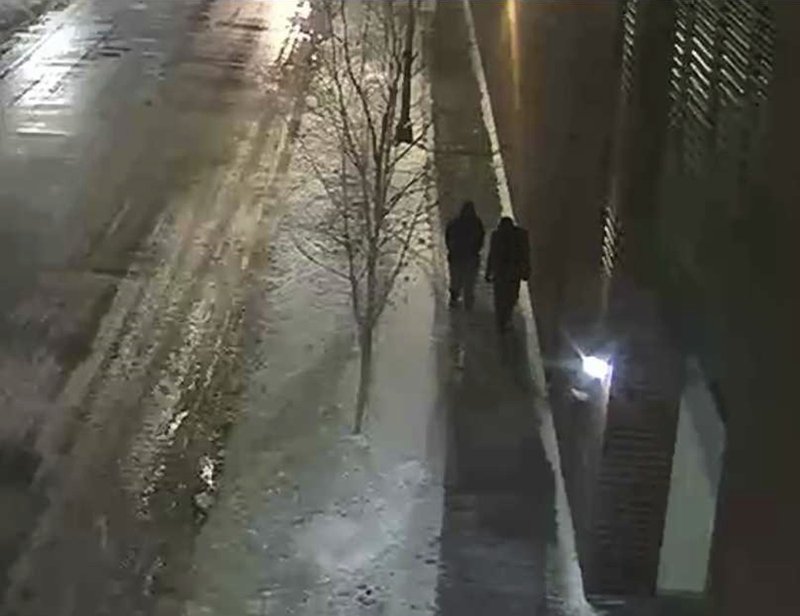
To start with, here's an editorial from the Chicago Tribune, in which the Editorial Board ponders the meaning of the Jussie Smollett case:
The recent trials we've been following have contained enough human pain to make us shudder: The Kyle Rittenhouse case involved two dead Americans; the matter in Georgia was about who caused the death of the 25-year-old Ahmaud Arbery; the yet-unresolved Ghislaine Maxwell affair has a backdrop of the cynical abuse of scores, if not hundreds, of impressionable young girls and women over many years.
By those standards, the case of Jussie Smollett has been comic relief.
Smollett, a B-list TV actor, was not accused of either killing or hurting anyone. His trumped-up saga of a deliberately staged, "racially motivated" attack usable for the purposes of personal promotion fits squarely into the Cook County tradition of darkly comic flim-flammery and low-bore corruption.
It matches up well with some of the cases famously recounted on the pages of this newspaper a hundred years ago by the crime reporter Maurine Dallas Watkins, whose trial-room notebook would form the basis for the musical "Chicago." Watkins would have loved writing about Smollett.
Once it became clear something fishy was in play, a conclusion reached Thursday evening by a jury of Smollett's peers, this was a trial that was fun for everyone to discuss.
How was the scheme concocted? Were the two bodybuilding brothers, apparently Smollett's accomplices, the Rosencrantz and Guildenstern to Smollett's Hamlet? Or were they closer to reincarnations of the classic "Saturday Night Live!" duo of Hans und Franz, here to pump anybody up? This case had a tabloid-friendly unspooling, with new twists and turns arriving almost every day.
But despite all the gossipy Tweets and chatter and opinions, there were real victims here. That would be everyone in the future who actually becomes the victim of a violent hate crime, being as Smollett's phony version only seeds needless doubt for the real incidents that surely will follow.
His idea of exploiting such an attack for publicity certainly worked with politicians on Twitter, especially since Smollett had plenty of connections and the immediate backing of a huge PR firm, thanks to his network, Fox Entertainment.
"This was an attempted modern day lynching," tweeted Kamala Harris at the time, praising Smollett's kindness. "This attack was not 'possibly' homophobic," wrote Alexandria Ocasio-Cortez, going after anyone holding back judgment, "it was a racist and homophobic attack." "What happened today to Jussie Smollett must never be tolerated in this country," wrote Joe Biden.
Biden was right about that. Just not for the reasons he thought.
Even as these rushed statements appeared on social media, Chicago police had to get down to the nitty gritty of what exactly happened. By all courtroom accounts, the cops took this crime seriously, expending huge amounts of resources on trying to find who had attacked Smollett. Even Smollett said he had been treated with dignity and respect during the initial stages of the investigation. Chicago police get a lot of criticism, including plenty leveled by this page. In this matter, they behaved admirably.
With the aid of cameras and other clues, police quickly figured out all was not as it seemed, and the evidence for this all being faked was passed to Cook County State's Attorney Kim Foxx. That's where things went off the rails, but not necessarily for the reasons most of the media is saying.
It's tempting to see the Smollett case, whose cause was backed by the attorney and influence peddler Tina Tchen, as another egregious example of Foxx's go-soft approach and reluctance to prosecute criminals, especially since Smollett had made Chicago look like a haven for violent racists and homophobes.
But cooler, nonpartisan heads can understand that with all Chicago has to worry about in the sphere of crime, a first-time offense likely to result in probation probably was not worth allowing to suck up resources that could be spent on finding the actual killers on our streets. Foxx's office was right to offer Smollett a quick deal, and correct to see that there were more important criminals for them to worry about.
But Foxx made one crucial mistake. She didn't require Smollett to admit his guilt and apologize as part of his deal. He should have offered to do that: Had he done so, he would have avoided four felony convictions on his record and, over time, he likely could have resumed his career. But he did not do anything of the kind.
And that's where Chicagoans both pragmatic and invested in fairness grew incensed, how a special prosecutor became involved and, frankly, how we ended where we ended up on Thursday evening when the jury delivered its verdict.
We know that people who are not on a TV show and friendly with politicians like Harris don't get both a sweetheart deal from the prosecutor and the chance to walk around town protesting their innocence. At that point, the Smollett case became about special favors in a city with an egregious history of them. And thanks to the jury, he ended up the loser, pending any appeals.
Smollett wasted a lot of time of some very busy people who have far more important issues to worry about than him. He embarrassed the politicians who supported him and he didn't respect his own fans. Sure, he probably didn't think it would ever come to all this, but he still didn't have the guts to turn off the machine when only he could. Shame on him.
Still, we haven't changed our mind about the limited severity of this crime, the hoopla notwithstanding, and we've no wish to see Smollett languish behind bars. We'd rather he admitted responsibility, got some help and performed meaningful public service.
Ideally right here in Chicago, a city whose reputation he slandered.
I won’t go into a full recap as most of us have already heard the details a million times, but the basic contradictions of Smollett’s infamous 2 a.m. Subway sandwich run have been masterfully laid out by Noah and Dave Chappelle. But you don’t have to be a comedian to see the absurdity of two well-prepared white racists successfully carrying out an attack during a chance encounter with their target on an empty downtown street in the middle of the night during the coldest week of 2019.
The former “Empire” actor’s nearly three-year journey from beloved victim to pariah took a step toward its conclusion Thursday when a Cook County jury found the actor guilty of five of six counts related to making a false report to police. Listening to the verdict, I was instantly transported back to that cold, prepandemic January morning when I awakened to a television news report of the attack. In hindsight, I’m proud of the fact that while other publications’ headlines blared that Smollett had been the victim of a hate crime, the Tribune’s first story on the incident, by reporter Tracy Swartz and me, was more subdued: “Cops look into report of assault on actor.”
As a longtime crime reporter, I’m loath to speak on active crime stories, but holes began appearing in the Smollett story within the first two hours of working on it. It seemed very clear from the jump that Smollett’s camp gave his version to friendly outlets to get his narrative out, despite assertions that he didn’t want any public attention. The first report was posted to ThatGrapeJuice.net, a celebrity website that somehow had exclusive details of the alleged Chicago attack — the attackers’ ski masks and the noose placed around Smollett’s neck. TMZ followed with new details that the attackers were two white men, along with the racist and homophobic slurs and the now-famous “This is MAGA country” comment. The story also claimed that Smollett suffered a fractured rib, which police later refuted.
I read each story three times during my ride to the newsroom that day and by the time I stepped off the bus, I knew the whole thing sounded off and warned two of my editors about the coming avalanche and that we needed to be careful writing about it. Smollett wasn’t only a handsome young rising star with a hit TV show filmed in Chicago, he was an activist who used his celebrity to champion gay and Black causes. It didn’t take long for A-list celebrities and politicians to share messages of support for Smollett.
The story got kicked into high gear when then-President Donald Trump publicly acknowledged the attack, prompting me to shout the F-word before I could stop myself. A shout-out from a sitting president meant that Smollett’s saga — with its numerous early red flags and strange turns — would remain in the spotlight until its bitter end. The incident thrust Chicago back into the national spotlight for all the worst reasons. We’d gone from a city that launched one American president to being a city constantly attacked by his successor to score cheap brownie points with red state followers.
Titled "The Tawdry Case of Jussie Smollett Had Comic Relief, But Was Not a Victimless Affair," the editorial was published on December 12, three days after Smollett was found guilty of five felonies. This is the editorial in its entirety:
The recent trials we've been following have contained enough human pain to make us shudder: The Kyle Rittenhouse case involved two dead Americans; the matter in Georgia was about who caused the death of the 25-year-old Ahmaud Arbery; the yet-unresolved Ghislaine Maxwell affair has a backdrop of the cynical abuse of scores, if not hundreds, of impressionable young girls and women over many years.
By those standards, the case of Jussie Smollett has been comic relief.
Smollett, a B-list TV actor, was not accused of either killing or hurting anyone. His trumped-up saga of a deliberately staged, "racially motivated" attack usable for the purposes of personal promotion fits squarely into the Cook County tradition of darkly comic flim-flammery and low-bore corruption.
It matches up well with some of the cases famously recounted on the pages of this newspaper a hundred years ago by the crime reporter Maurine Dallas Watkins, whose trial-room notebook would form the basis for the musical "Chicago." Watkins would have loved writing about Smollett.
Once it became clear something fishy was in play, a conclusion reached Thursday evening by a jury of Smollett's peers, this was a trial that was fun for everyone to discuss.
How was the scheme concocted? Were the two bodybuilding brothers, apparently Smollett's accomplices, the Rosencrantz and Guildenstern to Smollett's Hamlet? Or were they closer to reincarnations of the classic "Saturday Night Live!" duo of Hans und Franz, here to pump anybody up? This case had a tabloid-friendly unspooling, with new twists and turns arriving almost every day.
But despite all the gossipy Tweets and chatter and opinions, there were real victims here. That would be everyone in the future who actually becomes the victim of a violent hate crime, being as Smollett's phony version only seeds needless doubt for the real incidents that surely will follow.
His idea of exploiting such an attack for publicity certainly worked with politicians on Twitter, especially since Smollett had plenty of connections and the immediate backing of a huge PR firm, thanks to his network, Fox Entertainment.
"This was an attempted modern day lynching," tweeted Kamala Harris at the time, praising Smollett's kindness. "This attack was not 'possibly' homophobic," wrote Alexandria Ocasio-Cortez, going after anyone holding back judgment, "it was a racist and homophobic attack." "What happened today to Jussie Smollett must never be tolerated in this country," wrote Joe Biden.
Biden was right about that. Just not for the reasons he thought.
Even as these rushed statements appeared on social media, Chicago police had to get down to the nitty gritty of what exactly happened. By all courtroom accounts, the cops took this crime seriously, expending huge amounts of resources on trying to find who had attacked Smollett. Even Smollett said he had been treated with dignity and respect during the initial stages of the investigation. Chicago police get a lot of criticism, including plenty leveled by this page. In this matter, they behaved admirably.
With the aid of cameras and other clues, police quickly figured out all was not as it seemed, and the evidence for this all being faked was passed to Cook County State's Attorney Kim Foxx. That's where things went off the rails, but not necessarily for the reasons most of the media is saying.
It's tempting to see the Smollett case, whose cause was backed by the attorney and influence peddler Tina Tchen, as another egregious example of Foxx's go-soft approach and reluctance to prosecute criminals, especially since Smollett had made Chicago look like a haven for violent racists and homophobes.
But cooler, nonpartisan heads can understand that with all Chicago has to worry about in the sphere of crime, a first-time offense likely to result in probation probably was not worth allowing to suck up resources that could be spent on finding the actual killers on our streets. Foxx's office was right to offer Smollett a quick deal, and correct to see that there were more important criminals for them to worry about.
But Foxx made one crucial mistake. She didn't require Smollett to admit his guilt and apologize as part of his deal. He should have offered to do that: Had he done so, he would have avoided four felony convictions on his record and, over time, he likely could have resumed his career. But he did not do anything of the kind.
And that's where Chicagoans both pragmatic and invested in fairness grew incensed, how a special prosecutor became involved and, frankly, how we ended where we ended up on Thursday evening when the jury delivered its verdict.
We know that people who are not on a TV show and friendly with politicians like Harris don't get both a sweetheart deal from the prosecutor and the chance to walk around town protesting their innocence. At that point, the Smollett case became about special favors in a city with an egregious history of them. And thanks to the jury, he ended up the loser, pending any appeals.
Smollett wasted a lot of time of some very busy people who have far more important issues to worry about than him. He embarrassed the politicians who supported him and he didn't respect his own fans. Sure, he probably didn't think it would ever come to all this, but he still didn't have the guts to turn off the machine when only he could. Shame on him.
Still, we haven't changed our mind about the limited severity of this crime, the hoopla notwithstanding, and we've no wish to see Smollett languish behind bars. We'd rather he admitted responsibility, got some help and performed meaningful public service.
Ideally right here in Chicago, a city whose reputation he slandered.
Tribune reporter William Lee, in a column written after the
verdict, says the Smollett story reeked from the very beginning:
I won’t go into a full recap as most of us have already heard the details a million times, but the basic contradictions of Smollett’s infamous 2 a.m. Subway sandwich run have been masterfully laid out by Noah and Dave Chappelle. But you don’t have to be a comedian to see the absurdity of two well-prepared white racists successfully carrying out an attack during a chance encounter with their target on an empty downtown street in the middle of the night during the coldest week of 2019.
The former “Empire” actor’s nearly three-year journey from beloved victim to pariah took a step toward its conclusion Thursday when a Cook County jury found the actor guilty of five of six counts related to making a false report to police. Listening to the verdict, I was instantly transported back to that cold, prepandemic January morning when I awakened to a television news report of the attack. In hindsight, I’m proud of the fact that while other publications’ headlines blared that Smollett had been the victim of a hate crime, the Tribune’s first story on the incident, by reporter Tracy Swartz and me, was more subdued: “Cops look into report of assault on actor.”
As a longtime crime reporter, I’m loath to speak on active crime stories, but holes began appearing in the Smollett story within the first two hours of working on it. It seemed very clear from the jump that Smollett’s camp gave his version to friendly outlets to get his narrative out, despite assertions that he didn’t want any public attention. The first report was posted to ThatGrapeJuice.net, a celebrity website that somehow had exclusive details of the alleged Chicago attack — the attackers’ ski masks and the noose placed around Smollett’s neck. TMZ followed with new details that the attackers were two white men, along with the racist and homophobic slurs and the now-famous “This is MAGA country” comment. The story also claimed that Smollett suffered a fractured rib, which police later refuted.
I read each story three times during my ride to the newsroom that day and by the time I stepped off the bus, I knew the whole thing sounded off and warned two of my editors about the coming avalanche and that we needed to be careful writing about it. Smollett wasn’t only a handsome young rising star with a hit TV show filmed in Chicago, he was an activist who used his celebrity to champion gay and Black causes. It didn’t take long for A-list celebrities and politicians to share messages of support for Smollett.
The story got kicked into high gear when then-President Donald Trump publicly acknowledged the attack, prompting me to shout the F-word before I could stop myself. A shout-out from a sitting president meant that Smollett’s saga — with its numerous early red flags and strange turns — would remain in the spotlight until its bitter end. The incident thrust Chicago back into the national spotlight for all the worst reasons. We’d gone from a city that launched one American president to being a city constantly attacked by his successor to score cheap brownie points with red state followers.
There were other local ramifications. The case exposed a growing rift between Chicago police and State’s Attorney Kim Foxx, who earned their eternal enmity for dropping charges against Smollett that March, despite what authorities considered a solid criminal case.
I’ll always recall how Mayor Rahm Emanuel, Supt. Eddie Johnson and Cmdr. Ed Wodnicki were barely able to contain their rage to reporters after news broke over the dropped charges. Police had been suspicious of Smollett’s story early on, critical of the fact that he continued wearing the noose — a feared universal symbol of racial hatred — so that responding officers would see it. And of course there was Smollett’s initial hesitancy to turn over phone evidence that theoretically could have led to his attacker.
Within days, investigators learned the identity of brothers Abimbola and Olabinjo Osundairo, who caught a ride-hailing service near the scene. Until the brothers returned from Nigeria in February, sources said, police had one directive: Treat Smollett as a victim until the facts suggest otherwise. For weeks, police kept up the charade as they continued their investigation. The rest is history. Despite the comedy of errors in this tale, it was never a happy one to cover. Even with the prospect of it being a hoax, I was sympathetic to the actor, unsure whether the incident was a display of avarice and ego, or a cry for help by someone suffering a breakdown.
Despite the hot-button nature of the incident, this was a low-stakes Class 4 felony case, and the fact that no one had actually been injured, aside from a bruise under Smollett’s right eye, this story seemed destined to be forgotten. But Smollett broke a cardinal rule: He went into a city that wasn’t his own and loudly proclaimed “Your town wronged me.” Cops in any city would have been put under tremendous pressure to solve the case of an assaulted star. And despite the effort and attention, he wouldn’t admit his falsehood, with the evidence against him mounting. In the end, Smollett was responsible for derailing his own career, reducing his own reputation to ashes and playing for a fool all of those who came to his aid. And now he has been found guilty of what many of us suspected all along.
I’ll always recall how Mayor Rahm Emanuel, Supt. Eddie Johnson and Cmdr. Ed Wodnicki were barely able to contain their rage to reporters after news broke over the dropped charges. Police had been suspicious of Smollett’s story early on, critical of the fact that he continued wearing the noose — a feared universal symbol of racial hatred — so that responding officers would see it. And of course there was Smollett’s initial hesitancy to turn over phone evidence that theoretically could have led to his attacker.
Within days, investigators learned the identity of brothers Abimbola and Olabinjo Osundairo, who caught a ride-hailing service near the scene. Until the brothers returned from Nigeria in February, sources said, police had one directive: Treat Smollett as a victim until the facts suggest otherwise. For weeks, police kept up the charade as they continued their investigation. The rest is history. Despite the comedy of errors in this tale, it was never a happy one to cover. Even with the prospect of it being a hoax, I was sympathetic to the actor, unsure whether the incident was a display of avarice and ego, or a cry for help by someone suffering a breakdown.
Despite the hot-button nature of the incident, this was a low-stakes Class 4 felony case, and the fact that no one had actually been injured, aside from a bruise under Smollett’s right eye, this story seemed destined to be forgotten. But Smollett broke a cardinal rule: He went into a city that wasn’t his own and loudly proclaimed “Your town wronged me.” Cops in any city would have been put under tremendous pressure to solve the case of an assaulted star. And despite the effort and attention, he wouldn’t admit his falsehood, with the evidence against him mounting. In the end, Smollett was responsible for derailing his own career, reducing his own reputation to ashes and playing for a fool all of those who came to his aid. And now he has been found guilty of what many of us suspected all along.
Click here to read previous posts about Jussie Smollett.