Showing posts with label Fed Up Challenge. Show all posts

Tuesday, July 25, 2017

Contrasts

This is what's currently at the top of my Instagram feed. First, a nice healthy breakfast, posted by a dear friend that I've known since junior high school:
A post shared by Leslie Batten (@leslie_batten) on


Followed by this, from a Creative agency I follow:
A post shared by WunderLand Group (@wunderlandgroup) on


Yes, I was struck by the contrast.

Thursday, June 12, 2014

The Best Stuff On Earth?

It's now been a month since the Fed Up challenge to give up sugar for 10 days kicked off on May 12. As I've written before, I wasn't perfect at eliminating all the sugar in my diet but I did cut way back. And though the challenge is over, I'm continuing to monitor how much sugar I'm eating and keeping the amount as low as possible. And yes, I'm still making my own tomato sauce!


Because sugar is on my mind I occasionally do some random label-checking at the supermarket, even on items I'm not going to buy, just to see how much added sugar is really out there. Today's detective work was on a bottle of Snapple "Naturally Flavored Fruit Punch."  Here's what was on the front label:

Juice Blend
Juice Drink
All Natural
Made from the Best Stuff on Earth

There's also a nice message on the back. It's written in first person although it's not clear who, exactly, is speaking. An elf in the juice factory perhaps? Anyway, here's what it says:

"Have you read that chart over there? Read it, I'll wait. Did you notice? NO artificial flavors. NO preservatives. Nothing like that in this bottle. Just real ingredients, which is why we say, Made from the best stuff on earth."

Got that? It's made from the best stuff on earth. What does the ingredient list say? Filtered water, followed by sugar, followed by some fruit juice concentrate. And what does the nutrition chart say? 47 grams of sugar per bottle, which is considered to be one serving. By comparison, a bag of regular M&Ms, with 30 grams of sugar, is almost a health food. Well, not exactly but it's better than Snapple.

The fact that the Snapple people are getting away with calling this colored sugar water the best stuff on earth, without getting laughed out of the grocery store, makes me both incredulous and volcanically pissed off. This is what we're up against in the fight to get healthy. Fed Up? You bet.

Thursday, May 22, 2014

The Reality Of Food, Part 2

The Fed Up Challenge to give up sugar for 10 days ended yesterday and I'm so glad I did it. I wasn't absolutely perfect at it but overall my sugar consumption was way down and my plan is to continue to minimize, if not completely eliminate, sugar from my diet. I was surprised that it wasn't that hard to skip the overt sugars, i.e., the candy bars, cake, cookies, ice cream, etc.

For me the biggest challenge of the Challenge was the "white things," specifically pasta and bread. I had switched from white bread to 100% wheat bread quite a while ago, thinking it was the best choice, but as I wrote in an earlier post, that bread is made with added sugar and molasses and has 4 grams of sugar per slice. I've tried wheat pasta in the past too and some brands are OK but it's not the same. I know the real answer is to stop, or at least cut way, way back on eating bread/pasta at all, but that will be a lot harder for me than skipping a bag of M&Ms every afternoon.

So the battle continues. This morning I saw another article about the power of the food industry and how difficult it is to get accurate information and make smart choices about food. Dr. Barbara H. Roberts, writing at The Daily Beast, lays out the ways the American Heart Association is influenced by Big Food, sticking with recommendations that are no longer scientifically supportable. If you've ever bought something at the grocery store based on the Heart Check "this food is healthy for your heart" label, this will make your blood boil:

The AHA introduced the Heart Check Program in 1995 and it has been quite the moneymaker, as the AHA sells the Heart Check stamp-of-approval to food manufacturers. Food companies shell out between $1,000 and $7,500 to be certified by the Heart Check Program—and then there are yearly renewal fees. The program currently endorses 889 foods as “heart-healthy.”
And the Heart Check Program is not the only way the AHA benefits from Big Food companies. In their annual report for 2012-2013, the AHA lists among its lifetime donors of $1 million or more Conagra, Quaker Oats, and Campbell Soups, among others.
Read the whole thing here.

Thursday, May 15, 2014

Day 4, Hanging In There

Challenge tidbits from day 4:

The Tomato Sauce: I made tomato sauce again and the new recipe was so much simpler than the first one. They're both from America's Test Kitchen, which is one of my favorite food sites, and generally I'm happy with all their recipes. Right now however, I'm still scratching my head over that first recipe for tomato sauce and wondering who could possibly have thought putting hot sauce in a food processor was a good idea. No worries now, though. The second recipe was so much easier that I'm confident I'll keep making it. I may never buy tomato/pasta sauce in a jar again! 

The Bread: Bread is a problem, because I normally eat a lot of it. Pre-challenge I was eating Brownberry "Whole Grains 100% Whole Wheat Bread," thinking it was the best choice. The label proudly announces 22 whole grains per slice, "good source of fiber" and no high fructose corn syrup. However, a closer reading reveals that sugar is the third ingredient on the list, and there's molasses in there too, resulting in *4 grams* of sugar per slice, yikes. I switched to Brownberry Country Sourdough, which lists sugar as ingredient #7 and only "less than 1 gram" of sugar, which is better. Still, technically the sugar is there, along with the processed flour. Sometimes it really is hard to know which choice is "healthier."  

After I asked for suggestions on Twitter several people recommended Ezekiel bread and I bought a loaf yesterday. The one slice I've eaten so far wasn't bad but I admit I didn't love it. It was also a lot more expensive than "regular" bread, although I suppose the cost is offset by the money I'm not spending on M&Ms and cake. 

Mustard and Mayo: I made an easy vinaigrette recipe to replace my regular bottled salad dressing and it was pretty tasty, but the recipe included small amounts of dijon mustard and mayo. Both of the brands I use (Grey Poupon and Hellman's Light) list sugar in the ingredient list but zero sugar grams in the nutrition info. Since I only used 1/4 teaspoon of each, I'm choosing to believe that the vinaigrette is OK. It's sure a big improvement over the stuff that comes in the bottle. I've looked at recipes to make my own mustard and mayo, but I"m not sure I want to go there yet.   

Finally, The Fruit:  Or at least one fruit. I generally don't buy fresh fruit but the oranges at the grocery store yesterday looked really good so I bought 3 of them. I just ate one, in all of its natural glory and I have to say it tasted pretty good. 

So far so good!  

Tuesday, May 13, 2014

Musings From Day One

It's Day 2 of the Fed Up Challenge and I'm feeling good! Yesterday wasn't perfect from a "no sugar" point-of-view but I'm still calling it a great start. Officially, or at least in my own head, I didn't start until after breakfast. I had some leftover (frozen) pizza from Sunday night and in an "Oh, what the hell" moment I nuked it in the microwave and finished it off for breakfast. Why? I'm not really sure. Partly just because it was there, although I did rationalize to myself that once it was eaten and gone, it wouldn't be a problem anymore.

After that things went pretty well. For lunch I had pasta, topped with the last cup of my first batch of homemade tomato sauce. I usually top pasta with Parmesan cheese, and although the cheese doesn't have sugar in it I skipped it anyway, saving myself from a few grams of fat and some calories, perhaps an example of what can happen when you really start thinking about every morsel of food that goes into your mouth.

Dinner was a chicken salad - lettuce, celery, chicken and homemade vinaigrette. Like tomato sauce, salad dressing, specifically Wish-Bone Robusto Italian, is something I eat all the time, not just on actual salads but sometimes on pasta as well. Also like jarred tomato/pasta sauce, the label promises lots of great nutrition, but the ingredient list and nutrition facts chart tell a different story. Health claims on the label:
  • Get More from Your Salad
  • Naturally helps better absorb vitamins A & E
  • A splash of Wish-Bone doesn't just add delicious flavor, it helps you get more goodness from your salad
  • Excellent Source of Omega 3 ALA 
  • And, of course, No High Fructose Corn Syrup
The ingredient list has about 18 things and I'm not going to type them all, but sugar is listed fourth. The nutrition chart informs me that a 2 tablespoon serving contains 3 grams of sugar and 340 mgs of sodium. Not good, so I made an easy vinaigrette. If you're sensing a trend here, you're right - a big part of giving up sugar is cooking your own food and today's focus is Tomato Sauce, The Sequel. Stay tuned...

A Sugar By Any Other Name...

... will still make you fat and crazy!


Monday, May 12, 2014

A Good Start


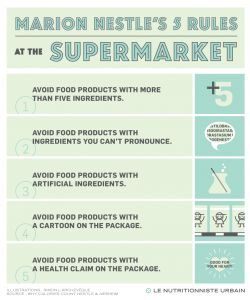
5tips_marion_nestle_eng
In the spirit of the Fed Up Challenge I'll add one more rule: Avoid food with sugar (which means *added sugar*). By the way, did you know food companies can hide sugar behind more than 50 different names? Eve Schaub, author of "Year Of No Sugar" has the list.

The Reality Of Food

It's day 1 of the Fed Up Challenge, or as I like to think of it, 10 Days Without Sugar and I have a feeling I could spend most of my time linking to articles that really piss me off about the reality of food. This is the first, from Mother Jones. The reporter is writing about the two-day annual conference of the California Dietetic Association and it's a pretty good demonstration of the power of "Big Food." I've cut and pasted a couple of key paragraphs below but the whole article is rage-inducing. As one of the attendees says to the reporter, "No wonder Americans are overweight and diabetic. The gatekeepers for our information about food are getting their information from junk-food companies."

The sessions—the real meat and potatoes of the conference—had food industry sponsors as well. The Wheat Council hosted a presentation about how gluten intolerance was just a fad, not a real medical problem. The International Food Information Council—whose supporters include Coca-Cola, Hershey, Yum Brands, Kraft, and McDonald's—presented a discussion in which the panelists assured audience members that genetically modified foods were safe and environmentally sustainable. In "Bringing Affordable Healthier Food to Communities," Walmart spokespeople sang the praises of (what else?) Walmart.

After lunch, I attended "Sweeteners in Schools: Keeping Science First in a Controversial Discussion." Sponsored by the Corn Refiners Association, whose members produce and sell high-fructose corn syrup, it included a panel composed of three of the trade group's representatives. The panelists bemoaned some schools' decision to remove chocolate milk from their cafeteria menus. Later, one panelist said that she'd been dismayed to learn that some schools had banned sugary treats from classroom Valentine's Day parties, which "could be a teachable moment for kids about moderation." The moderator nodded in agreement, and added, "The bottom line is that all sugars contain the same calories, so you can't say that there is one ingredient causing the obesity crisis." The claim was presented as fact, despite mounting scientific evidence that high-fructose corn syrup prompts more weight gain than other sugars.

The more I learn about food in this country the madder I get. Giving up M&M's is just the beginning. We need a revolution. Read the article here

Sunday, May 11, 2014

This Is Why People Don't Cook

Yesterday, as promised, I made homemade tomato sauce. How did it go?

The Good: It tasted great. 
The Bad: It was way more complicated and time-consuming than I anticipated.
The Ugly: By the time I was finished my kitchen looked like several cans of tomatoes had exploded and (cue small violins) I cut my finger while slicing up the vegetables (the "mirepoix.")  

Thoughts: 

Read the recipe carefully. I was so focused on the ingredients, and in particular on the sugar and salt content, that I didn't read the recipe carefully enough before I started. If I had, I probably would have gone looking for a recipe that didn't require me to pluck the seeds out of a whole can of tomatoes, or pour the hot tomato sauce from the sauce pan into the food processor and, after puréeing it, pour the still-hot sauce back into the pan. Very messy. 

Read the labels carefully. The recipe called for one 28-ounce can of whole tomatoes and the label on the can said it contained 3 grams of sugar and 170 mgs of salt. That didn't sound too bad, but oops, I fell for the "serving size" trick. Since I was going to use the whole can in my sauce, I assumed those amounts were for the whole can. Wrong. It turns out that a 28-ounce can of whole tomatoes is considered, at least by the manufacturer, to contain *seven* servings, which means I was getting 1190 mgs of sodium and 21 grams of sugar. The ingredient list didn't include sugar, so the sugar must (I hope) occur naturally in the tomatoes, but do they have to add so much salt? 

Estimate your time carefully. The recipe took twice as long to complete as I expected it to, only partly because I had to stop and find a band-aid when I cut my finger. Chopping the onion, carrot and celery, seeding and crushing the tomatoes, and puréeing the hot sauce all took a lot longer than I expected. It also took a lot more bowls and utensils than I expected, and cleaning up the kitchen afterwards took longer too. 

So would I do it again? I'll make tomato sauce again but I'm going to find an easier recipe. I like to cook so even though things didn't go exactly as planned I still enjoyed doing it. But for people who don't like to cook or aren't used to cooking, making this recipe would be a giant pain in the neck. I can totally understand the appeal of just opening a jar of Newman's Own and heating it up in the microwave, regardless of the salt, sugar and/or fat content, which pretty much sums up the heart of the Fed Up Challenge. Tomorrow's Day 1 and I'm interested to see how it goes. 

Saturday, May 10, 2014

Saucing The Tomatoes


The Fed Up Challenge doesn't officially start until Monday but I decided to get into the spirit of things by cooking my own tomato sauce. I'm aware that one good way to get away from the "evils" of processed food and gain control of what you're eating, especially the big bad three additives of salt, sugar and fat, is to cook stuff yourself.

My usual, easy "pasta for lunch" meal is made with store-bought tomato/pasta sauce in a jar. Specifically I've been buying Newman's Own Cabernet Marinara, which, according to the front label is "All Natural" and "Made With Extra Virgin Olive Oil," and according to the back label contains the following:

Tomato puree (water, tomato paste, citric acid)
Diced Tomatoes
Cabernet Wine
Salt
Sugar
Extra Virgin Olive Oil
Soybean Oil
Dried Onions
Basil
Dried Garlic
Spices

Pretty straightforward, right? No long, multi-syllable chemical enhancements or preservatives, just some regular food items that I can buy myself. The serving size is a 1/2 cup, which contains 70 calories, 590 grams of sodium, or 25% of the recommended daily value, and 9 grams of sugar. Before deciding to take up the challenge of giving up, or at least cutting way back, on sugar, I was mostly concerned about the sodium. 590 grams is a lot of salt, especially for 1/2 cup and that brings up one of the tricks food companies use to make us think their products are healthier than they really are: the so-called serving size is unrealistically small. I've heard that in Italy it's traditional to eat pasta with just a small coating of sauce, but I admit I like mine the American way, doused in sauce. My usual amount is closer to a full cup, which means I'm getting half my daily allotment of salt in one serving of pasta with sauce, plus 18 grams of sugar.

With all that in mind I set out to make my own tomato sauce. Check back tomorrow to hear how it went.

Friday, May 9, 2014

The "Fed Up" Challenge

Question: Can I give up sugar for 10 days?
Answer: Sure.
Honest answer: I'm not sure.

There's a new documentary out today, called Fed Up, with Katie Couric as a producer and narrator. It's about the really horrible stuff most of us Americans eat most of the time and in conjunction with the release of the movie, Katie has issued a challenge: give up sugar for 10 days, starting Monday.

Question: How hard can that be?
Answer: Really, really hard.

It's not just about giving up the obvious stuff with sugar, like candy, cookies, ice cream and Coke, where the sugar is easy to see. The harder part is the "hidden" sugar, which is in almost everything we eat. A quick check yesterday, as I pondered attempting the challenge, revealed sugar as an ingredient in such things as Wish Bone Italian salad dressing, the tomato sauce in a jar that I put on pasta and the mustard and mayo I put on my sandwich. The pasta doesn't have sugar, but it does have wheat flour, which apparently affects my brain the same way sugar does. The bread in the sandwich has sugar, too, although the label loudly announces "No High Fructose Corn Syrup."

Yikes.

So am I going to take the challenge? Yes, with one caveat: I'm giving myself permission not to do it perfectly. It's not going to be easy. I've already figured out that if I really stop eating everything with even a little bit of sugar in it there won't be much left to eat other than fresh fruit and vegetables, with the occasional piece of chicken or fish on the side. That's pretty much the point of the whole thing, but still. It's a big change to make.

If you're intrigued, check out the Fed Up website here.