Tuesday, August 11, 2020

The Guessing Game - Updated: Kelly Ripa & Her Family

What will be on the cover of People this week? My guesses:

Pete Hamill: The legendary journalist died at age 85
Michelle Obama: Talking about depression during the shutdown; she'll also be a featured speaker at the Democratic (virtual) convention next week
Becca and Garrett: The Bachelorette couple appears to have broken up, although neither has confirmed it
Jennifer Grey: Will star in a Dirty Dancing sequel
Linda Collins: An Arkansas state senator, she was killed by a close friend (read more here)
Kanye West: His so-called presidential campaign is apparently designed to draw voters away from Joe Biden. Several Republicans are helping him get on the ballot in various states.
Maureen Dowd: A dumb mistake in her New York Times column, I wrote about it here
Katherine Schwarzenegger and Chris Pratt: Their daughter was born
Rachael Ray: A big fire at her house, she, her husband and their dog are reported to be safe
Simon Cowell: Broke his back in an e-bike accident
Antonio Banderas: Tested positive for Covid-19
Princess Anne: Turning 70 this Saturday

Stories that appear on the new cover will be highlighted in green.

Update on Tuesday evening. Madeleine Westerhout: A former executive assistant to Donald, her book, titled Off The Record, comes out today (August 11)

Update #2 on Wednesday morning:

Issue dated August 24, 2020: Kelly Ripa and her Family

Image


Last year at this time: Issue dated August 26, 2019

Saturday, August 8, 2020

Dump Pence? - Updated

I've written several times here in the blog about the possibility that Donald would dump VP Mike Pence in favor of Nikki Haley, so much so that I started using a "Dump Pence" tag. (Click here to see those posts.) Now, as we wait for the name of Joe Biden's (female) pick, there's a little more Veepstakes intrigue, this time on the Republican side.

Do you know who Kristi Noem is? Neither did I, until this morning. She's the Republican governor of South Dakota and now she's the one who may be trying to shove Mike Pence aside. How? With some serious sucking up to Donald.

In an article titled How Kristi Noem, Mt. Rushmore and Trump Fueled Speculation About Pence’s Job, and sub-titled After Ms. Noem, the South Dakota governor, flew to Washington on Air Force One, speculation about her ambitions ensued. She made a second trip to smooth things over with Mike Pence, New York Times reporters Jonathan Martin and Maggie Haberman tell an intriguing story:

WASHINGTON — Since the first days after she was elected governor of South Dakota in 2018, Kristi Noem had been working to ensure that President Trump would come to Mount Rushmore for a fireworks-filled July 4 extravaganza.

After all, the president had told her in the Oval Office that he aspired to have his image etched on the monument. And last year, a White House aide reached out to the governor’s office with a question, according to a Republican official familiar with the conversation: What’s the process to add additional presidents to Mount Rushmore?

So last month, when the president arrived in the Black Hills for the star-spangled spectacle he had pined for, Ms. Noem made the most of it.

Introducing Mr. Trump against the floodlit backdrop of his carved predecessors, the governor played to the president’s craving for adulation by noting that in just three days more than 125,000 people had signed up for only 7,500 seats; she likened him to Theodore Roosevelt, a leader who “braves the dangers of the arena”; and she mimicked the president’s rhetoric by scorning protesters who she said were seeking to discredit the country’s founders.

In private, the efforts to charm Mr. Trump were more pointed, according to a person familiar with the episode: Ms. Noem greeted him with a four-foot replica of Mount Rushmore that included a fifth presidential likeness: his.

But less than three weeks later, Ms. Noem came to the White House with far less fanfare — to meet not with Mr. Trump, but with Vice President Mike Pence. Word had circulated through the Trump administration that she was ingratiating herself with the president, fueling suspicions that there might have been a discussion about her serving as his running mate in November. Ms. Noem assured Mr. Pence that she wanted to help the ticket however she could, according to an official present.

She never stated it directly, but the vice president found her message clear: She was not after his job.

There is no indication Mr. Trump wants to replace Mr. Pence. Mr. Trump last month told Fox News that he’s sticking with Mr. Pence, whom he called a “friend.”

Yet with polls showing the president trailing Joseph R. Biden Jr., the presumptive Democratic nominee, and Republicans at risk of being shut out of power in Congress, a host of party leaders have begun eyeing the future, maneuvering around a mercurial president.

Senator Tom Cotton of Arkansas was in New Hampshire late last month, Senator Rick Scott of Florida is angling to take over the Senate Republican campaign arm to cultivate donors, and Representative Liz Cheney of Wyoming is defending Dr. Anthony S. Fauci, the government’s leading expert on infectious disease, while separating herself from Mr. Trump on some national security issues.

At the same time, Secretary of State Mike Pompeo is attempting to shore up his conservative credentials by pushing a hard line on China, and Senators Ted Cruz of Texas and Rand Paul of Kentucky are attempting to reclaim their standing as fiscal hawks by loudly opposing additional spending on coronavirus relief.

Drawing less attention, but working equally hard to burnish her national profile, is Ms. Noem. The governor, 48, has installed a TV studio in her state capitol, become a Fox News regular and started taking advice from Mr. Trump’s former 2016 campaign manager, Corey Lewandowski, who still has the president’s ear.

Next month, she’ll address a county Republican dinner in Iowa.

“There seems like there might be some interest on her part — it certainly gets noticed,” Jon Hansen, a Republican state representative in South Dakota, said of Ms. Noem’s positioning for national office.

Her efforts have paid off, as evidenced by the news-driving celebration at Mount Rushmore. Yet Ms. Noem’s attempts to raise her profile have not been without complications. And they illustrate the risks in political maneuvering with a president who has little restraint when it comes to confidentiality, and a White House that shares his obsession about, and antenna for, palace intrigue.

To the surprise of some of her own advisers, Ms. Noem flew with Mr. Trump to Washington on Air Force One late in the evening after his Mount Rushmore speech. Joined by Mr. Lewandowski, she and the president spoke for over an hour privately during the flight — a fact that Mr. Trump and some of his aides soon shared with other Republicans, according to officials familiar with his disclosure.

An aide to Ms. Noem, Maggie Seidel, said she did not raise the vice presidency with Mr. Trump. Mr. Lewandowski, who is a paid adviser to the Pence-aligned Great America PAC, also denied that he or the governor ever raised the subject of replacing Mr. Pence on the ticket.

Mr. Lewandowski, in a brief interview, described Ms. Noem as a star who “has a huge future in Republican politics.”

A White House official laughed at the notion that Mr. Trump is open to replacing Mr. Pence, a move that, among other things, would exude desperation. And regarding the phone call about adding the president’s image to Mt. Rushmore, the official noted that it is a federal, not state, monument.

Still, word of the Air Force One conversation quickly reached White House officials, including those in Mr. Pence’s office.

A short time later, Ms. Noem was jetting back to the capital, this time in less grand fashion, after requesting a meeting with Mr. Pence.

White House aides kept Ms. Noem from meeting with Mr. Trump again, one person familiar with the planning said. But Mr. Pence’s office gladly put his session with the governor on his public schedule and the vice president tweeted about it afterward. Ms. Noem’s aides, hoping to tamp down questions about the second trip, emphasized that she had also met with officials from the Department of Health and Human Services and other agencies while she was in the capital.

One official close to the vice president said that Ms. Noem did not discuss her Air Force One flight with Mr. Pence but used the conversation to say she wanted to help the campaign however she could. The official suggested that the vice president’s team has an opportunity for her in mind: helping Mr. Pence prepare to debate whichever woman Mr. Biden selects as his running mate.

Yet one senior Trump adviser has recently lamented to others that Mr. Trump could have boosted his re-election campaign had he replaced Mr. Pence with a woman, according to people familiar with the conversations. One potential candidate mentioned was Nikki Haley, the former United Nations ambassador who is close to the president’s daughter and son-in-law, Ivanka Trump and Jared Kushner.

However, Mr. Pence has been an unstinting ally of Mr. Trump, and the vice president retains a number of allies in the president’s orbit.

“I think we’ll win South Dakota either way,” Brian Ballard, a lobbyist close to Mr. Trump, said.

That these kinds of speculative conversations about a different running mate have taken place at all, though, illustrates the depth of frustration in Mr. Trump’s inner circle over his political fortunes.With early voting starting in less than two months in some states, the president’s ineffectual response to the coronavirus has alienated voters and made the election primarily a referendum on him.

Speculation has long lingered in Republican circles that Mr. Trump could swap out Mr. Pence for Ms. Haley, partly because of the president’s own musings about it.

For a time in 2018, Mr. Trump queried people about Mr. Pence’s loyalty. And officials in the administration, including some close to Mr. Pence, said they believed that Mr. Kushner and Ms. Trump were angling to replace him with Ms. Haley.

In his memoir, “The Room Where It Happened,” the former national security adviser John R. Bolton recounts how, flying to Iraq on Christmas night in 2018, the president asked him for his opinion on jettisoning Mr. Pence.

Ms. Noem, the daughter of a rancher who took over her family’s property after her father died, has insisted that she has little appetite to return to Washington, where she served as South Dakota’s sole House member for eight years before becoming governor.

“She’s focused on being the governor of South Dakota,” said Ms. Seidel, her senior adviser.

The president’s transition team contacted her about interviewing for a cabinet post after the 2016 election, but she was already planning to run for governor then. Some of her allies believe she’d also be open to the interior or agricultural secretary roles in a second Trump term ahead of the 2024 race.

Ms. Noem’s poll numbers have increased after a difficult first year in office. But to some of her aides, Mr. Lewandowski, a hard-charging New Englander, has been a disruptive presence in Pierre, South Dakota’s small state capital. He appeared as a guest speaker at one luncheon with cabinet officials and pressed the governor’s appointees to make a more aggressive case for her, irritating the state officials, according to a person briefed on the events.

The governor is now on her third chief of staff because the last one, Joshua Shields, left in part because of the increased role of Mr. Lewandowski, according to South Dakota Republicans.

Mr. Lewandowski has sought opportunities that could benefit both Mr. Trump and Ms. Noem. He recently discussed with the president’s advisers sending Mr. Trump to the annual motorcycle rally in Sturgis, S.D., where there would be a big crowd and where the two might have appeared together again; Mr. Trump’s aides did not want him in the same politically safe state twice in two months.

Ms. Noem has been a steadfast ally of Mr. Trump and has mirrored his handling of the virus.

She has pushed for schools to reopen for in-person classes, denounced mask mandates and had South Dakota participate in a study on hydroxychloroquine, the malaria treatment Mr. Trump has trumpeted.

It was her star turn at Mount Rushmore, though, that has gotten Republicans talking and been a boon to South Dakota tourism, the state’s second-largest industry.

Recognizing the president’s immense interest in the monument, Ms. Noem worked with his Interior Department to ensure there would be fireworks for the celebration, a longstanding priority for Mr. Trump. There had been no fireworks there for the previous decade because of environmental and fire-risk concerns.

In the weeks leading up to the event, Ms. Noem went on Laura Ingraham’s show on Fox News to make clear she was expecting to “have a large event” for the president and would not require social distancing or masks.

Then, as the president sat watching her remarks in a bunting-wrapped box just offstage, she praised America as a place where someone who was “just a farm kid” could become “the first female governor of South Dakota.”
(This is the article in its entirety.)

I'm trying to decide which part of this is the most annoying, disgusting and/or pathetic:
  • A woman smart enough to get elected governor is taking advice from Corey Lewandowski
  • The Republican belief that putting a woman on the ticket will get women who don't like Donald to vote for him
  • Donald's dream of seeing his face on Mt. Rushmore
Now let's think about Governor Noem. A recently-elected female governor in a large, western state with a small population. The first female governor of that state and one of the youngest governors in the country. An ambitious woman with national-level dreams. Who does that remind you of? Our old friend Sarah Palin, of course. 

I think of Sarah every four years as we wait to hear who's been picked to run for VP. Ever since 2008, avoiding John McCain's catastrophic mistake has been Job One for every presidential candidate. I also assume that it's not just the person doing the picking who doesn't want to repeat the Palin disaster. Presumably everyone who's interviewing for the job is also determined to do it a hell of a lot better than Sarah Palin was able to do. Sarah was given a rare opportunity, one that probably every politician in America would kill for, and she squandered it. She wasn't ready in 2008, but she was only 44, young for a governor. She had political skills and many, many Republicans thought she had potential for the future and wanted her to succeed.  

So what happened? Where is she now? Twelve years after her star turn as the Republican VP candidate, followed by a couple of years in which she was the It Girl Of All It Girls, Palin, who even now is only 56 years old, is completely out of politics, and as far as I can tell, isn't doing much of anything. She quit her governorship without completing a single term and never ran for office again. She wrote a few books. She appeared on several reality TV shows, including most recently something called The Masked Singer. She has seven grandchildren. She's divorced. What's next? Believe it or not, in a recent interview with ABC News, she said that she's thinking of running for something again. Here's how People reported the story:

Palin told ABC that the woman who 2020 Democratic candidate Joe Biden picks to be his running mate "has really got to be strong and be vocal when it comes to those trying to shape them, mold them, tell them what to say," referencing campaign aides who advise politicians on everything from policy to clothes.

"That candidate had better be strong and stand up for what she knows is right," Palin said.

As for herself, Palin said she would run for office again "in a heartbeat" and that she planned to run for an elected position again at some point.

She said she would take more control of her public image the next time around, however.

"I would've gone rogue a lot earlier," she said, when addressing what she would do differently in a future campaign. "I would've fought back against those who were running the campaign who, you know, weren't in touch with the American people and what the American people wanted."

She continued: "I'd do it again in a heartbeat, and I want to do it again. I want to be back in there in public service."
(Read the entire article here.)

Hell will freeze over before Donald's face is carved into the mountains of South Dakota and my bet is that it'll be pretty cold before Sarah Palin runs for office again, too. (Unlike 10 years ago, when every little thing Sarah said got wall-to-wall coverage, her interview with ABC was almost invisible, although ABC could run it again as part of their coverage of Joe Biden's VP pick.)

Would Donald dump Pence for Kristi Noem or Nikki Haley? Unlikely, but nothing would surprise me.


Update:


Update #2:


And, by-the-way, Donald, no, you can't have your face carved on Mt. Rushmore. The Sioux City Argus Leader explains why, other than the obvious reasons, it's not possible:

The problem is, as most South Dakotans already know, adding Trump, let alone any president, is not possible.

Maureen McGee-Ballinger, public information officer at Mount Rushmore, said workers are asked daily whether any president can be added. And for years, people have suggested Franklin Roosevelt, John F. Kennedy and Ronald Reagan, among others. A website – MakeRoomonRushmore.com – advocates for Obama.

"There is no more carvable space up on the sculpture," McGee-Ballinger said. "When you are looking on the sculpture, it appears there might be some space on the left next to Washington or right next to Lincoln. You are either looking at the rock that is beyond the sculpture (on the right), which is an optical illusion, or on the left, that is not carvable."

A brief history lesson: Gutzon Borglum originally intended to put Thomas Jefferson first in the lineup. Washington had already been started in his current spot, but when work commenced on Jefferson, it was determined the rock wasn't usable. Washington remained, but Jefferson had to move.

Lincoln had to be relocated, as well, leaving behind another segment of worked rock. An inscription in the shape of the Louisiana Purchase was scrapped.
(Read the entire article here.)

Update #3 on Thursday, August 20. I don't know how credible reporter Helen Kennedy is, but I saw her tweet this morning and decided to put it here:


Will Donald kick Mike Pence to the curb next week? Stay tuned. 

Too Much Pot Brownie?

New York Times columnist Maureen Dowd published a not-very-well-edited column this morning, claiming that it had been 36 years since "a man and a woman ran together on a Democratic Party ticket." This caused political/history nerds such as myself to scratch our heads. What about Hillary and Tim, a mere four years ago? How quickly they forget.

A howl of outrage went up on the Twitterverse and the offending sentence was quickly fixed, although the NYT can't bring themselves to apologize for the error:


Fortunately for history, Daniel Larison had grabbed a screenshot of the original NYTimes Opinion tweet:


Hillary weighed in too:


It was entertaining, but all is well for the moment and there's not much else to say except c'mon Joe Biden, put us all out of our quadriennial Veepstakes misery and announce your pick soon!

But wait. "A very vivid hallucination," "Too much pot brownie"? What's that about? Hill is referring to a column Dowd published on June 3, 2014. Titled Don't Harsh Our Mellow, Dude, this is what it said:

The caramel-chocolate flavored candy bar looked so innocent, like the Sky Bars I used to love as a child.

Sitting in my hotel room in Denver, I nibbled off the end and then, when nothing happened, nibbled some more. I figured if I was reporting on the social revolution rocking Colorado in January, the giddy culmination of pot Prohibition, I should try a taste of legal, edible pot from a local shop.

What could go wrong with a bite or two?

Everything, as it turned out.

Not at first. For an hour, I felt nothing. I figured I’d order dinner from room service and return to my more mundane drugs of choice, chardonnay and mediocre-movies-on-demand.

But then I felt a scary shudder go through my body and brain. I barely made it from the desk to the bed, where I lay curled up in a hallucinatory state for the next eight hours. I was thirsty but couldn’t move to get water. Or even turn off the lights. I was panting and paranoid, sure that when the room-service waiter knocked and I didn’t answer, he’d call the police and have me arrested for being unable to handle my candy.

I strained to remember where I was or even what I was wearing, touching my green corduroy jeans and staring at the exposed-brick wall. As my paranoia deepened, I became convinced that I had died and no one was telling me.

It took all night before it began to wear off, distressingly slowly. The next day, a medical consultant at an edibles plant where I was conducting an interview mentioned that candy bars like that are supposed to be cut into 16 pieces for novices; but that recommendation hadn’t been on the label.

I reckoned that the fact that I was not a regular marijuana smoker made me more vulnerable, and that I should have known better. But it turns out, five months in, that some kinks need to be ironed out with the intoxicating open bar at the Mile High Club.

Colorado raked in about $12.6 million the first three months after pot was legalized for adults 21 and over. Pot party planners are dreaming up classy events: the Colorado Symphony just had its first “Classically Cannabis” fund-raiser with joints and Debussy. But the state is also coming to grips with the darker side of unleashing a drug as potent as marijuana on a horde of tourists of all ages and tolerance levels seeking a mellow buzz.

In March, a 19-year-old Wyoming college student jumped off a Denver hotel balcony after eating a pot cookie with 65 milligrams of THC. In April, a Denver man ate pot-infused Karma Kandy and began talking like it was the end of the world, scaring his wife and three kids. Then he retrieved a handgun from a safe and killed his wife while she was on the phone with an emergency dispatcher.

As Jack Healy reported in The Times on Sunday, Colorado hospital officials “are treating growing numbers of children and adults sickened by potent doses of edible marijuana” and neighboring states are seeing more stoned drivers.

“We realized there was a problem because we’re watching everything with the urgency of the first people to regulate in this area,” said Andrew Freedman, the state’s director of marijuana coordination. “There are way too many stories of people not understanding how much they’re eating. With liquor, people understand what they’re getting themselves into. But that doesn’t exist right now for edibles for new users in the market. It would behoove the industry to create a more pleasant experience for people.

“The whole industry was set up for people who smoked frequently. It needs to learn how to educate new users in the market. We have to create a culture of responsibility around edibles, so people know what to expect to feel.”

Gov. John Hickenlooper and the Legislature recently created a task force to come up with packaging that clearly differentiates pot cookies and candy and gummy bears from normal sweets — with an eye toward protecting children — and directed the Department of Revenue to restrict the amount of edibles that can be sold at one time to one person. The governor also signed legislation mandating that there be a stamp on edibles, possibly a marijuana leaf. (Or maybe a stoned skull and bones?)

The state plans to start testing to make sure the weed is spread evenly throughout the product. The task force is discussing having budtenders give better warnings to customers and moving toward demarcating a single-serving size of 10 milligrams. (Industry representatives objected to the expense of wrapping bites of candy individually.)

“My kids put rocks and batteries in their mouths,” said Bob Eschino, the owner of Incredibles, which makes candy and serves up chocolate and strawberry fountains. “If I put a marijuana leaf on a piece of chocolate, they’ll still put it in their mouths.”

He argues that, since pot goodies leave the dispensary in childproof packages, it is the parents’ responsibility to make sure their kids don’t get hold of it.

“Somebody suggested we just make everything look like a gray square so it doesn’t look appealing. Why should the whole industry suffer just because less than 5 percent of people are having problems with the correct dosing?”

Does he sound a little paranoid?


And one more thing. Was Hillary being just a little bit snarky in her tweet about Dowd's mistake? Yes. Why? In 1999 Dowd won a Pulitzer Prize for a series of 10 columns she wrote in 1998, in which she gleefully shredded Bill Clinton for his activities with Monica Lewinsky. (The Pulitzer committee cited her "fresh and insightful columns on the impact of President Clinton's affair with Monica Lewinsky.") What did she say, exactly? Consider:

January 25, 1998: 

Let's review what we've learned so far.

The President a liar? Knew that.

The President a philanderer? Knew that.

The President reckless in the satisfaction of his appetites? Knew that.

The President would say anything and hurt anybody to get out of a mess? Knew that.

Married men cheat? Knew that.

Married men cheat with young women? Knew that.

Married men who cheat with young women lie about it? Knew that.

Hillary isn't throwing Bill's stuff out on the White House lawn because she is as committed to their repugnant arrangement as he is? Knew that.


August 23, 1998:

After the President's prime-time confession, the news media were abuzz about whether Mr. Clinton could repair his damaged relationships with his wife and daughter.

Suddenly, That Woman stamped her feet. Like the Glenn Close character in "Fatal Attraction," Monica Lewinsky issued a chilling ultimatum to the man who jilted her: I will not be ignored.

She let it be known that she was wounded that the President had failed to apologize to her and had dismissed their grand, 18-month romance, their shared passion for books and laughs, as trivial -- a mere mechanism for relieving Oval Office tension.

Mr. Clinton rejected a more contrite version of the speech written by Bob Shrum -- nicknamed the "Shoot Me" draft at the White House -- that contained an apology to "Monica Lewinsky and her family." Instead, with some brass-knuckle guidance from Hillary, he embraced his wife and daughter as "the two people I love most," while swatting Monica away as "inappropriate."

He portrayed himself, insultingly, as a passive participant in their trysts. What she called true love, he called "legally accurate."


September 13, 1998:

Middle-aged married man has affair with frisky and adoring young office girl. Man hints to girl he might be single again in three or four years. Man gets bored with girl and dumps her. Girl cries and rants and threatens, and tells 11 people what a creep he is.

The dialogue in this potboiler, compiled with sanctimonious, even voyeuristic relish by Reverend Starr, is so trite and bodice-ripping that it makes "Titanic" look profound.

In fact, Monica identified with Rose, the feisty, zaftig young heroine of "Titanic." Last January, the former intern wrote the President what she called "an embarrassing mushy note" inspired by the movie, asking her former boyfriend if they could have sex (the lying-down kind).

Despite the fact that it takes place in the most powerful spot on the planet, the romance does not sizzle.

Bill Clinton fancies himself another Jack Kennedy and invoked his idol's name last week to defend himself.

But Kennedy was cool. His women were glamorous. The Rat Pack was good copy. He may have been just as immoral, but his carousing at least had style.

Mr. Clinton's escapades are just cheesy and depressing. The sex scenes are flat, repetitive, juvenile and cloying, taking place in the windowless hallway outside the Oval Office study or in the President's bathroom.


November 18, 1998: In the final column, Dowd concluded with this: 

At the White House, the truth is employed only to the extent that it's useful. When the Monica story broke, Dick Morris said, the President asked him to do a poll to tell him what would play better, the truth or a lie. Mr. Morris said he told his old pal he couldn't tell the truth and survive, and Mr. Clinton replied, "Well, we'll just have to win."

New York magazine, which included me among its mug shots, rains a cascade of poll numbers showing that by big margins the public is fed up with hearing about the scandal.

I know exactly how the public feels. I'm sick of hearing about it too.

But the fact is that the scandal is there, and the President did what he did and said what he said, and the consequences of what he did and said have preoccupied the executive, the legislative and the judicial branches of government for a year.

To pretend otherwise, to submit robotically to the polls, to take one's professional instructions from the wishes and whims of a fickle electorate would be to abdicate the role the public says it wants the press to play: covering the news.

If the President had told the truth immediately, the story would have died. But it is our job to undo the spin and look into the lies and go the extra skeptical mile to see that there is no cover-up. Moreover, all journalists are not like all other journalists in the wild and woolly and recklessly fast era of the 24-hour news cycle of cable, the Internet and high-decibel know-it-alls and gossips.

The impure history of modern America -- Vietnam, Watergate, Iran-contra -- proves that reporters have a duty to dig for the truth, whatever the public thinks.

There is a danger of making false equations between popularity and rightness, between what is liked and what is true. The danger is that next time, when the cover-up takes place in a less gray area, reporters will look at the numbers and go home early. Next time it may not be about sex and lies. It may be about life and death.


You can read all ten columns here.

Days until the election: 87

Thursday, August 6, 2020

This Day In History, 1945: The First Atomic Bomb Is Dropped On Hiroshima


Wednesday, August 5, 2020

Send Money?

Donald's campaign continues to bamboozle its donors with requests for money:

Image


Image


Donald's campaign brought in a ton of money in July, so these desperate entreaties must work, but wow, to me they're so ridiculous I would have said they were parodies.

Tuesday, August 4, 2020

Happy Birthday, Mr. President!


In honor of Barack Obama's 59th birthday:


Exactly 20 years later, on August 4, 1981, Meghan Markle was born, making today her 39th birthday:


And one more thing. Prince Charles's grandmother, the Queen Mother, was also born on August 4, in 1900. She lived to be 101 years old and died in 2002.

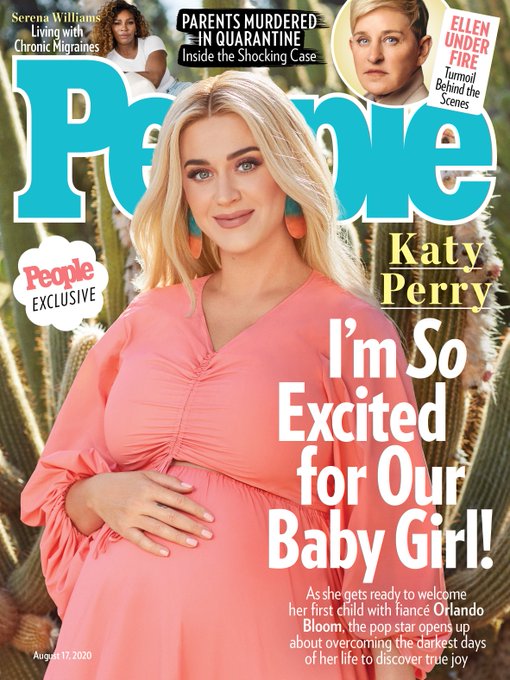
The Guessing Game - Updated: Katy Perry

It's a new Guessing Game post, yay! What will be on the cover of People this week? My guesses:

John Lewis: His funeral was Thursday, with former presidents Obama, Bush and Clinton present
Kim and Kanye: His health issues, their marriage may be in trouble
Ellen DeGeneres: Several former staffers made allegations of issues with the workplace culture on her show, an investigation will take place
Ghislaine Maxwell: Arrested for child trafficking, Donald continues to "wish her well"
Princess Anne: The Queen's only daughter turns 70 on August 15
Sean Penn: He got married
Breonna Taylor: The young woman who was shot and killed by police in her own home; she's on the cover of the new issue of Oprah magazine
Clare Crawley and Tayshia Adams: Big news in Bachelor Nation: Rumors have been confirmed that Clare has left filming of The Bachelorette and Tayshia Adams, from Colton's season, will take her place (read more here)
Wilfred Brimley: Died at age 85
Doug Hurley and Bob Behnken: The AstroDads came home safely
Ree Drummond and/or her daughter Paige: Paige is engaged
Country star Lucas Combs: Also engaged
Nikki Bella and Brie Bella: I barely know who these people are but apparently they both gave birth recently
Michelle Obama: She started a new podcast. Her first guest? Barack.
Britney Spears: #FreeBritney
Val Kilmer: A new movie with his daughter, he's also in the upcoming Top Gun sequel

Stories that appear on the cover of the new issue will be highlighted in green.

Update: Pregnant Katy Perry gets the nod for the main cover this week; Ellen gets a secondary headline.

Issue dated August 17, 2020: Katy Perry
Image


Last year at this time: Issue dated August 19, 2019


Media Literacy


And, for the record, Donald agrees:


Image


Sunday, August 2, 2020

The Books Of Donald, Part 2 - Updated

The New York Times considers a new genre of literature, Political Revenge, featuring our old friend The Mooch:

Title: In Trumpworld, the Grown-Ups in the Room All Left, and Got Book Deals

Subtitle: A large club of Trump administration evictees have turned their bracingly bad experiences into a new genre: political revenge literature.

It was the summer of 2016, and the Republican Party was about to nominate Donald J. Trump for president. Until then, many party members had aggressively opposed his candidacy. “I think he’s crazy,” Senator Lindsey Graham, Republican of South Carolina, said earlier that year. “I think he’s unfit for office.”

But faced with the inevitable reality of Mr. Trump, the party was forced to perform what the British tabloids call a “reverse-ferret” — a messaging U-turn in which you abruptly take the opposite position of the one you espoused a moment earlier.

Contrary to what they said before, the Republicans announced, Mr. Trump was totally suited for the presidency. He would rise to the occasion. Being president would render him, tautologically, presidential. In any case, at least he would be surrounded by adults who would steer him in the right direction.

“It began to dawn on me,” Anthony Scaramucci, who went on to (briefly) work in the Trump White House, wrote of hearing about the then-candidate’s tax proposals. “Donald J. Trump wasn’t the extreme, unhinged, unserious candidate that I thought he was.”

Mr. Scaramucci spent just 11 days as the White House communications director in 2017 before being unceremoniously removed, a victim of his own operatic ineptitude as well as the dysfunction of the White House. He now regrets the error, as he sees it, of ever having admired Mr. Trump. “The guy stinks,” he said recently.

As it happens, Mr. Scaramucci wrote a book about his brief, unhappy White House experience, joining a large club of Trump administration evictees who have turned their bracingly bad experiences into a new genre of political revenge literature. These include James Comey, former F.B.I. director; Omarosa Manigault Newman, former assistant to the president; Andrew McCabe, former deputy F.B.I. director; John Bolton, former national security adviser; Cliff Sims, former White House communications aide; and Anonymous, current senior figure, at least by his or her own account, in the Trump administration.

(There’s also Sean Spicer, former press secretary, who wrote a mostly complimentary book about his fleeting White House tenure; and Mary Trump, not an ex-staffer but the president’s niece, whose scathing portrait of Trump family pathology came out in July and sold 1.35 million copies across all formats in its first week. That book is currently No. 1 on hardback nonfiction best-seller lists in the United States, Britain, Canada and Ireland, and No. 2 in Australia.)

Taken en masse, the books paint a damning portrait of the 45th president of the United States. But the sheer volume of unflattering material they contain can have the paradoxical danger of blunting their collective impact. After the 10th time you read about Mr. Trump’s short attention span, your own attention is in danger of wandering.

“There is only so much the public can absorb,” Anonymous writes in “A Warning.”

There are even more memoirs scheduled for the fall: one by Michael Cohen, the president’s disgraced ex-personal lawyer, which federal officials tried to block but then said could proceed, and another by H.R. McMaster, who was Mr. Trump’s second national security adviser and is no fan of the president.

But at this point, nearly four years in, is there anything left to say about Mr. Trump that might surprise us? Or, as Mr. McCabe writes in “The Threat”: “What more could a person do to erode the credibility of the presidency?”

Reading all these books, one after the other, is like swimming for days in a greasy, brackish canal whose bottom is teeming with shards of broken-down old industrial equipment. The experience is not pleasant, you might hurt yourself, and it leaves you covered in grime. The picture they paint of their protagonist — Mr. Trump — is so outrageous that if they were fiction they would be dismissed as too broad, too much of a caricature.

As different as the authors are, the books share a number of common observations about the president. And so, with the Republican Party set to renominate him this month, here is a reminder of what sort of leader Mr. Trump has turned out to be, according to his growing band of disgruntled former employees.


Trump vs. his employees

Mr. Trump is universally presented in the memoirs as a flamboyantly mean and intemperately indiscreet boss, wrong-footing and humiliating cabinet members and aides with constant criticism, sometimes to their faces, sometimes behind their backs.

The president dismisses Jim Mattis, his first secretary of defense, as “a liberal Democrat,” yells at him in meetings and notes that “I never really liked him.” (“I felt sorry for Mattis, not to mention the country as a whole,” Mr. Bolton writes.)

He derides Kirstjen Nielsen, his second secretary of homeland security as ineffectual and “not mentally able” to handle her job and then, in a fit of pique, futilely attempts to reassign her responsibilities first to Jared Kushner, his son-in-law, and then to Mr. Bolton.

He muses aloud on multiple occasions about dumping Vice President Mike Pence from the ticket in 2020 and replacing him with Nikki Haley, the UN ambassador. “Did we make a mistake with Gina?” he asks, referring to his decision to make Gina Haspel director of the C.I.A.

“Rex was terrible,” he says about Rex Tillerson, his original secretary of state. “What good is he?” he asks rhetorically about Steven Mnuchin, his treasury secretary. “I thought we had the right guy at Treasury. But now I don’t know.”

He yells at his trade adviser, Peter Navarro, when Mr. Navarro attempts to show him a complicated chart outlining a policy point. (“I have no idea what I’m even looking at,” the president snaps.) He tells Mr. Kushner in meetings: “Jared, you don’t know what you’re talking about.” He mocks his original chief economic adviser, Gary Cohn, as a “globalist,” elongating the “O” in a sneering tone, as if the word were akin to “Antifa member.”

Just as the president uses derisive nicknames for his political enemies, so he does for his own subordinates. He mocks Jeff Sessions, his first attorney general, as “Benjamin Button.” He calls Betsy DeVos, the education secretary, “Ditzy DeVos.” “This place is really taking a toll on Kellyanne,” he says of Kellyanne Conway, counselor to the president, implying that she looks tired and worn out.


The president and the truth

The Trump administration surged into life with a whomping great Trumpian untruth: that Mr. Trump’s inauguration crowd was the largest in history. Even Mr. Spicer did not believe it, though he had to pretend otherwise.

“It was hard to keep a straight face as Sean proceeded to lie to the American people,” Ms. Manigault Newman writes.

All the memoirists present Mr. Trump as supremely untrustworthy. He is “a deliberate liar, someone who will say whatever he pleased to get whatever he wishes,” Mr. McCabe writes. “People who’ve known him for years accept it as common knowledge,” Anonymous writes.
Sometimes Mr. Trump asserts one thing and then, a few minutes later, just the opposite.

On other occasions, he conjures pieces of misinformation designed to bolster his thesis, as when he insisted that “three to five million people” voted illegally in the 2016 election. He has a habit of plucking figures from thin air — first $20 billion, for instance, then $38 billion, to drive home his point about trade deficits in a meeting with President Moon Jae-in of South Korea — regardless of the numbers’ relationship to fact.

The memoirists have different ways of dealing with all this presidential slipperiness. Mr. Comey and Mr. McCabe start keeping detailed logs of their encounters with the president, the way you would if you had an unstable spouse and wanted to catalog his erratic behavior for use in future divorce proceedings.

Too bad, is the apparent view of Reince Priebus, the original chief of staff.

“The directive came down from Reince,” Ms. Manigault Newman writes, “that our default position was to back up whatever the president said or tweeted, regardless of its accuracy.”


How to describe the experience

Striving for new ways to characterize the head-spinning unreality of the Trump White House, the authors of the memoirs turn to a variety of vivid figures of speech.

Mr. Spicer: “I sometimes felt like a scuba diver, abandoned in the middle of the ocean, treading water.”

Mr. Comey: “The demand was like Sammy the Bull’s Cosa Nostra induction ceremony — with Trump, in the role of the family boss, asking me if I have what it takes to be a ‘made man.’”

Ms. Manigault Newman: “The selection process for his cabinet was like an episode of ‘The Bachelor.’”

Mr. Bolton: “It was like making and executing policy inside a pinball machine.”

Anonymous: Working for Mr. Trump was like “showing up at the nursing home at daybreak to find your elderly uncle running pantsless across the courtyard and cursing loudly about the cafeteria food.”

Trump as instigator

To read these books is to read of a chaotic, paranoiac workplace, where the boss delights in fomenting discord and instability among the employees.

He encourages them to keep tabs on one another. “Give me their names,” he tells Mr. Sims, wielding a Sharpie and a White House note card, vowing to rid the White House of nonloyalists.

He praises their rivals. “Keith Kellogg knows all about NATO,” the president says airily to Mr. Bolton, speaking with ominous intent of Mr. Pence’s national security adviser. “He never offers his opinions unless I ask.”

(This causes some merriment between Mr. Bolton and Mike Pompeo, the current secretary of state, who plays dual roles in Mr. Bolton’s drama: as a rival he suspects of conspiring and leaking against him, and as his partner in anti-Trump incredulity and black-humored job insecurity.

“As Pompeo and I reflected later, this statement told us exactly who my likely replacement would be if I resigned soon,” Mr. Bolton writes. “I said, ‘Of course, if you resign, maybe Keith would be Secretary of State.’” To which Mr. Pompeo responds: “Or, if we both resign, Keith could become Henry Kissinger and have both jobs.’”)


The president’s verbal style

Mr. Trump likes to talk, the memoirists agree, and he does not like to listen.

He meanders from topic to topic, loops back around, adds new topics, repeats himself, boasts, mixes facts with fake facts, throws in his latest obsession, continuing on and on according to some labyrinthine stream-of-consciousness impulse in which whatever is on his mind is worthy of public utterance. He does this in rallies and at campaign events; he also does it in briefings, in one-on-one conversations and at policy meetings.

“I don’t use the word ‘conversation’ because the term doesn’t apply when one person speaks nearly the entire time,” Mr. Comey writes of the experience.

The presidential attention span

It is true that Mr. Trump successfully repeated the words “person, woman, man, camera, TV” on television in an effort to demonstrate the superiority of his mental acuity, but it is also true, the books argue, that he rarely reads, gets bored easily, is irritable and distracted, has trouble remembering complicated things, has no intellectual curiosity and is ignorant not just about his job but about things generally considered common knowledge.

With his short attention span, he is averse to learning anything at briefings if he finds the information difficult to follow, boring, or in contravention of what he already thinks. Staff members are told to to stick to a single point and repeat it often, and to boil complex proposals down to a single page — or, better, a single paragraph. They are told not to present Mr. Trump with too-long briefing papers, lest he shout at them, or with too many slides, lest his eyes glaze over.

“Any time somebody new came in to brief him, he’d get angry and say, “Who’s that guy? What’s he want?” Ms. Manigault Newman writes.

The presidential schedule

The president keeps unconventional office hours, is ofte
n late to meetings and events and watches a lot of TV.
“At 9:35 I called Trump, who was as usual still in the residence,” Mr. Bolton writes.

“He often doesn’t start the day in the Oval Office until 10 or 11 a.m.,” Anonymous writes. He is “channel-surfing his way through the presidency.”

“His official schedule was more of a loose outline than a strict regimen,” Mr. Sims writes.

The presidential ego

In “Too Much and Never Enough,” Mary Trump describes her uncle as “a savant of self-promotion” with a “delusional belief in his own brilliance and superiority” stemming from a bottomless insecurity that needs to be assuaged with a constant stream of ego-boosting compliments.

That is why the president often asserts that he is the best at everything.

“It was the most presidential act in decades,” he says, after he directs the Pentagon to bomb Iran and then calls it off at the last minute. (Mr. Bolton has a different take: “In my government experience, this was the most irrational thing I ever witnessed any president do.” )

“They say I might be the world’s greatest brander,” he says to Mr. Sims, before unveiling his marketing idea for his tax-cut plan: calling the legislation the “Cutting Cutting Cutting Bill” (it ended up being called something else).

Several memoirists describe how Mr. Trump, to soothe a wounded psyche bruised by his failure to win the popular vote in 2016, continually invited visitors to admire posters illustrating how he had won the election anyway.

“Trump kept big charts in his private dining room, in his den, in his study, that showed the electoral map color coded in red and blue,” Ms. Manigault Newman writes. “When anyone walked in, he’d point to the chart and talk about the election results.”

Anonymous was familiar with the maps, as well. “Trump carried around maps outlining his electoral victory, which he would pull out at odd times,” he writes. “He would beckon guests, as well as aides, advisers and incoming cabinet officers, to gaze at the sea of red on the map.”


Does Mr. Trump use a tanning bed?

“His face appeared slightly orange, with bright white half-moons under his eyes where I assumed he placed small tanning goggles,” Mr. Comey writes.

Ms. Manigault Newman mentions the tanning-adjacent chatter around the abrupt firing of Angella Reid, chief usher of the White House, several months into Mr. Trump’s administration.

“Allegedly, Trump didn’t approve of her handling of his tanning bed,” she says. “I’d heard he was unhappy with her efforts to procure the bed, to bring it into the East Wing securely, to find a discreet place for it, and to set it up properly.”

Aides on the president’s conduct

The memoirs paint a picture of the West Wing as a place of baroque workplace dysfunction, where workers gather to trade “Guess what he did now” stories about their boss and to save him (and themselves, and the country) from his worst impulses.

And so, in “A Warning,” Anonymous writes that cabinet-level administration officials contemplated “a midnight self-massacre,” which would entail “resigning en masse to call attention to Trump’s misconduct and erratic leadership.”

Many staffers are perpetually on the brink of quitting, keeping resignation letters on hand should the time come. And if his colleagues hate working for the Trump administration, John Kelly, the president’s second chief of staff, apparently hates it the most.

“This is the worst” (insert expletive here) “job I’ve ever had,” Mr. Kelly tells Mr. Sims.

“You can’t imagine how desperate I am to get out of here,” he tells Mr. Bolton. “This is a very bad place to work.”

Things John Bolton claims people said to him

A striking aspect of “The Room Where it Happened” is how frequently cabinet-level officials confide incredulously in Mr. Bolton about the president’s irrationality and narcissism, as if they and the former national security adviser formed a gang of rebellious high-school students, quietly plotting resistance against the incompetent autocrats running the school.

“As McGahn often whispered to me,” Mr. Bolton writes, speaking of Donald McGahn, who served for a while as White House counsel, “This is not the Bush Administration.”

“Has there ever been a presidency like this?” Mr. Kelly asks Mr. Bolton, mentioning that the president has just said, apropos of nothing, that it would be “cool” to invade Venezuela. (“I assured him there had not,” Mr. Bolton responds.)

“This is getting pretty silly,” Mr. Mattis says to Mr. Bolton as the men listen to Mr. Trump rail at Jens Stoltenberg, the secretary general of NATO, about how America’s allies mock it behind its back because it pays too much in annual dues.

As for Mr. Pompeo, Mr. Bolton describes how the secretary of state passed him a snarky anti-Trump note in the middle of the president’s summit with Kim Jong-un of North Korea in 2018. And he describes how, after listening to the president yell at Ms. Nielsen about border security in a particularly fruitless meeting, Mr. Pompeo whispers to Mr. Bolton: “Why are we still here?”


Leaving Trump’s orbit

What Donald can do in order to offset the powerlessness and rage he feels is punish the rest of us,” Mary Trump writes.

This is clear by the way he behaves when he has fired someone or they have quit, frequent occurrences in an administration with such a high turnover. After he fires Mr. Comey, the FBI director, while he is in California, for instance, Mr. Trump is incensed to learn that Mr. Comey has returned to Washington on the same government plane that he traveled out on.

“That’s not right! I didn’t approve of that!” he rants to Mr. McCabe. Then he decrees that Mr. Comey should never be allowed to enter the F.B.I. headquarters again, not even to clean out his desk. “I’m banning him from the building,” the president says.

After Mr. Mattis resigns as defense secretary, Anonymous writes, the wounded president throws “a temper tantrum,” insists that Mr. Mattis leave the job immediately, before his successor has been named, and then falsely claims that in fact he fired Mr. Mattis, rather than the other way around.

How the Trump administration said ‘you’re fired’

Mr. Comey: Saw the news reported on TV in the back of the auditorium while he was in the middle of making a speech in California.

Mr. McCabe: Saw the news on TV, followed by a presidential tweet: “Andrew McCabe FIRED, a great day for the hard working men and women of the FBI.”

Ms. Manigault Newman: Called into the Situation Room before the 2017 White House Christmas Party, was informed by Mr. Kelly that “there are significant integrity violations related to you,” and was not allowed to leave until the stress of the encounter triggered an asthma attack and she went home.

Mr. Sims: Submitted his resignation after being told by Mr. Kelly: “In the past 40 years, I don’t think I’ve ever had a subordinate whose reputation is worse than yours.”

Mr. Priebus: Idling in the presidential motorcade after a trip to New York on the day after he had submitted his resignation, learned that his removal was effective immediately when he read on Twitter that Mr. Kelly was replacing him. The motorcade went on Twitter that Mr. Kelly was replacing him. The motorcade went on to the White House; his car peeled away and drove off into oblivion.

Trump on the authors

Mr. Comey: “A weak and untruthful slime ball”

Mr. McCabe: “A major sleazebag.”

Ms. Manigault Newman: “Vicious, but not smart.”

Mary Trump: “A seldom seen niece who knows little about me, says untruthful things about my wonderful parents (who couldn’t stand her!) and me, and violated her NDA. … She’s a mess!”

Mr. Sims: “A low level staffer that I hardly knew. … He is a mess!”

Mr. Bolton: A “sick puppy.” 
(This is the article in its entirety.)

All this stuff is interesting but almost all of it could have been discerned by anyone who was paying attention to Donald before the election. The books mentioned above have all been written and published while Donald is still president, theoretically at least the most powerful man in the world. I can only imagine what we'll learn in the memoirs written after the clock strikes twelve and he turns into an old, tired, worn-out, unhealthy, unpowerful and unloved former president. (January 20. Noon. Eastern time.) 

And speaking of unhealthy, apparently Donald made another unscheduled visit to Walter Reed hospital yesterday; I've seen quite a bit of chatter about what could have caused the bruise on his right hand:


In the spirit of "What's wrong with Donald," remember the "Orange Death Mask" picture from last Wednesday: 

Trump
(AP Photo/Susan Walsh)

I was thinking it must have been photoshopped. It just didn't seem possible that his staff would let him go out in public looking like that, but that's the picture direct from AP Images. It's very strange. 

Saturday, August 1, 2020

This Day In History, 1981: MTV Goes Live


A Full And Complete Healthcare Plan - Updated


Donald's interview with Chris Wallace took place on July 19:


At the 43-second point he says "We're signing a healthcare plan within two weeks. A full and complete healthcare plane."

Two weeks from July 19 is August 2, which is tomorrow. He said this yesterday:


Update on Sunday afternoon:


Looks like Donald spent a good part of today, Sunday, at his golf course. Don't worry, it's only mid-afternoon. He still has plenty of time to present his full and complete plan to the nation. 

Update #2. There was, of course, no plan.