Sunday, July 12, 2020

Follow The Money - Updated

I've never believed Donald is as rich as he claims to be. I do believe that if the truth about his finances ever comes out, it will be clear that he's a serious criminal and has been for years. Today this thread from Adam Davidson caught my eye:


I think Donald's money will be getting more attention and not in a good way. Stay tuned.

Update on August 5. More about Donald's monetary adventures in Scotland, from an article at Mother Jones:

In 2006, Donald Trump purchased a 1,400-acre swath of the old Menie Estate in Aberdeenshire, a rambling property situated on Scotland’s rugged and remote northeastern coast. Trump pledged to develop a world-class golf resort replete with luxury villas there, and he vowed to revitalize the region with more than a billion dollars of investment. Though not an obvious location for a glitzy development—the area is mostly known for its offshore oil industry, and it rains more than a third of the year—Aberdeenshire was to be the beachhead of the mogul’s ambitious plan to insert his family name among the storied golf courses of Scotland, the birthplace of the sport, and attain for his brand the kind of old-world prestige that had eluded Trump in the United States.

The development seemed particularly important to Trump, whose mother hailed from the Isle of Lewis, a far-flung island in the Outer Hebrides. And it was unlike anything he had undertaken before. He often licenses his name to projects financed by others. And the self-proclaimed “king of debt” typically takes out large loans to finance the ventures he does bankroll. In this case, Trump’s company proceeded with the development on its own. And it says it paid for everything in cash.

Such was also the case for Turnberry, the historic golf resort, an hour south of Glasgow, that Trump purchased in 2014 for $60 million. His large expenditures in Scotland were notable because they came during a rocky financial stretch for Trump. The year before purchasing the Aberdeenshire estate, he was ousted as CEO of his thrice-bankrupted casino business; in 2008, he defaulted on a large Deutsche Bank loan tied to a development in Chicago.

Like other Trump wagers, his Scottish gamble has so far not worked out. Both resorts are bleeding millions annually. Meanwhile, he and his company have spent years viciously skirmishing with various locals and government agencies that resisted Trump’s plans to build luxury housing on the fringes of the resorts, which the Trump Organization seems to view as vital to profitability.

If business was lackluster before, it’s dismal now that the coronavirus pandemic has all but halted the Scottish golf season, at least as far as international travelers are concerned. To make matters worse, as Trump’s hospitality empire grapples with the fallout of COVID-19, it also faces a series of maturing debts, loans amounting to nearly a half-billion dollars, which need to be paid down or refinanced over the next four years.

Recently, a new—and perhaps bigger—threat to Trump has emerged in Scotland. Scottish lawmakers are pushing to peer into Trump’s finances using an anti-money-­laundering statute typically employed against kleptocrats, oligarchs, and crime kingpins. Their question: Where did the hundreds of millions Trump poured into his Scottish courses actually come from?

Early promotional materials for Aberdeenshire carried what purported to be the Trump clan’s baronial crest—three lions under an armored fist brandishing a spear and surrounded by a flourish of red and white feathers.

It was, no surprise, a fake. Trump had cribbed the coat of arms from Joseph Edward Davies, whose wife had built Mar-a-Lago and who had legitimately been granted the crest in the 1930s. He had made only one minor change, erasing the Davies family motto of “integritas” (integrity) and replacing it with “Trump.” He had used the doctored crest for years to peddle all sorts of products—from ties to beach towels—and it was plastered across his US properties.

But that didn’t fly in Scotland.

For centuries the country has had an office devoted to making sure people do not claim someone else’s family name. And after it determined Trump was indeed displaying a stolen coat of arms, he was barred from using it. The episode foretold Trump’s subsequent misadventures in Scotland, a country particularly resistant to his brand of flimflam.

In Aberdeenshire, Trump initially won over locals with his plans for a sprawling upscale golf community containing multiple courses ringed by tastefully designed homes. He vowed to bring 6,000 jobs to the area. But fierce opposition formed when Trump revealed his plans to build the first course atopenvironmentally sensitive sand dunes. In late 2007, local planners rejected Trump’s proposal, but after Scotland’s then–First Minister Alex Salmond met with Trump, the Scottish government stepped in to overrule the local authorities. Construction proceeded. But when Salmond refused to block a planned offshore wind farm in view of Trump’s course, Trump went ballistic. He wrote Salmond a series of bizarre letters in which he insisted that if Salmond allowed the wind farm, he would destroy any chance of Scottish independence, and “your economy will become a third world wasteland that global investors will avoid.”

At a hearing in 2012, a member of the Scottish Parliament asked Trump, who appeared in person, for evidence that the turbines would damage Scottish tourism.

“Well, first of all, I am the evidence. I’m more of an expert than the people you’d like me to hire…I am considered a world-class expert in tourism,” Trump declared without missing a beat, as the room broke out in laughter and audience members rolled their eyes.

Trump eventually sued the Scottish government but lost so resoundingly that in 2019 he was ordered to pay its legal fees. The wind farm had been completed the previous year.

Meanwhile, Trump became embroiled in petty disputes with his neighbors in Aberdeenshire. At first, these were the type of NIMBY contretemps that are to be expected when a large development is proposed in a small community. But with Trump, whose business credo is “get even with people,” things quickly escalated.

The Menie Estate had been sold off in parcels over the years, requiring him to purchase it piece by piece. But a group of homeowners whose properties formed small enclaves amid the larger estate defied Trump’s entreaties to sell.

David Milne was one of them. In 1992, he purchased a decommissioned coast guard watch station on the property. It was government-owned, Milne says, and “dead cheap.”

“It was an empty, cold industrial building,” Milne recalls, describing how he wandered through the structure, eventu­ally making his way to a tower with a panoramic view of the North Sea. “I came upstairs and got into what is now my office and looked out at the view and it was just a case of, ‘Wow! Yes, I’m having this!’ And the deal was done. I put down my roots and never moved. There’s literally my blood, sweat, and tears in this building in various walls. Heartaches, heartbreaks, success, pain, and triumph. I’m proud of this building, proud of this house.”

Perched on a hillock overlooking what would become the 18th hole, Milne’s home stood dead in the center of Trump’s vision of a pristine golf course for elite jet-setters. “I want to get rid of that house,” Trump declared during a visit to his course in 2010, adding, “We’re trying to build the greatest course in the world. This house is ugly.”

Milne and his wife rejected Trump’s purchase offer, which Milne describes as laughably low. Trump raised his price slightly and attempted to sweeten the deal by offering Milne, who rarely golfs, a lifetime membership at the club and access to its spa. After the Milnes rebuffed that offer, Trump’s lawyer asked local authorities to take their home—and those of others who refused to sell—by compulsory purchase (the UK version of eminent domain). Milne and several other neighbors fought off the attempt. He contends Trump then tried to harass them out of their properties.

Construction work severed Milne’s water and phone lines. Milne says the Trump Organization also encircled his property with trees to block his view, attempted to construct a giant berm hemming him in, and threatened to knock down his garage for allegedly being built over the property line (it wasn’t). Ultimately, Trump’s company erected a fence around the Milnes’ property—then billed the couple for the work.

Milne tossed the bill and has delighted in telling the story ever since—especially since Trump made his famous campaign pledge in 2016 to “build a great, great wall on our southern border” and make Mexico pay for it. The Milnes now fly a Mexican flag (next to the Saltire, the Scottish flag) outside their home, within view of the Trump clubhouse.

Trump’s heated squabbles with Milne and other neighbors had a sideshow quality—bizarre, ham-handed, and often self-defeating—but there was something stranger still about the amounts of cash he has dumped into Aberdeenshire and Turnberry.

He spent nearly $13 million purchasing the land for the Aberdeenshire course, and as much as $50 million developing the property. All, apparently, in cash. According to Trump, after purchasing Turnberry in 2014 for $60 million from a holding company owned by the government of Dubai, he dished out as much as $200 million rehabbing the venerable property.

Neither has ever turned a profit. Turnberry, considered one of the top Scottish courses, has seen its golf business decline. When it opened in 2012, Aberdeenshire was touted as a technically interesting and highly challenging course, but it has struggled to attract crowds. Milne says that over the last few years he’s found it so sleepy it rarely bothers him.

“To be quite honest, it’s not a major issue to me,” he says. “The car park is very rarely more than half full.”

The size of Trump’s wealth is a source of great debate, but two things are fairly well known—the period between 2006 and 2014 included some of his lowest points, financially speaking, and even in the best of times, the amount he splurged in Scotland would be a ton of cash for him to have on hand, let alone spend so freely. And Trump made these Scottish investments amid a $400 million cash spending spree, documented by the Washington Post, in which he also purchased a golf club in Ireland, five courses in the United States, and several pricy homes.

The New Yorker estimated that Trump would have spent half his available cash on the purchase of Turnberry alone, concluding there wasn’t “enough money coming into Trump’s known business to cover the massive outlay he spent” renovating the property.

And the mystery deepens. Martyn McLaughlin, a Glasgow-based reporter for the Scotsman newspaper, discovered that in 2008 Trump approached a Scottish bank asking for a $63 million loan to buy and renovate a historic hotel near Edinburgh, overlooking the final hole of St. Andrews, the most famous golf course in the world. The terms he proposed were so ludicrously favorable to him that bank executives concluded Trump was asking for a “free loan,” and doing business with the developer was “too risky.” Meanwhile, Trump was touting his “very strong” cash position and his representatives were telling the Scottish public that he had more than $1 billion available to spend in their country. (The Trump Organization did not respond to questions from Mother Jones.)

This February, a group of Scottish Parliament members began making the case that Scotland should use an investigative tool under UK law called an Unexplained Wealth Order (UWO) to scrutinize Trump’s transactions. It can’t be wielded against just anyone; it’s designed to make inquiries into the finances of “politically exposed persons” suspected of money laundering. It has been invoked several times in London; for example, examining how the wife of a jailed ex–Azerbaijani government official had managed to afford a 16 million-pound shopping spree at Harrods.

Patrick Harvie, a Scottish Parliament member and co-leader of Scotland’s Green Party, has led the campaign for a UWO against Trump. “This is not someone who inspires confidence in sound finances and sound business,” he says. “The fact that there are many allegations floating around that the US authorities have investigated, whether it’s in relation to Russia or his political dealings domestically—you don’t have to sniff the air very long to see there’s something that smells.”

Harvie cited a report by Avaaz, a global nonprofit activist group, that has been key to the campaign. It highlights Trump’s assoc­iation with people scrutinized by US law enforcement for illicit financial transactions, including Paul Manafort, his campaign chair who was convicted of tax and bank fraud, and Michael Cohen, who was sent to prison for campaign finance crimes committed on Trump’s behalf.

“Without more information from Mr. Trump, there is reasonable doubt that his income during the time of Turnberry’s purchase and renovation would have been sufficient to cover all of these expenditures,” the report concludes.

McLaughlin puts it in simpler terms. “The abiding mystery is why Mr. Trump and his companies seem to relish in spending exorbitant amounts of money and losing exorbitant amounts of money here,” he says. “Given all the difficulties the Trump Organization has had, why is it so determined to throw more money at it?”

One theory is that Trump hoped to own a course that hosts a “major”—one of the top-tier professional golf tournaments each year. Turnberry used to regularly host the British Open, but it hasn’t since Trump took over. “He desperately wants a major. That was the big idea,” says sports writer Rick Reilly, who has golfed with Trump and in 2019 published the book Commander in Cheat: How Golf Explains Trump.

Indeed, the New York Times reported this summer that in 2018 Woody Johnson, a Trump donor who was appointed as US ambassador to the United Kingdom, told several colleagues that the president had asked him to make inquiries with the British government about steering the British Open to Turnberry. According to the Times, Johnson did raise the question with the Scottish secretary of state, against the advice of career diplomats; nothing came of it.

Reilly says Trump ruined any chance of getting the British Open with his racist and sexist conduct. “Of all the people in the world that aren’t going to put up with a fool, it’s the Scots,” he says. “They’re just such a no-nonsense people and they see him for what he is: He’s a big blowhard con man who is trying to tell them what they know isn’t true.”

Trump’s alleged entreaty to his UK ambassador is not the first time his administration has been accused of taking action to boost Turnberry’s lackluster business. Last year, Politico reported that Air Force flight crews stopping for overnight layovers in Scotland were being sent to Turnberry’s hotel—a luxury establishment close to an hour away from the airport—even though cheaper lodging was available nearby. The Air Force, which spent nearly $184,000 at Turnberry, denied any wrongdoing.

If Trump’s Scottish ventures seemed ill-fated before, things are about to get much worse. In 2018, the most recent year for which numbers are available, both courses lost more than $15 million combined. And that was a good year. A golf industry expert familiar with Trump’s operations says he expects that 2020 revenues at Turnberry and Aberdeenshire will be down 80 to 90 percent from 2018.

Gordon Dalgleish, president of PerryGolf, which organizes golf tours for well-heeled clients in the British Isles, says the pandemic has brought Irish and Scottish golf tourism to a standstill. At many of the iconic Scottish courses, including Trump’s, “well north of 50 percent” of the patrons are wealthy Americans. “If you sat in the lobby at Turnberry, you’d hear a lot of American accents,” he says.

Not this year. In May, Scottish authorities allowed golf clubs to reopen, but under strict guidelines: Clubhouses were shuttered, caddies can work for golfers from just two households a day, and players are barred from congregating on the course before, during, or after play. But the far bigger impediment is that, as of July, the United Kingdom required international travelers to quarantine for two weeks. “It’s pretty hard to sell a one-week trip until there’s no quarantine,” Dalgleish notes.

Last fall, local authorities rejected Trump’s initial proposal to build a golf community at Turnberry, but in July, McLaughlin revealed that the Trump Organization had quietly drawn up plans for an even more ambitious expansion—one that could cost hundreds of millions of dollars. Meanwhile, Aberdeenshire officials have finally approved Trump’s plan to begin building a second course along with luxury homes and “five-star hotel cottages.” The cost, according to Trump, is almost $200 million.

Dubbed the Trump Estate, promotional materials show rows of quaint dwellings crowded along elaborately landscaped lanes. Homes range in price from about $370,000 for a two-bedroom cottage to $1.6 million for a five-bedroom mansion.

But with revenues so low, the money needed to complete the project—let alone a major development at Turnberry—may be hard for the Trumps to come by. McLaughlin also says he doesn’t understand how luxury homes in an out-of-the-way region of Scotland, known for blustery North Sea winds and offshore oil, make sense.

“Quite how they’ll have a viable business scheme out of that, I’m not sure,” he says. “Who pays hundreds of thousands of pounds for a family villa in the northeast of Scotland that’s got the corrosive brand of Trump attached to it?”

Reilly agrees. “Buying a place there would be like flying to Italy to go to an Olive Garden,” he says. “It’s insane. Who would do that?”

McLaughlin says that at an open house for prospective buyers last winter, the interested parties seemed mostly foreign. “Which raises the question, Who is investing? Who is giving money to the president’s company? It’s the most explicit opportunity to put money into the Trump Organization in return for property.”

Of course, if Trump’s finances continue to suffer, he may have to offload the courses before he builds a single villa. “He’ll have to. It’s a matter of when,” says the golf industry expert. “He doesn’t have the cash flow.”

David Milne says he hasn’t heard from the Trumps in years. But one early evening 11 years ago, at the height of the planning battle over Aberdeenshire, Milne says he heard a knock at his door. He opened it to find Donald Trump Jr. and then–Trump Organization executive George Sorial. They had visited before, Milne says. “They quite often showed up and tried to discuss something. Usually they were told to go away. None of them have ever been over the doorstep.”

That evening, they weren’t there for a discussion; just to deliver a message—or, as Milne understood it, a threat. “Remember, whatever you say and whatever you do, we usually get what we want,” Milne recalled being told.

“Not this time,” he responded.
(This is the article in its entirety.)


And what are we to make of this:


Tomorrow is going to be an interesting day.


Saturday, July 11, 2020

Grammar Lessons - Updated

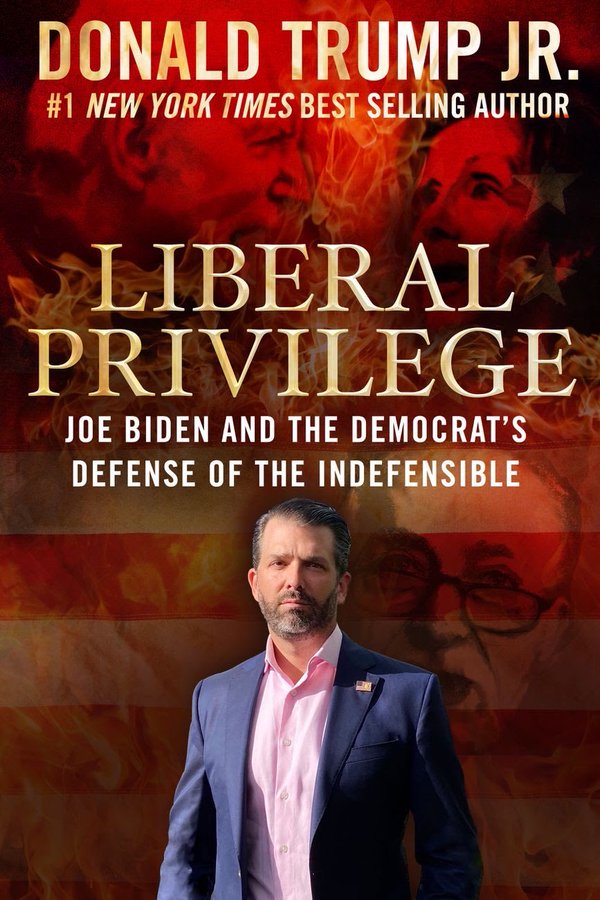
What's wrong with this picture?

Image

Yes, the cover of Don Jr.'s new book has a typo. I think it's hilarious. Does that make me a bad person?

More:


Read the Axios article here.

Update: I was talking about the apostrophe (it should be after the s: Democrats') but look closely. There's another mistake. "Best Selling" should have a hyphen (Best-Selling.) I also saw a short debate on Twitter about whether these are typos or misspellings. I used the word typo above but after giving it some thought, I've decided that "grammar error" is more precise.

Now if I'm lucky I won't have to think about Junior's dumb book ever again.

Update #2 on July 26. Don Jr. is featured in this MeidasTouch ad:

This Day In History, 1804: Hamilton v. Burr


Donald's Women

I've always been surprised and puzzled by the fact that significant numbers of women, white college-educated women in particular, voted for Donald in 2016. Now, writing at The Bulwark in an article titled "What Women Want," and subtitled "Here's what women who voted for Trump in 2016 are saying about him now," Sarah Longwell sheds some light on why they did, and why they're not doing it again this time. This is the article in its entirety:

One of the great mysteries of 2016 was why so many women voted for Donald Trump.

Despite being caught on a hot mic talking about grabbing women “by the pu**y,” nearly 20 sexual assault allegations, and well known accounts of treating his multiple wives horribly, Trump still received the votes of 44 percent of white college-educated women and 61 percent of non-college-educated white women.

Many observers were doubly confused because they had expected Hillary Clinton, as the first major party female nominee, to be especially strong with women. And she wasn’t. Trump did poorly with African-American and Hispanic women, because he did poorly with all African-Americans and Hispanics. But he managed to actually win a narrow plurality among white women. 


But that mystery has been easy to solve. Over the last three years I conducted dozens of focus groups with both college-educated and non-college-educated female Trump voters. And the answer given most commonly for why they voted for Donald Trump is “I didn’t vote for Donald Trump. I voted against Hillary Clinton.”

In 2016, Democrats understood that Hillary Clinton was a deeply polarizing candidate. But even they didn’t grasp the full magnitude of it. Right-leaning and Republican female voters had spent more than a decade hating both Clintons, and they didn’t stop just because Hillary’s opponent was an unrepentant misogynist.

In fact, Bill Clinton’s legacy of similarly disgusting behavior with women—and Hillary Clinton’s defense of her husband—had the effect of blunting Trump’s own execrable track record. These women voters decided that either way, there’d be a guy with a long history of sexual malfeasance living in the White House.

But after Trump’s victory, something started happening almost immediately. Women—even those who voted for Trump in 2016—began shifting away from the president.

In the 2018 midterm elections that delivered Democrats 40 congressional seats and control of the House of Representatives, support for Republicans from both college-educated women and non-college-educated white women dropped by 5 points.

And the relationship has gotten worse.

A recent New York Times Upshot/Siena College Poll showed Trump trailing Joe Biden by 22 points with women. That’s 9 points bigger than the gender gap was in 2016.

And while much has been made of college-educated women in the suburbs ditching Trump, a recent ABC/Washington Post survey shows that Trump’s support with white non-college-educated women has fallen by 11 points.

After nearly three years of conducting focus groups with women who held their nose and voted for Trump in 2016, this decline hasn’t surprised me. He was holding on to many of those voters with a wing and a prayer and strong economy. When everything began to fall apart, these female Trump leaners went running for the exits.

From the beginning of his presidency these women gave Trump low marks for his tweeting and divisiveness—but they also gave him credit for the strong economy and relative prosperity of the last few years.

His perceived business acumen was one of the top reasons many of these women were willing to take a flyer on him in the first place. Never forget that for many Americans, their impressions of Trump were formed less by his presidential campaign than by his role on The Apprentice where he was, through the wonders of editing and reality TV storytelling, presented as a decisive, successful businessman.

In late 2019 and early 2020 with a roaring economy and a bunch of abstract foreign policy scandals consuming the media and the elites whom these voters generally despise and distrust, even Trump-voting-women who rated the president’s performance as “very bad” weren’t entirely sure what they would do in 2020. There was still a crowded field of Democratic candidates—many of whom were living, breathing representations of the far-left caricature that Republicans paint of Democrats.

But by March of 2020, everything had changed.

First, Joe Biden blew out Bernie Sanders and the rest of the Democratic field.

In my focus groups, Biden had consistently outperformed all other Democrats among the female Trump voters who were souring on the president. In hypothetical head-to-head matchups, almost none of the women would take Bernie Sanders or Elizabeth Warren over Trump, but a handful would typically (if not enthusiastically) pick Biden over Trump.

It cannot be overstated how much better of a candidate Joe Biden is for attracting disaffected Republican voters—especially women—than any of the other Democrats who ran this cycle.

Then on March 11 the World Health Organization declared the coronavirus a global pandemic. Two days later, the United States declared a state of emergency.

No one in America will forget what happened next: Lockdowns; PPE shortages; 130,000 deaths; staggering unemployment.

And every night on television voters saw a president both unwilling and incapable of providing clear and coherent leadership.

Since March, I have conducted the focus groups virtually and watched Trump’s position with women weaken in real time.

Interestingly, in the early days of the pandemic the women in the focus groups were frustrated with Trump, but didn’t necessarily hold him responsible for everything that was happening. He hadn’t done great, they said, but it was a tough situation for any president to handle.

It wasn’t until the killing of George Floyd and the resulting protests that the bottom started to drop out.

Two weeks after Floyd’s death I ran a focus group with seven women from swing states—all of whom voted for Trump but currently rated him as doing a “very bad” job.

Only one was leaning toward voting for him again. Three were definitely going to vote for Biden. The other three were still making up their minds. But even these undecideds were unequivocal in their distaste for Trump’s posture on race and his handling of the protests. They actively recoiled.

One of the Trump voters who had decided to vote for Biden said, “The stakes are too high now. It’s a matter of life and death.”

That’s a pretty a good distillation of why Trump has been shedding support from women over the last few months. The multiple crises laid bare the fact that Donald Trump isn’t the savvy businessman these women voted for. Instead, they see him as a divisive president who’s in over his head.

And they see that his inability to successfully navigate this environment has real-world consequences for actual people.

Average voters weren’t moved by Trump’s obstruction of justice in the Mueller investigation, or his quid-pro-quo with Ukraine, or his many personal scandals. But when people are unemployed, or dying, and the streets are on fire, they want a president who isn’t winging it.

They want someone who knows how the world works and can make the government perform the kind of functions that only it can do. Like managing a coordinated national response to a pandemic. Or using the bully pulpit to bring the nation together during a moment of crisis.

Donald Trump and his campaign think they can stop the bleeding with women by leaning into the culture wars and highlighting looters, rioters, and vandals pulling down statues. But this is a fundamental misunderstanding of these voters. They don’t see Trump as someone who can protect them from the chaos—they think he’s the source of it.

Which isn’t to say that the race couldn’t turn around for one reason or another. I suppose that crazier things have happened in American politics. (Though I can’t think of many off the top of my head.)

But the reality is that no modern president has done more to alienate female voters. His whole life Trump has treated women with disdain. And they are now poised to return the favor.


I voted for Hillary three times, in the 2008 primary, the 2016 primary and the 2016 general election. I think she would have been a fine president, and not just in comparison to the degenerate pig who got the job. She's not perfect (no politician is) but she's not even close to being the devil in high heels her enemies have made her out to be. To me at the time, it was blindingly clear that even a voter who didn't admire Hillary, or perhaps actively disliked her, could see that she was so much better than Donald Trump. 

Obviously, I was wrong. Epistemic closure is powerful; if everything a voter knows about Hillary Clinton was learned by watching Fox News and listening to Rush Limbaugh, hell will freeze over before that voter votes for her.

Anyway, here we are and I have one more thought about Hillary as president and it's something that came to me gradually over the last few years. We won't have a woman in the White House for a few more years but I hope it happens soon. When it does, it will feel strange and different, no matter who the woman is or how wonderful she is. (Note: Different doesn't mean bad. We can adjust to different.) Most likely in addition to the first Madam President, there will also be the first First Gentleman, or whatever he decides to call himself. 

His role won't be easy. It will no doubt take a while before everyone gets used to the fact that the person sitting in the Oval Office is the wife and the person organizing the state dinner is the husband. As much as I wanted to see Hillary as the first woman president, I now believe that things will go more smoothly all around if the first First Gentleman isn't Bill Clinton. Or any former president, really, but especially not Bill Clinton. Presumably no one would actually expect Bill to plan state dinners. Keeping him out of the Oval Office would be the problem. Imagine: 

We're in the East Room of the White House; everyone's waiting for President Clinton to walk in and announce a new initiative to help children. The doors open, the audience stands up and the band starts playing Hail To The Chief. 

Standing in the doorway with her parents, Chelsea grabs her father by the arm. "Dad, wait," she whispers. "The music's for Mom. You have to let her go in first."

I just don't think the Big Dog could handle being the second most important Dog in the room. 

Friday, July 10, 2020

Two Disastrous Numbers

From Jonathan Bernstein, published this morning:

There are only two numbers from this week you need to know if you want to understand the presidential election: 1.3 million and 59,886.

That’s the number of new applications for unemployment insurance last week and (by one estimate) the number of new coronavirus cases from Thursday. They’re both disastrous figures for the nation — and for President Donald Trump, who has no apparent plan to deal with either.

New infections hit yet another daily record on July 9, according to the New York Times. Cases are rising in 36 states plus Puerto Rico, the Virgin Islands and Washington, DC. Hospitals are filling up in Houston, Phoenix and more. Supplies of personal protective equipment are running low. Testing, while considerably better than a few months ago, is still struggling to keep up. As a result, several states (including California, Florida and Texas) have partially reversed their reopenings and many more have paused.

As for the labor market? Despite better-than-expected numbers in April and May, the overwhelming story is that weekly job losses are at what would’ve been a record pace before 2020. As my Bloomberg Opinion colleague Noah Smith puts it:

"The U.S. is in a very odd situation. Even as the official unemployment rate falls, the health of the underlying labor market is deteriorating as the coronavirus pandemic drags on. The country is in the middle of two simultaneous downturns — a short-term seizure caused by fear of coronavirus and a longer-term slump that will look more like a traditional recession. Unfortunately, the latter is just beginning."

There’s no way to predict the direct effects of the pandemic on the election; there simply isn’t a precedent for it. But if there's one relationship that is reliable, it's that hard economic times are terrible for incumbent presidents. It’s possible that voters would give Trump a mulligan on a recession directly tied to something beyond his control. The problem is that the longer the pandemic drags on, the less likely it is that they’ll consider either the public-health disaster or the economic fallout inevitable — especially since the damage has receded in other rich nations.

And especially since Trump has so little to offer. Since mid-April, he has basically abandoned any attempt to control the virus. His only consistent message has been to ask everyone to resume normal life. He's recently been repeating the preposterous claim that the spike in cases is simply an artifact of more testing, which hardly accounts for the hospital beds filling up in state after state. Trump's task force established guidelines for reopening businesses, but the president has urged governors to ignore them; now that his focus is on getting schools to open, he's pushing the Centers for Disease Control and Prevention to gut their recommendations.

As for the economy, Trump seems far more willing to provide continued relief and stimulus than the “wait and see" Senate Republicans. But his specific proposals aren't particularly well thought-out or suited for the job (he really wants to restore the deductibility of business-entertainment expenses, which seems more like a long-term benefit for people in the hospitality business than a way to immediately boost the economy). And he hasn't put together a sustained push for new legislation; he's been willing to let Senator Mitch McConnell set the pace, which has meant months of delay. At any rate, as both public-health professionals and economists have been screaming since March, the economy will never be healthy as long as the virus is out of control.

The truth is that, in a crisis like this, there just isn’t a substitute for sustained, serious presidential action, and Trump has been more of a passive spectator than anything else. And while there is still theoretically time for him to rebound from his desperate standing in the election, it's hard to see how that happens if he doesn't change the way he runs his presidency.
 (This is the article in its entirety.)

Thursday, July 9, 2020

Would Donald Quit, Continued - Updated

Just going to post this:


This may be a one-off or there may be a growing chorus discussing the possibility of Donald declining to run for re-election. I'll add to this post as I see more.

Update. Another tweet about Donald not running:


I wrote about the possibility of a Pence pardon for Donald back in January, 2019. I said then I don't think it's a given and I still don't:

I know I've wandered into the weeds a bit in this post, but there's one more thing on my mind as I ponder Mike Pence's future. A month after Gerald Ford became president he issued an unconditional pardon of Richard Nixon. He did it partly out of compassion for Nixon and his family, partly because he believed that having to resign the presidency counted as a serious punishment, meaning that Nixon didn't "get off scot-free," and partly so he (Ford) and the country could move on from Watergate.

Would Pence follow Ford's lead and pardon Donald, if he was in a position to do so? Ford's pardon of Nixon was volcanically unpopular and the conventional wisdom is that it played a significant part in Ford's loss to Jimmy Carter in 1976. I think it's accurate to say that Ford didn't anticipate how unpopular the Nixon pardon would be. (In his memoir, Ford wrote that he was surprised at how little compassion American voters felt for Richard Nixon after he resigned. I wonder how much compassion Americans would feel for Donald Trump.) President Ford had no historic precedent to look to for guidance but Pence would have one. Based on Ford's experience, my best guess right now is that even if Pence wanted to pardon Donald, he wouldn't do it before the 2020 election. Too risky.

In our "what if" scenario, Donald's best shot at a pardon would probably be a Pence loss in 2020. Soon-to-be former President Pence could issue the pardon on Inauguration Day, 2021, right before he walks out the door of the White House for the last time, which is when outgoing presidents traditionally issue pardons that are expected to be controversial or unpopular. Would he? Pence, who would be 61 at the time, presumably would be looking forward to enjoying the cushy life of a former president. (He could also, of course, be thinking about running again in 2024.) Would he be willing to risk his popularity, and possibly some of his future income from paid speeches and a memoir, by taking the heat for letting Donald off the hook? There's no way to know right now but I'd say it's not a given.
(Read the entire post here.)

What about the opposite switch? Trump stays in place to run for reelection but he dumps Mike Pence and picks another running mate? Former Democratic strategist Ed Kilgore, writing at NYMag.com, thinks it's a possibility:

First, Trump is in very serious danger of not being reelected. He needs a game changer to reset the race, and a fresh veep is a time-honored way to do that, even if it involves (to quote the words said to John McCain in 2008 about choosing Sarah Palin) "high risk [and potentially] high reward." Indeed, if, like Trump, you have no real second-term agenda to tout and no capacity to "pivot to the center" and pursue swing voters via messaging or policies, it's one of the few cards in the deck.

... Second, Trump could perhaps try to blame Pence for his administration's deadliest and most politically damaging error, its mishandling of COVID-19 from the get-go. The veep is, after all, the head of the White House Task Force, even though he has consistently given up the spotlight to Trump and to public-health advisers like Anthony Fauci and Deborah Birx. In an administration with constant personnel changes and little sense of reciprocal loyalty, it wouldn't be that out of the ordinary for the sycophant-in-chief to be asked to step aside as one last act of service to the warrior-king, taking the fall for a public-health disaster. (Read the entire article here.) 

I wrote about the possibility of Donald dumping Pence here, here and here.

Update #2. I was listening to the Campaign HQ podcast, which is hosted by David Plouffe and he also mentioned the possibility that Donald dumps Pence, saying that [Trump] is going to "look to change the channel" and a VP switch might be a way to do that. The episode was recorded yesterday.

Update #3 on July 17. I'm not watching Morning Joe this morning but apparently Mika and Donny are still considering the possibility that Donald will drop out of the race:


Read my first Would Donald Quit? post here.

Update #4 on July 25. Yesterday Nikki Haley sent out a slobberingly sycophantic tweet; apparently she's still dreaming of replacing Mike Pence on the ticket:


Tuesday, July 7, 2020

Is Donald Trying To Lose?

In a column titled "Trump Is Acting As If He Wants To Lose," Jonathan Bernstein ponders Donald's strange choices:

President Donald Trump began a week in which the coronavirus pandemic continues to spread, with devastating consequences for public health and for the economy, by bashing Nascar for banning Confederate symbols and Black Nascar driver Bubba Wallace for not apologizing for … well, it wasn’t exactly clear what he thought Wallace should apologize for. At any rate, it put Trump squarely on the other side of the issue from Nascar, and from (for example) most White state legislators in Mississippi, who recently voted to remove Confederate symbolism from their state flag.

My immediate reaction over on Twitter was to question whether Trump would be behaving any differently if he had given up on winning re-election and was instead trying to cultivate a fanatical group of loyal customers for future business endeavors. I then saw that smart political scientists in the Eastern time zone had beaten me to it:


I should emphasize: In politics, we should always be wary of questioning motives. The nature of political action is that what people say and do is what counts, not what they really think.

And in this case, we should be particularly hesitant. It's tempting to leap to the conclusion that when things go badly for a president, it must reflect his or her deficits and shortcomings rather than economic or political realities. Thus when George H.W. Bush fell behind Bill Clinton in the 1992 campaign, pundits were quick to find what they interpreted as signs that Bush didn’t really want a second term after all — he looked at his watch during a debate! — rather than accepting that Bush surely wanted to win but was basically doomed by a recession.

But when presidents act in ways that can’t be easily understood by analyzing the normal incentives of the job, it’s reasonable to ask what else might be going on. Trump has repeatedly taken fringe positions recently, whether by denouncing Black Lives Matter or scorning masks or deriding a cautious approach to easing pandemic restrictions. Or, for that matter, by ignoring or dismissing reports that Russia offered bounties for killing American troops in Afghanistan. Why would he do that?

I’ve questioned for some time now whether Trump desperately craves re-election, and I think that’s the best framework here. It’s not that Trump doesn’t want to win. It’s that he’s not willing, as normal presidents are, to do whatever it takes. In particular, he doesn’t appear willing to do his job.

That’s the story of the pandemic, where Trump’s refusal since mid-April to do anything at all has been close to inexplicable. In fact, it’s so contrary to normal presidential behavior that the White House plan at this point is just to “hope Americans will grow numb to the escalating death toll and learn to accept tens of thousands of new cases a day,” the Washington Post reported on Monday. Presumably the campaign wishes it had more to work with — as Washington Post columnist Greg Sargent says, it’s a point that certainly makes the president look awful — but that's all that Trump is giving them. And it’s the story on Nascar, too. Trump simply isn’t willing to listen to advisers who want him to stick to poll-tested campaign themes.

Why? Trump’s whole life has taught him that he’s always right no matter how wrong he seems to be. He had plenty of setbacks in his business career, but if he was inclined to learn from them, that temptation was surely erased when he ran for president, was ridiculed by everyone for months, and won anyway. All politicians are at risk of overlearning the supposed lessons of their elections and to think of themselves as underdogs whom the experts wrote off. Trump has better reason than perhaps any other politician ever to make that mistake.

Beyond that is a question of ambition. It’s not really about how much ambition a politician has; it’s about what that ambition is about — the content of a politician’s ambition. Trump is unusual in that he seems focused more on private interest than public ambition. In this sense, choosing not to read briefing materials and to spend hours and hours watching cable TV news is similar to Trump’s decisions against divesting from his businesses or disclosing his tax returns. For Trump, the presidency is a prize he’s won that validates his decision to do whatever he wants, not a job that has obligations.

And that differs radically from previous presidents. Whether it was to change policy in order to improve the nation, or to serve the public, or to be personally powerful, normal presidents really wanted the job. Not just the election victory and the title. And most of those presidents worked hard and sacrificed for years in order to get it. They were under no illusion about the presidency being a position that entitles its occupant to do whatever he or she wants because they had to make so many compromises and commitments to get there — and because, as politicians, they worked with previous presidents and watched them carefully as they were frustrated by the limits of the job. Trump has never given any indication that he’s like that. And right now, it’s costing him — and the nation.

Friday, July 3, 2020

Donald Isn't Well

I'm not watching Donald's speech at Mt. Rushmore, but I'm getting an earful, so to speak, in my twitter feed. The consensus? Donald isn't having a good night. A sampling of what I'm seeing:


And one more thing. If you're wondering why Kimberly Guilfoyle is trending, it's because she has tested positive for the Coronavirus.


Apparently Ms. Guilfoyle didn't see Ivanka Trump's tweet:


Maybe she caught it at this exclusive party in the Bridgehampton last Saturday night, as reported by Page Six:

A Hamptons insider was stunned to arrive at a house in Bridgehampton on Saturday night to find a packed party that looked “as if COVID had never happened” — with Donald Trump Jr. and girlfriend Kimberly Guilfoyle among the revelers.

Our spy estimated there were about 100 partiers, who our source says were maskless, at the bash at the 51 Sandpiper Lane mansion, hosted by famed Hamptons builder Joe Farrell, who owns the pricey pile and is selling one down the road for $15 million. The event — which comes days after Long Island entered Phase Three of reopening and while COVID cases surge in some parts of the country — had a caterer and uniformed bartenders.

A source close to Don Jr. told us that the pair only stayed for about an hour, and that it was an outdoor event on the building’s roof (though our original source said the party was both inside and outside).


Any guesses for how long before Junior tests positive too? 


Thursday, July 2, 2020

Letting Trump Be Trump

In an article titled "Why June Was Such A Terrible Month For Trump," the New York Times ponders the state of Donald's re-election campaign. This is the article in its entirety:

Last Saturday night, over dinner at the White House, Bernard Marcus, a top Republican donor, told President Trump he was alarmed at Mr. Trump’s plummeting poll numbers and Jared Kushner’s stewardship of his father-in-law’s re-election effort.

Mr. Trump sought to assuage Mr. Marcus’s concerns, assuring the billionaire Home Depot founder that his political fortunes would soon change in part because he was bringing in “good people” to steady his campaign, according to a person briefed on their conversation.

The next morning, before setting off for a round of golf, the president tweeted a video from a Florida retirement community that featured a Trump supporter yelling, “white power,” setting Mr. Trump’s aides on a scramble to reach him on the course and have him delete the message.

As Mr. Trump heads to Mount Rushmore on Friday to spend the Independence Day holiday in the carved presence of presidential greatness, he is suffering through the most trying stretch of his administration thanks in large part to his self-inflicted wounds. June represented the political nadir of his three and a half years in the Oval Office, when a race in which he had been steadily trailing, but faring respectably, broke open and left him facing the possibility of not just defeat but humiliation this fall.

The disconnect between the surge in coronavirus cases and Mr. Trump’s dismissive stance toward the pandemic has been particularly pronounced, mystifying Democrats and Republicans alike; this week, as some states halted their reopening because of a record-setting number of new cases, the president predicted the virus would “just disappear.”

In addition to public surveys showing him losing decisively to Joseph R. Biden Jr. in a number of battleground states, private Republican polls in recent weeks show the president struggling even in conservative states, leading Mr. Biden by less than five points in Montana and trailing him in Georgia and even Kansas, according to G.O.P. officials who have seen the data.

Last month’s convergence of crises, and the president’s missteps in responding to them, have been well-chronicled: his inflammatory response to racial justice protesters and his ill-considered rally in Tulsa, his refusal to acknowledge the resurgent virus or seriously address detailed reports about Russian operatives’ putting a cash bounty on American soldiers. It’s this kind of behavior, polls indicate, that has alienated swaths of swing voters.

“People are making judgments about the president’s performance there and how he’s handling it,” said John Thune of South Dakota, the second-ranking Senate Republican, making no attempt to sugarcoat what he acknowledged has become a referendum on Mr. Trump’s performance. “Sometimes you get dealt a hand and you got to play it.”

Yet as demoralizing as June was for many Republicans, what was less visible were the frenetic, and often fruitless, attempts by top Republicans to soothe the president and steer him away from self-sabotage, while also manipulating him to serve their own purposes.

One Republican official who is in frequent contact with the campaign expressed incredulity at how some aides willfully distort the electoral landscape to mollify Mr. Trump, recalling one conversation in which they assured him he was faring well in Maine, a state where private polling shows he’s losing.

Interviews with almost four dozen Republican lawmakers, strategists and administration officials about Mr. Trump’s re-election bid paint a picture of a White House and a re-election effort adrift, at once paralyzed by Mr. Trump’s erratic behavior yet also dependent on him to execute his own Houdini-like political escape. Most of those interviewed requested anonymity to freely discuss internal deliberations, and to avoid retribution from the president.

Mr. Trump continues to hope for an economic recovery he can run on in the final four months of the campaign, and on Thursday he trumpeted as a sign of progress the employment report showing 4.8 million jobs gained in June. But it is not clear that Mr. Trump will get much credit for a partial — and possibly fleeting — rebound when coronavirus cases are soaring.

Some of Mr. Trump’s advisers say their internal polling is more competitive than myriad public surveys showing the president in a deep hole. The debates, which could reorient the race, still loom, and even as Mr. Biden catches up, the president still enjoys substantial fund-raising and organizational advantages.


On Thursday morning, top White House and campaign aides met to lay out a schedule for Mr. Trump through July, one that allows for politicking but, in a nod to Tulsa, at a far smaller scale than his signature rallies.

People close to the White House said that Mr. Trump remains stubbornly determined to feed the appetites of his hard-right base and deliver a message about what he describes as his great achievements in office. He’s also eager to recreate his tiny 2016 team.

Indeed, his well-financed political apparatus is more than ever a family affair, controlled by a small handful of Trump relatives and retainers who are exceedingly indulgent of the candidate — and often at war with one another.

In an interview, Mr. Kushner, whose influence in the administration is exceeded only by Mr. Trump, said his strategy amounted to letting the president dictate his own re-election.

“He’s really the campaign manager at the end of the day,” Mr. Kushner said, adding: “Our job is to present him with data, give him ideas, help him structure. And then when he makes decisions on where he wants to go, the campaign was designed to be like a custom suit for him.”

Letting Trump be Trump will delight some of his most committed supporters, but it is likely to dishearten Republicans who are already nervous about losing the Senate and yielding further ground in the House.

Some of the president’s closest outside allies are attempting to devise more of a strategic plan for his re-election.

Chris Christie, the former New Jersey governor, sent the president a memo last week that White House officials described as a blunt warning that he will lose if he does not stop running the 2016 campaign all over again and urging him to develop a clear vision for the next four years.

Senator Lindsey Graham of South Carolina, who joined Mr. Trump for his golf outing Sunday, is urging him to run as more of a populist on issues like stimulus spending, infrastructure and prescription drugs to combat the virus-driven recession.

A handful of Mr. Trump’s allies are more focused on the staff than the candidate. They are agitating for him to overhaul his operation and effectively demote the campaign manager, Brad Parscale; that’s a move Mr. Kushner has been encouraging in the wake of the Tulsa debacle, for which he has blamed Mr. Parscale, according to people familiar with his thinking.

But some of the president’s closest advisers believe that is unlikely to happen, in part because Mr. Trump is loath to take advice from new strategists anyway.

Mr. Kushner and Mr. Parscale appear increasingly at odds. Mr. Kushner has sent mixed signals about his view of the campaign manager: In a meeting with Republican officials this week, Mr. Kushner repeatedly shushed Mr. Parscale and told him to “shut up,” according to multiple people familiar with the events, but at other times he has urged friends of the president to tell Mr. Trump they think Mr. Parscale is doing a good job.

To some of Mr. Trump’s allies, including some in the conservative news media, the outsized role Mr. Kushner himself plays is part of the problem. And Mr. Trump, for his part, has been dismissive of Mr. Kushner in discussions with advisers in recent weeks, on matters including criminal justice reform, and has indicated that he wants to follow his own impulses, not his son-in-law’s, on how to campaign.

It’s those impulses that members of Mr. Trump’s inner circle spend much of their time on, seeking to quell his agitation over his sagging electoral prospects. Last week, for example, a handful of his White House advisers, but not Mr. Parscale, gathered in the Map Room to lift Mr. Trump’s spirits by showing him new campaign advertising.

Equally revealing — at a moment when Mr. Trump is bleeding support from independents and some moderate Republicans — is how often his advisers pacify him by highlighting his standing with voters he largely has in hand: those who participate in party primaries.

His campaign frequently trumpets the president’s record of success in influencing nominating contests, and in private, campaign officials wield his endorsement as a barely veiled threat.

In an email last month that was shared with Senate Republican chiefs of staff, Mr. Trump’s White House political director, Brian Jack, reminded the head of the Senate Republican campaign arm about the president’s then-unblemished record of endorsements.

“After last night’s election results,” Mr. Jack wrote in the message, obtained by The New York Times, “candidates endorsed by President Trump are now 64-0 in Congressional special and primary elections since the midterms.”

Such boasting, though, only drew more attention to an otherwise obscure House runoff last month for the North Carolina seat previously held by Mark Meadows, Mr. Trump’s chief of staff. Mr. Meadows’s wife nudged Mr. Trump to endorse a candidate who wound up getting trounced, leaving the president unhappy with Mr. Meadows.

There have been strides, if tardy ones, toward a more functional political structure. A key Florida-based operative who was dismissed because the governor of Florida wanted her fired was suddenly brought back this week.

And after he endorsed Kris Kobach, the firebrand Republican, in the 2018 Kansas governor’s race only to see him lose the general election in a deeply red state, Mr. Trump has played a hands-on role in attempting to deny Mr. Kobach the nomination for a Senate seat.

Last month, the president called David McIntosh, the head of the conservative Club for Growth, and persuaded him to have the group take down its ads attacking a rival to Mr. Kobach, Representative Roger Marshall, who is favored by many establishment-aligned Republicans. Still, Mr. Trump has not gone as far as endorsing Mr. Marshall, telling allies he did not want to anger his own voters by openly spurning Mr. Kobach.

Yet the campaign and the White House are still rife with fiefs.

Kimberly Guilfoyle, the former television personality who’s dating Mr. Trump’s eldest son, controls an expanding fund-raising division that is paying at least one donor, the socialite Somers Farkas, to help raise money.

At the same time, the campaign has quietly unwound a team dedicated to coordinating Vice President Mike Pence’s activities, shedding a group of staff members assigned to him.

Mr. Trump is sometimes unaware of moves made in his name, even though Mr. Kushner has made it part of his role to ensure that people don’t take advantage of him. At times, his newness to national politics haunts him as other Republicans seek to have him promote their agendas.

House Minority Leader Kevin McCarthy, for example, had lobbied the president to endorse Tony Gonzales for an open South Texas seat over a more hard-line candidate they feared would have little chance in the general election.

But Mr. Trump grew uneasy after a call from Senator Ted Cruz of Texas, who urged him not to take sides against Raul Reyes, a build-the-wall border hawk. Mr. Cruz endorsed Mr. Reyes on Tuesday, and it is now unclear what the president will do.

What mystifies many Republicans about Mr. Trump is why he is so unwilling to take easy steps that could help remedy his political difficulties.

The most visible example is Mr. Trump’s refusal to promote mask-wearing to fight the virus, which poses perhaps the most dire threat to his re-election. Several advisers have privately urged him to do so, to little avail.

“What I find hard to understand is that in order for the president to get re-elected, he’s going to want to see a really strong economy,” Senator Mitt Romney said, adding that a recovery can’t happen without slowing the spread of the virus, which includes wearing masks. “So I would think the president would be on the air hammering his base to get the economy back and win the election.”

Mr. Romney’s lament illustrates the limits on the ability of Mr. Trump’s staff to influence him.

The president has resisted appeals from some advisers to start an onslaught of television advertising against Mr. Biden. Several people in touch with Mr. Trump and his campaign said the president strongly preferred seeing positive ads about his own accomplishments to negative ones about Mr. Biden. And he has told people he believes the race won’t be decided until October, as it was last time.

Mike Shields, a G.O.P. strategist involved in outside-spending efforts to support Mr. Trump, said Republicans had to seize the opportunity to sully Mr. Biden in a new way. He said efforts to brand Mr. Biden as nearly senile were not working.

“He should not be portrayed as doddering; he should be portrayed as what he is: someone who will drown our vulnerable economy and gladly sign Nancy Pelosi’s radical left legislation into law,” Mr. Shields said, adding of Mr. Biden, “General election voters simply don’t know this yet, so the sooner the better.”

Such a plan of attack would, however, require a disciplined president. Asked if his advisers could separate Mr. Trump from his Twitter feed as they did for a stretch in 2016, a senior administration official laughed and said Mr. Trump would do what he wanted.

Or, as Senator Rick Scott of Florida put it: “He is who he is. People know who he is. You think he’s going to change?”


This is how co-author Jonathan Martin publicized the article on Twitter:  


... and note that he's not talking about Donald resigning his job. He means that the staff is resigned to having a really bad candidate. 


Carl Rove weighs in: 


Raise your hand if you think Donald can all-of-a-sudden demonstrate competence and discipline.

This Day In History, 1964: LBJ Signs The Civil Rights Bill