Showing posts with label Trump Won't Leave. Show all posts

Tuesday, January 5, 2021

A Pickle For Mike Pence (Or Let's Watch The VP Squirm)

One week ago, in an Opinion piece at the NY Times titled "Will Pence Do the Right Thing?," Neal K. Katyal and John Monsky pondered the vice president's situation: 

President Trump recently tweeted that “the ‘Justice’ Department and FBI have done nothing about the 2020 Presidential Election Voter Fraud,” followed by these more ominous lines: “Never give up. See everyone in D.C. on January 6th.”

The unmistakable reference is to the day Congress will count the Electoral College’s votes, with Vice President Mike Pence presiding. Mr. Trump is leaning on the vice president and congressional allies to invalidate the November election by throwing out duly certified votes for Joe Biden.

Mr. Pence thus far has not said he would do anything like that, but his language is worrisome. Last week, he said: “We’re going to keep fighting until every legal vote is counted. We’re going to win Georgia, we’re going to save America,” as a crowd screamed, “Stop the steal.”

And some Republicans won’t let up. On Monday, Representative Louie Gohmert of Texas and other politicians filed a frivolous lawsuit, which has multiple fatal flaws in both form and substance, in an attempt to force the vice president to appoint pro-Trump electors.

Mr. Trump himself has criticized virtually everyone’s view of the election, from that of the Supreme Court to the F.B.I. to Senator Mitch McConnell, but he has never attacked Mr. Pence, suggesting he has hopes for the vice president.

But as a matter of constitutional text and history, any effort on Jan. 6 is doomed to fail. It would also be profoundly anti-democratic and unconstitutional.

Both Article II of the Constitution and the 12th Amendment say that the votes of the Electoral College are to be opened by the “president of the Senate,” meaning the vice president. The Electoral Count Act, passed in 1887 to avoid chaotic counts like the one that followed the 1876 election, adds important details. It provides a detailed timeline to tabulate electoral votes, culminating with the final count to take place on Jan. 6, and it delineates the powers of the vice president.

He is to be the “presiding officer” (meaning he is to preserve order and decorum), open the ballot envelopes, provide those results to a group of tellers, call for any objection by members of Congress, announce the results of any votes on objections, and ultimately announce the result of the vote.

Nothing in either the text of the Constitution or the Electoral Count Act gives the vice president any substantive powers. His powers are ministerial, and that circumscribed role makes general sense: The whole point of an election is to let the people decide who will rule them. If an incumbent could simply maneuver to keep himself in office — after all, a maneuver to protect Mr. Trump also protects Mr. Pence — the most foundational precept of our government would be gravely undermined. In America, “we the people,” not “we, the vice president,” control our destiny.

The drafters of the Electoral Count Act consciously insisted on this weakened role for the vice president. They guarded against any pretense he might have to throw out a particular state’s votes, saying that the vice president must open “all certificates and papers purporting to be” electoral votes. They further said, in the event of a dispute, both chambers of Congress would have to disagree with a particular state’s slate of electoral votes to reject them. And they made it difficult for Congress to disagree, adding measures such as a “safe harbor” provision and deference to certification by state officials.

In this election, certification is clear. There are no ongoing legal challenges in the states of any merit whatsoever. All challenges have lost, spectacularly and often, in the courts. The states and the electors have spoken their will. Neither Vice President Pence nor the loyal followers of President Trump have a valid basis to contest anything.

To be sure, this structure creates awkwardness, as it forces the vice president to announce the result even when personally unfavorable.

After the close election of 1960, Richard Nixon, as vice president, counted the votes for his opponent, John Kennedy. Al Gore, in perhaps one of the more dramatic moments of our Republic’s short history, counted the votes and reported them in favor of George W. Bush.

Watching Mr. Gore count the votes, shut off all challenges and deliver the presidency to Mr. Bush was a powerful moment in our democracy. By the time he counted the votes, America and the world knew where he stood. And we were all lifted up when Mr. Gore, at the end, asked God to bless the new president and vice president and joined the chamber in applause.

Republican leaders — including Senators McConnell, Roy Blunt and John Thune — have recognized the outcome of the election, despite the president’s wrath. Mr. McConnell put it in clear terms: “The Electoral College has spoken. So today, I want to congratulate President-elect Joe Biden.”

Notably, Mr. Pence has been silent. He has not even acknowledged the historic win by Kamala Harris, the nation’s first female, first African-American and first Asian-American vice president.

He now stands on the edge of history as he begins his most consequential act of leadership. The question for Vice President Pence, as well as other members of Congress, is which side of history he wants to come down on. Can he show the integrity demonstrated by every previous presidential administration? The American people accept a graceful loser, but a sore loser never goes down well in the history books.

We urge Mr. Pence to study our first president. After the Revolutionary War, the artist Benjamin West reported that King George had asked him what General Washington would do now that America was independent. West said that Washington would give up power and go back to farming. King George responded with words to the effect that “if he does that, he will be the greatest man in the world.”

Indeed, Washington did so, surrendering command of the army to Congress and returning to Mount Vernon for years until he was elected president. And he again relinquished power eight years later, even though many would have been happy to keep him president for life. Washington in this way fully realized the American Republic, because there is no Republic without the peaceful transfer of power.

And it’s now up to Mr. Pence to recognize exactly that. Like all those that have come before him, he should count the votes as they have been certified and do everything he can to oppose those who would do otherwise. This is no time for anyone to be a bystander — our Republic is on the line.
(This is the article in its entirety.)

About the authors: Mr. Katyal, a law professor at Georgetown, is a former acting solicitor general of the United States. Mr. Monsky is the creator of the American History Unbound Series of multimedia productions that covers watershed moments in American history and a board member of the New-York Historical Society.  

Today, in an article titled "Pence's Choice: Side With the Constitution or His Boss" and subtitled "The vice president will preside on Wednesday when Congress convenes to ratify Joe Biden's victory. President Trump still seems to hold out hope that his loyal No. 2 could change the outcome," the Times has this to say: 

WASHINGTON — Speaking to supporters of President Trump on Monday at the Rock Springs Church in Milner, Ga., Vice President Mike Pence implored the crowd to vote in the two runoff elections Tuesday that will determine whether Republicans maintain control of the Senate.

“I am here for one reason and one reason only, and that is that Georgia and America need David Perdue and Kelly Loeffler back in the Republican majority,” Mr. Pence said.

But the crowd had a message for him, too.

“We need you do the right thing Jan. 6!” one supporter cried out. “Stop the steal!” shouted others. The crowd applauded.

If Mr. Pence has tried to skirt Mr. Trump’s efforts to cling to power, his reception in Georgia on Monday served as the latest reminder of the delicate role he will play on Wednesday, when Congress conducts what is typically a ceremonial duty of opening and counting certificates of electoral votes.

As president of the Senate, Mr. Pence is expected to preside over the pro forma certification of the Electoral College vote count in front of a joint session of Congress. It is a constitutionally prescribed, televised moment in which Mr. Pence will name the winner of the 2020 presidential election, Joseph R. Biden Jr.

It is also a moment some of Mr. Pence’s advisers have been bracing themselves for ever since the president lost the election and stepped up his baseless claims of widespread voter fraud. There is no chance of Mr. Pence not being there, people close to him said. Mr. Pence’s aides have told people that they view the vice president’s role as largely ceremonial.

“I know we all have got our doubts about the last election,” Mr. Pence said Monday in Georgia, attempting to assuage Trump supporters. “I want to assure you that I share the concerns of millions of Americans about voting irregularities. I promise you, come this Wednesday, we will have our day in Congress.”

It was not clear, perhaps by design, what he meant. Mr. Pence does not have unilateral power to affect the outcome of Wednesday’s proceedings. But he has carefully tried to look like he is loyally following the president’s lead even as he goes through a process that is expected to end with him reading out a declaration that Mr. Biden is the winner.

After nearly a dozen Republican senators said they plan to object to the certification of the vote on Wednesday, the vice president’s chief of staff, Marc Short, issued a carefully worded statement intended not to anger anyone.

“The vice president welcomes the efforts of members of the House and Senate to use the authority they have under the law to raise objections and bring forward evidence before the Congress and the American people on Jan. 6,” he said.

The statement, which frustrated senators who say Mr. Trump is trying to thwart democracy, helped to mollify the president, according to one person close to him.

But it was not enough to squash the belief of many Trump supporters — and the president himself — that the vice president could still somehow help overturn the results.

Two people briefed on the discussions said Mr. Trump had directly pressed Mr. Pence to find an alternative to certifying Mr. Biden’s win, such as preventing him from having 270 electoral votes and letting the election be thrown to the House to decide.

In Georgia on Monday night at a rally for Senators David Perdue and Kelly Loeffler, Mr. Trump openly pressured the vice president, saying, “I hope Mike Pence comes through for us, I have to tell you.” He added, “Of course, if he doesn’t come through, I won’t like him as much,” before saying that he really likes Mr. Pence.

On Monday, after Mr. Pence returned from Georgia, the vice president and Mr. Trump were expected to hear a last-minute pitch at the White House from John Eastman, another Trump lawyer. Mr. Pence also met with Senate parliamentarians for hours on Sunday to prepare himself and the president for what he would say while on the Senate floor.

The fact that Mr. Pence’s role is almost entirely scripted by those parliamentarians is not expected to ease a rare moment of tension between himself and the president, who has come to believe Mr. Pence’s role will be akin to that of chief justice, an arbiter who plays a role in the outcome. In reality, it will be more akin to the presenter opening the Academy Award envelope and reading the name of the movie that won Best Picture, with no say in determining the winner.

“President Trump’s real understanding of this process is minimal,” said Scott Reed, a Republican strategist.

Some of Mr. Trump’s other advisers have helped fuel the idea that Mr. Pence could affect the outcome of the election. In an interview with Jeanine Pirro on Fox News on Saturday night, Peter Navarro, a White House trade adviser, claimed inaccurately that Mr. Pence could unilaterally grant a demand by Senator Ted Cruz of Texas and 11 other Republican senators for an “emergency 10-day audit” of the election returns in the states Trump allies are disputing.

On Saturday morning, Mr. Trump called Mr. Pence and expressed “surprise” that the Justice Department had weighed in against a lawsuit filed by Trump supporters, including House members, seeking to expand Mr. Pence’s powers in the process. The suit was dismissed on Friday by a federal judge in Texas whom Mr. Trump had appointed.

One person close to Mr. Pence described Wednesday’s duties as gut-wrenching, saying that he would need to balance the president’s misguided beliefs about government with his own years of preaching deference to the Constitution.

Members of the vice president’s circle expect that Mr. Pence will follow the rules while on the Senate floor and play his ceremonial role as scripted, aides said. But after that, he will have to compensate by showing his fealty to Mr. Trump.

A tentative final foreign trip by Mr. Pence to visit Israel, Bahrain and Belgium was scrapped, while more events to talk up Mr. Trump’s legacy at home are being considered, according to a person familiar with the plans. Aides would not say whether Mr. Pence would attend Mr. Biden’s inauguration.

Pence aides said they expected the vice president to walk through what is expected to happen on Capitol Hill with Mr. Trump before Wednesday, in part to inoculate himself against public criticism in real time.

But even with his practice at managing the president, Republican strategists described Mr. Pence as being in the worst political position of any potential 2024 major Republican presidential candidate. The vice president will be unable to avoid a nationally televised moment when he declares Mr. Biden the winner, potentially disappointing those who believe Mr. Trump was the victor and angering those who think he has the power to change the outcome.

“His best bet is to buck and dodge and make it through without infuriating either side,” said William Kristol, the conservative columnist and prominent “Never Trump” Republican who was chief of staff to Vice President Dan Quayle.

“He has to hope the Trump people are furious at Tom Cotton and anyone else who doesn’t go along,” Mr. Kristol said, referring to Senator Tom Cotton of Arkansas, an ally of the president’s who said he would not join the effort to challenge the Electoral College results. “He has to hope establishment Republicans are furious at Josh Hawley and Ted Cruz. And then he’s the guy who didn’t offend anyone.”

Four years ago, Mr. Pence was facing a difficult re-election for governor of Indiana when Mr. Trump’s advisers at the time saw opportunity in choosing the mild-mannered, silver-haired conservative who was popular among the evangelical voters whose support Mr. Trump needed.

Since then, Mr. Pence has played the role of the president’s relentless defender and — with rare exception — prevented daylight from coming between them.

In an administration that has cycled through four chiefs of staff, four national security advisers and four press secretaries, the vice president’s political calculation has long been that being the unstintingly loyal No. 2 would give him the best shot at inheriting the Trump mantle.

But with just 16 days left in the administration, Mr. Pence is at risk of meeting the fate that he has successfully avoided for four years: being publicly attacked by the president.
(This is the article in its entirety.) 

I have no admiration for Mike Pence, so I'm enjoying watching him squirm about this. I also like the idea of him being in the worst political position of any potential 2024 major Republican presidential candidate. Someone recently declared that Pence has the charisma of a ream of paper, and I agree. Even without his current between-a-rock-and-a-hard-place quandary, it's hard for me to imagine him getting elected to anything in the future. 

Wednesday, December 23, 2020

Four Weeks To Go

This is how Donald is spending his time in the final weeks of his presidency, from the New York Times: 

With four weeks left in President Trump’s term, he is at perhaps his most unleashed — and, as events of the last few days have demonstrated, at the most unpredictable point in his presidency.

He remains the most powerful person in the world, yet he is focused on the one area in which he is powerless to get what he wants: a way to avoid leaving office as a loser.

He spends his days flailing for any hope, if not of actually reversing the outcome of the election then at least of building a coherent case that he was robbed of a second term.

When he has emerged from his relative isolation in recent days, it has been to suggest out of the blue that he would try to blow up the bipartisan stimulus package, driving a wedge through his party in the process, and to grant clemency to a raft of allies and supporters, mostly outside the normal Justice Department process.

He has otherwise sequestered himself in the White House, playing host to a cast of conspiracy theorists and hard-core supporters who traffic in ideas like challenging the election’s outcome in Congress and even invoking martial law, seeking to give some of them government jobs.

He is almost entirely disengaged from leading the nation even as Americans are being felled by the coronavirus at record rates. Faced with an aggressive cyberassault almost surely carried out by Russia, his response, to the degree that he has had one, has been to downplay the damage and to contradict his own top officials by suggesting that the culprit might actually have been China. He played almost no role in negotiating the stimulus bill that just passed Congress before working to disrupt it at the last minute.

It is not clear that Mr. Trump’s latest behavior is anything other than a temper tantrum, attention-seeking or a form of therapy for the man who controls a nuclear arsenal — though one alternative, if charitable, view is that it is strategic groundwork for a grievance-filled run in 2024.

If nothing else, it will make for an especially anxious next 27 days in Washington.

This article is based on interviews with more than a dozen current and former administration officials, Republicans and allies of the president.

Most of his advisers believe Mr. Trump will depart the White House for a final time by Jan. 20. The pardons he announced Tuesday night suggest he is comfortable using his powers aggressively until then. But how far he will go to subvert the election results, actually refuse to leave the White House or to unleash a wave of unilateral policy decisions in his final weeks is hard to discern.

Still, his erratic behavior and detachment from his duties have even some of his most loyal aides and advisers deeply concerned.

For the moment, Mr. Trump has told advisers he’s willing to stop listening to Sidney Powell, the lawyer who has appealed to him by peddling a conspiracy theory about the election, and people like Patrick Byrne, the former chief executive of Overstock.com, who was present for a wild, nearly five-hour meeting in the Oval Office and then the presidential residence last Friday.

But current advisers have described a daily struggle to keep Mr. Trump from giving in to his impulse to listen to those who are telling him what he wants to hear. And former advisers say the most worrisome issue is the gradual disappearance of the core group of West Wing aides who, often working in unison, consistently could get him to turn away from risky, legally dubious and dangerous ideas.

“The number of people who are telling him things he doesn’t want to hear has diminished,” said his former national security adviser, John R. Bolton, who had a very public parting of ways with Mr. Trump and who has been vocal in objecting to the president’s thrashing against his electoral loss.

Mr. Trump has turned to aides like Peter Navarro, a trade adviser who has been trying to gather evidence of election fraud to bolster his boss’s claims. And he is listening to Republicans who insist that Vice President Mike Pence could help sway the election during the normally routine process of ratifying the election early next month, despite the fact that it isn’t realistically possible.

Among Republicans on Capitol Hill, there is talk of clamping down on any of his supporters who might try to disrupt that process, a possibility made real by the president’s importuning of Senator-elect Tommy Tuberville of Alabama to gum up the works.

Yet it is not certain that Mr. Tuberville will carry through the president’s desires, and even he if does, there is the possibility that Senator Mitch McConnell of Kentucky, the Republican majority leader, could step in to prevent such a move. Mr. McConnell has already urged his caucus not to raise objections when the results are certified, because it would force others to publicly vote against the president.

Even in the best of times, Mr. Trump has searched for — and required — reinforcements from people outside the White House in support of whatever his aides will go along with.

But in the White House, Mr. Trump is turning on his closest of allies. He has complained to allies that Mr. Pence, who has been mocked for unflinching loyalty over the last four years, should be doing more to defend him. And he is angry that Mr. McConnell has recognized Mr. Biden as the winner of the election.

This week, Mr. Trump had an assistant send a chart featuring the timing of his endorsement of Mr. McConnell overlaid on polling data to claim he was responsible for Mr. McConnell winning re-election this year — a claim political professionals would dispute — and to suggest the majority leader is ungrateful for his help.

And on Tuesday evening, Mr. Trump tweeted a broadside against Senate leadership by attacking Mr. McConnell and the majority whip, Senator John Thune, of South Dakota, who had said any challenge to ratification of the election results would go down like a “shot dog.”

At the Justice Department, Attorney General William P. Barr’s public and emphatic rejection on Monday of the need for special counsels to investigate election fraud and Hunter Biden appeared intended in part to insulate his short-term successor, Jeffrey A. Rosen, from any further pressure on those fronts by the president.

Privately, allies who have stood by as Mr. Trump has weeded out others through loyalty purges, and who have dismissed criticisms that the president has authoritarian tendencies, are expressing concern about the next four weeks.

Mr. Barr, whose last day in the job is Wednesday, has told associates he had been alarmed by Mr. Trump’s behavior in recent weeks. Other advisers have privately said they feel worn out and are looking forward to the end of the term.

For those who remain, the days have been bleak endeavors during which government workers are forced to spend time either executing the president’s demand that election fraud be proven, or incurring his wrath.

As Axios reported, Pat A. Cipollone, the White House counsel who has implored Mr. Trump to steer clear of proposed maneuvers like having federal officials seize control of voting machines to inspect them, has become a target of the president’s anger.

Mr. Trump has characterized Mr. Cipollone derisively, invoking his own mentor, the infamously ruthless and unscrupulous lawyer Roy Cohn, as what a White House counsel should aspire to be like.

The White House chief of staff, Mark Meadows, has objected to some of the president’s desires, like appointing Ms. Powell as special counsel examining voter fraud, but he also made a trip to Georgia on Tuesday to investigate ballot safety measures. Mr. Meadows, a former House member, has also leaned into the effort by his old colleagues to challenge the vote in Congress, something that might keep the president from engaging further with Ms. Powell, but which many Republicans consider destructive to their party.

Other advisers have simply absented themselves at a time when the president is particularly unsteady.

The president’s son-in-law and senior adviser, Jared Kushner, has been out of the country for significant amounts of time since Election Day, traveling through the Middle East for deals that burnish his own credentials. He has responded to people seeking his help with Mr. Trump by saying that the president is his children’s grandfather, implying there are limits to what he can do to help.

Mr. Trump has spent his days watching television, calling Republicans in search of advice on how to challenge the electoral outcome and urging them to defend him on television. As always, he turns to Twitter for boosts of support and to vent his anger. He has not gone golfing since the weather has turned colder, and is cloistered in the White House, shuffling from the residence to the Oval Office.

Many Trump advisers hope that his planned trip to his private club in Palm Beach, Fla., Mar-a-Lago, will give him a change of scenery and a change of perspective. He is scheduled to leave on Wednesday and stay through the New Year holiday, although some aides said he still might decide against it.
(This is the article in its entirety.)

Friday, July 17, 2020

Immensely Powerful, Bizarrely Irrational, Increasingly Desperate

From Eugene Robinson, writing at the Washington Post:

This is the awful reality of our situation: For the next six months — at least — we are trapped on a badly leaking ship captained by an utter fool.

If he cared a whit about the well-being of the nation he is supposed to lead, President Trump would resign immediately. He would slink back to his gaudy apartment in Trump Tower, where he could look down at the new Black Lives Matter street painting on Fifth Avenue. Or he would flee to his Florida estate, Mar-a-Lago, where his rounds of golf might be disturbed by the sirens of ambulances rushing covid-19 victims to overburdened emergency rooms.

But it is absurd to imagine that Trump cares about anyone or anything but himself. He will not go voluntarily. So on Election Day, he must be made to suffer a humiliating defeat, and on Inauguration Day, he must be firmly escorted — bodily, if necessary — out of the White House.

This election is not about politics, ideology or even red vs. blue tribal identity. At this point, it’s about our collective survival.

I believe that Joe Biden will be a good president if he is elected, and that circumstances will present him with the opportunity to be a truly great president, if he’s able. But any functioning adult would be an improvement over Trump, because he is not in fact a functioning adult. As his niece, Mary L. Trump, explains at length in her new book, he is more like a damaged child.

His callousness and refusal to admit error led us to where we are now with covid-19 — beset by worsening, out-of-control spread of the virus at a time when other industrialized countries are cautiously returning to normal. There is nothing we can do about his past mistakes. But look at what the president is doing now — pushing hard for a nationwide reopening of schools with in-person classroom instruction, just like before the pandemic. If viruses had imaginations, that would be covid-19’s fondest dream.

Trump’s hostility toward a national reckoning with structural racism is no surprise — not to those who recall his crusade for the death penalty ​after the arrests of the Central Park Five, who were ultimately exonerated; ​or his exploitation of the racist “birther” conspiracy theory about former president Barack Obama, which vaulted Trump to political prominence. But look at how he is heightening racial tensions, rather than soothing them, by going out of his way to champion Confederate memorials and the Confederate battle flag, and by turning “law and order” into code words for white nationalism. Even George Wallace, when he ran for president, was more circumspect.​

If Trump had done all of this out of calculation, reasoning that it gave him the best chance of winning reelection, he would immediately change course. An NBC News/Wall Street Journal national poll of registered voters released Wednesday showed him trailing Biden by 11 points, with 50 percent of respondents saying that under no circumstances would they even consider voting for Trump. A Quinnipiac poll released the same day showed Trump down by a whopping 15 points.

Listening to the hour-long screed Trump delivered in the Rose Garden on Tuesday, I didn’t hear a canny politician trying to calibrate his positioning. I heard an angry, frustrated man who might actually believe the lies he tells to excuse his failures. Witness what he said about the fact that the United States is seeing tens of thousands of new cases of covid-19 every day, while European countries now see just hundreds or even dozens: 

"But if we did — think of this, if we didn’t do testing — instead of testing over 40 million people, if we did half the testing, we’d have half the cases. If we did another — you cut that in half, we’d have yet again half of that. . . . They talk about cases, and the cases are created because of the fact that we do tremendous testing.”

Can a grown man able to dress himself in the morning really not understand that all those covid-19 cases would still exist, and people would still be suffering and dying, if we were performing no tests at all? Does he sincerely believe a tree that falls in the forest makes no sound if a Fox News camera crew isn’t there to record it?

Trump is immensely powerful, bizarrely irrational and increasingly desperate. Perilous months lie ahead, and I fear that things are likely to get much worse before they get better.

Sunday, June 28, 2020

Would Donald Quit? - Updated

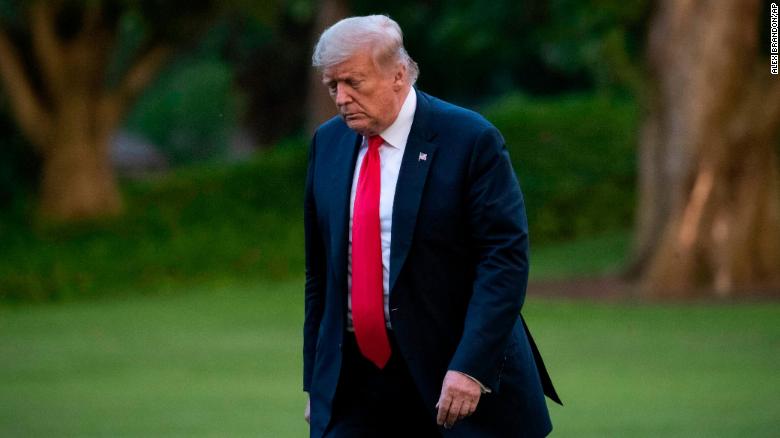
President Donald Trump walks on the South Lawn after arriving on Marine One at the White House, Thursday, June 25, 2020, in Washington. Trump is returning from Wisconsin. (AP Photo/Alex Brandon)
photo credit: AP Photo/Alex Brandon


It's hard for me to imagine that Donald would walk away, but I decided to post this just in case. As I've said here before, he sure doesn't look like he's having much fun as president. Maybe he will declare victory and leave the field. Stay tuned.  

Update. The Lincoln Project weighs in: 


Update #2 on Tuesday afternoon. Apparently Joe Scarborough thinks Donald might drop out. The question was asked during Eugene Robinson's Live Chat today: 


Hi Eugene! I watched Morning Joe this morning and Joe thinks that maybe President Trump will drop out in August. Politically, what would that mean for the race? I want Mike Pence to suffer political consequences for following Trump lock step--but would VP Biden have a harder time with VP Pence? Do you think Trump would go after Mike Pence because he couldn't stand to see his VP win? I know it's speculation, but would love to know what you think!

A: Eugene Robinson

I don't think Trump is going to drop out. If he did, and Pence ended up being the GOP nominee, I think Pence would lose -- I don't see him taking votes from Biden and I don't see him firing up the Trump base. I think the Republican Party would get massacred and basically have to start from scratch.

I'll see if I can find a clip of Joe Scarborough's remarks.

I haven't found video of Joe this morning, but I did see another tweet and this one uses the term "resign" rather than "drop out:"


Days until the election: 126

Update #3. I found the Joe S. video, which is from Friday morning:


Update #5 on Sunday, July 5. Donny Deutsch and Joe are still talking about the possibility that Donald would walk away. This is from Friday, July 3:

Donny Deutsch: "I want to go back something you teed up last week, that I've been thinking about all week, I would not be shocked if at some point he drops the mic. This thing is away from him, it's not turning around. and this is a guy that I can not see standing up and owning the biggest landslide defeat in U.S. history. ... I don't see this guy going the distance."

Joe S: "I've been talking to people who are actually close to him who have speculated for some time that rather than lose a huge election, a huge landslide loss, that he would walk away. Sort of do what LBJ did. ... He does not want to get beaten, with Biden getting 350, close to 400 electoral votes. You look at the polls, I don't know if people close to him are lying to him, but he's behind in Georgia, Texas is tied, even, I read that even some GOP pollsters are talking about the problems, he's struggling in Kansas. This is shaping up to be a historic landslide so I don't understand why he would hang on, especially because the coronavirus just keeps getting worse."

I wonder if somewhere, very quietly and very discreetly, officials from the RNC are developing a plan for what they would do if Donald drops out of the race.

Update #6 on Monday, July 6. An interesting thought from Jonathan Bernstein:


Tuesday, December 10, 2019

What If Donald Won't Leave?

What if Donald is removed from office via Impeachment, or loses the election? What if he just won't leave? The question came up again on Gene Robinson's Live Chat today:

Q: And If It Works...?

Hi Gene, hi all. While it seems unlikely at present that the Republicans in the Senate will vote to convict the president, leading to his removal from office, one must assume for argument's sake that it could eventually happen. Alright, let's say that over the next few weeks and during the Senate trial a small tide begins to turn, for whatever reason, and President Trump is convicted by exactly the number of votes required, not even with one to spare. He and his base will probably not accept the results. Then what? No president has ever been removed from office in our nation's history so there is no precedent. How do you think that the removal process will actually work--especially if the president and his supporters are not willing to go quietly (i.e., à la Richard Nixon)?


A: Eugene Robinson

Okay, we're in Fantasy Land right now. But if Trump is convicted and removed, at that point he will no longer be president and the executive branch will begin taking its orders from Mike Pence. I assume the Secret Service would immediately begin moving Trump and his family out of the White House. I assume Marine One would show up on the South Lawn, whether Trump summons it or not, and he would be escorted aboard.

Q: trump leaving office

Let's assume for the sake of argument, that in spite of his continued election interference (Rudy is still doing it now, as we chat here), Donald Trump loses the 2020 election. What's the plan for when he scream "Fake Election" and "Voter Fraud" and refuses to leave? The Congress doesn't even seem up to enforcing lawful subpoenas. What then?

A: Eugene Robinson

If he loses, then on Inauguration Day he will no longer be president. I assume the new president will order that former president Trump be escorted from the building.
(Read the entire chat here.)

I see people ranting about this on Twitter, too, and of course Donald has "joked" about staying for three terms. His supporters appear to believe that he can just stay on as long as he feels like it if they wish for it hard enough. What they're ignoring is what Gene says twice in his answers above: he will no longer be president. After the inauguration of the new president at noon on January 20, 2021, if Donald loses the election, or as soon as the Senate votes to remove him due to the Articles of Impeachment, Donald Trump isn't president anymore. Legally and constitutionally, he isn't president anymore.

But what if he won't leave? We're talking about Donald Trump sitting in the White House, pretending to be president when he isn't president anymore. I think he'd be laughed out of the room. Donald can tie himself to the Resolute Desk if he wants to, but that wouldn't change the fact that he isn't president anymore. At that point he's just a delusional 74-year-old man and he would be removed, physically if necessary.

For the good of the country I hope Donald leaves with dignity, whenever the moment comes, but I admit, it would be a tiny bit soul-satisfying to see him dragged out of the White House kicking and screaming.  

The question came up in a chat in May, too, read that here